
Backlink Building Without Outreach: Automated Link Acquisition [September 2026]

By Bennett Cohen
Get Maintouch
Turn search and AI visibility work into a repeatable growth system.
Manual outreach is a time sink. You fire off 50 emails, get four replies, and if you're lucky, one turns into a link. The math falls apart the second you try to scale. Backlink building without outreach flips the model. Instead of chasing links one at a time, you build systems that pull them in for you. I'll show you how to create content that earns citations on its own, automate the parts that used to eat your week, and run tools that find and close link opportunities in the background.
TLDR:
- Linkable assets like original research and free tools earn 4.7x more backlinks than standard posts
- Broken link building and unlinked brand mentions generate backlinks without cold outreach
- Manual outreach has an 8.5% response rate and doesn't scale for consistent link acquisition
- Maintouch automates backlink procurement by identifying pages in striking distance and sourcing quality links from real marketplaces
Create Linkable Assets That Earn Backlinks Naturally
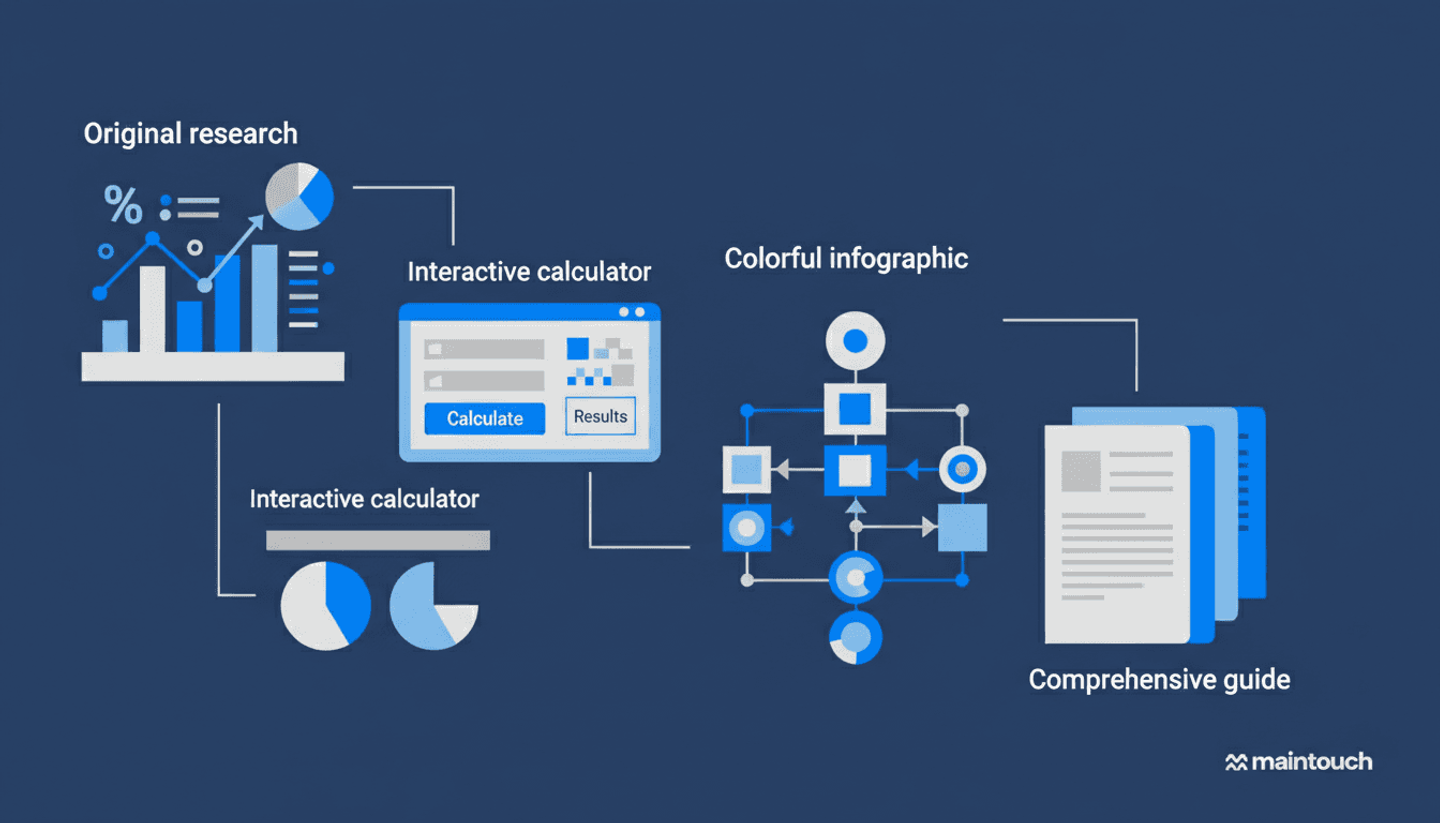
The best backlinks are the ones you never asked for. According to BacklinkGrid's link-building statistics roundup, original research content earns roughly 4.7x more links than standard blog posts because it gives other writers something unique to cite.
What works:
- Original data studies: Run surveys, analyze your customer data, or compile industry benchmarks. Even small datasets work if the angle is fresh. Other sites will link to you as their source.
- Interactive calculators and tools: ROI calculators, assessment quizzes, or free utilities get shared and linked because they're useful. They don't need to be complex.
- Visual assets: Infographics and data visualizations get picked up by sites looking for visual content. Keep them simple and cite-worthy.
- Definitive guides: Content that covers a topic more thoroughly than anything else becomes the default reference. Think 3,000+ words with real depth, not fluff.
Backlink Strategy Comparison: What Actually Works
| Strategy | Avg. Links Earned | Time to Results | Scalability | Outreach Required |
|---|---|---|---|---|
| Original Research | 4.7x more than standard posts | 2-6 months | High | None |
| Free Tools/Calculators | Several times more than standard posts* | 1-3 months | High | None |
| Broken Link Building | Moderate success rate* | 2-4 weeks | Medium | Minimal (automated) |
| Unlinked Mentions | High success rate* | 1-2 weeks | Medium | Minimal |
*Directional ranges based on practitioner reports across industry case studies (Ahrefs, Backlinko, Moz); your mileage will vary by niche and asset quality.
| Content Syndication | 1-3 links per piece | Immediate | High | None |
|---|---|---|---|---|
| Manual Outreach | 8.5% response rate | 4-8 weeks | Low | Heavy |
Publish Data-Driven Content and Industry Research
Data beats opinions in link building. Long-form research consistently pulls more backlinks than shorter posts (Backlinko's content-length study found long-form pieces earn several times more links on average) because it gives writers something credible to cite.
What actually works:
Run customer surveys with 50-100 responses. Ask about pain points, spending habits, or workflow challenges in your niche. Publish the results as a standalone report.
Mine public datasets from government databases, APIs, and public records. Pull something interesting out and publish your findings with charts.
Create annual benchmark reports tracking key metrics year over year. The first year is setup, but every year after compounds because people start waiting for your report.
Build a statistics page compiling every relevant stat about your industry with proper citations. Journalists search for these when they need quick data.
Use Broken Link Building Without Traditional Outreach
Broken links are everywhere. Per AtomSEO's broken link research, roughly 66.5% of external links audited have gone dead since 2013. Sites need replacements constantly. The trick is skipping manual outreach entirely.
Find broken links in your niche using Ahrefs Site Explorer or Check My Links (Chrome extension). Look for resource pages, link roundups, and old blog posts where links have died. Filter for pages with decent authority that match your topic.
Create better replacement content first. If the broken link pointed to a guide about email automation, write a more current version. Make yours more useful than what existed.
Use automated notification tools like Broken Link Builder or Linkody to alert site owners about their broken links. These send bulk notifications without manual outreach. You're flagging the issue and suggesting your content as the replacement.
Some site owners will swap in your link. Others won't bother replying. The ones who do hand you high-intent links from genuinely relevant sites, which is the only kind worth chasing.
Reclaim Unlinked Brand Mentions
Your brand gets mentioned without links all the time. Someone writes about your space, quotes your blog, or drops your name in a roundup. They just forgot to link.
These are the easiest backlinks you'll ever get. The site already knows you exist and thought you were worth mentioning. You're not cold pitching, you're just closing the loop.
Set up Google Alerts for your brand name, product name, and founder names. You'll get daily emails when you're mentioned. Check each one for a link. If there isn't one, you've got a target.
Use tools like Ahrefs Content Explorer or Brand24 to find unlinked mentions at scale. Search your brand name, filter out results from your own domain, and scan for pages that mention you without linking.
Send a quick email. "Hey, saw you mentioned [Brand] in your post about [topic]. Appreciate the shoutout. Mind adding a link so readers can find us? Here's the URL: [link]."
Most writers will add the link within a day or two.
Build Free Tools and Interactive Resources
Free tools work because they solve problems right now. A founder searching for "SaaS CAC calculator" wants the answer immediately, not another blog post explaining CAC.
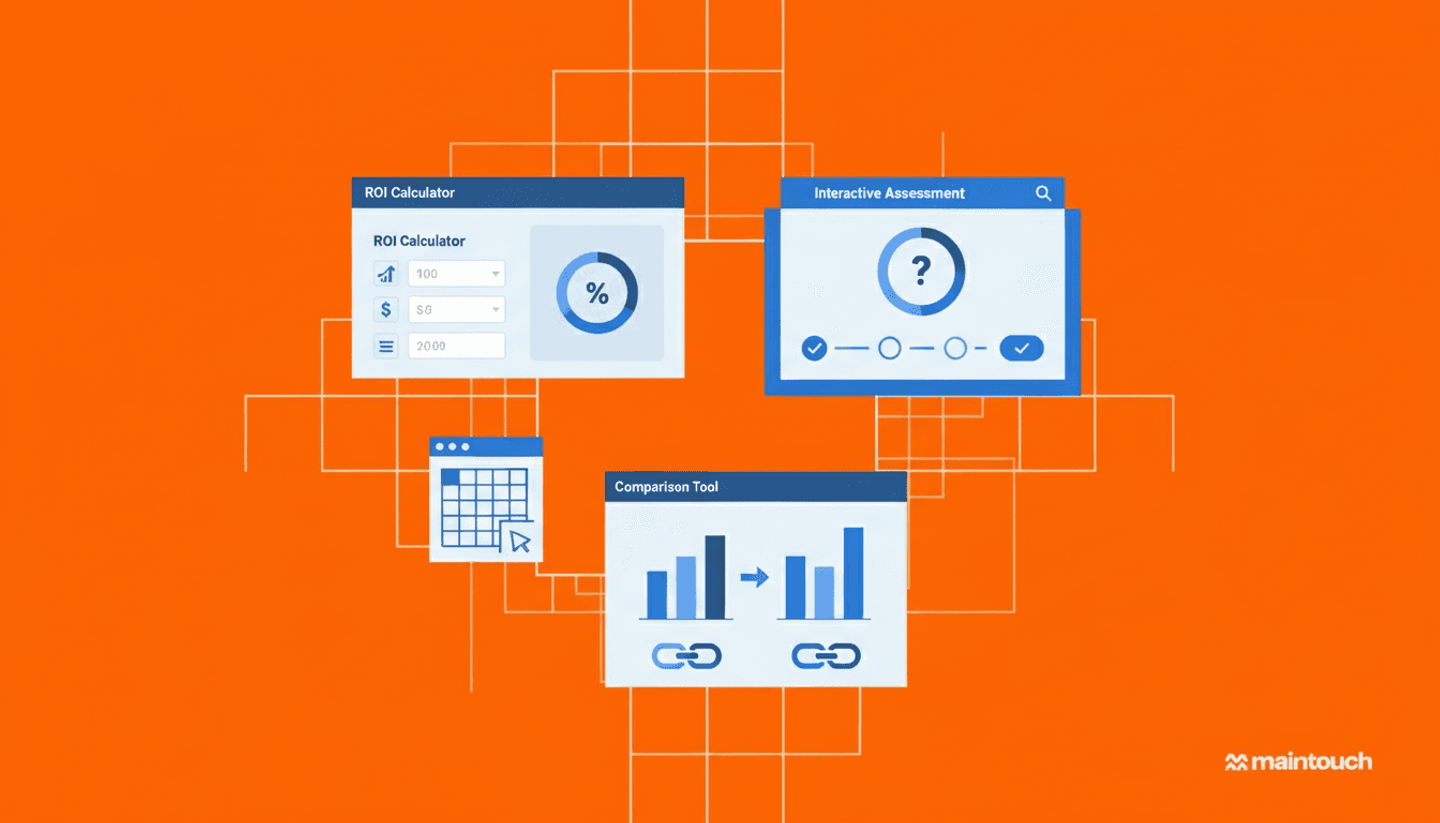
Build calculators for metrics your audience tracks manually. ROI calculators, pricing estimators, comparison tools, conversion rate analyzers. Keep the UI dead simple. One screen, clear inputs, instant results.
Templates are easier to build and still get links. Create spreadsheet templates for financial modeling, content calendars, or workflow planning. Google Sheets works fine. Share it publicly and let people make copies.
Interactive assessments pull links because they're sharable. Build a "How ready is your site for AI search?" quiz or "What's your backlink quality score?" assessment. People link to these when discussing the topic because they add value without making the reader leave.
The trick is picking something your audience already googles. Check "People Also Ask" and Reddit threads in your space. Find repetitive questions where a tool beats an article.
Once the tool is live, the links come without you lifting a finger. Writers cite it. Other tools embed it. The asset quietly compounds while you sleep.
Use Content Syndication and Republishing Strategies
Syndication puts your content on other sites with a backlink to the original. Most marketers rely on syndication to generate backlinks without pitching.
Start with sites that accept syndicated content. Medium's canonical link feature points back to your original. Business Insider, Entrepreneur, and Inc. accept contributed content that links to the source. Apply once, and if approved, republish multiple pieces.
Content distribution networks like Outbrain and Taboola push your articles to publisher sites automatically. You pay for placement, but the backlinks and traffic come without individual outreach. For organic distribution at scale, programmatic SEO tools can multiply the surface area of content earning links.
Set up licensing terms that require attribution. Creative Commons licenses (BY or BY-SA) mandate a link back to your site. Sites republishing your content legally must include the backlink.
Republish your own content on LinkedIn, Substack, and niche community sites with a canonical tag or "Originally published at [your site]" note at the top.
The Problem With Manual Outreach and Freelancer Services
Manual outreach doesn't scale. Industry benchmarks from Backlinko's cold outreach analysis put the average reply rate on link-building emails in the single digits (around 8%). The rest vanish into the void, along with the hours you spent personalizing them.
Hiring freelancers on Upwork or Fiverr isn't the fix either. Most lean on templated emails, buy links from sketchy PBN networks, or run tactics that flirt with Google penalties. You're paying for short-term gains that wreck your rankings six months later.
How Maintouch Automates Backlink Building Without Outreach
We built Maintouch to skip the outreach mess. The system watches your content through Google Search Console and flags pages ranking between positions 5 and 20. These are your best backlink candidates because they're close enough that a few quality links will push them into the top spots.
As of June 2026, the system scrapes the web in real time to find live linking opportunities. Not PBN garbage or sketchy directories. Real sites with actual traffic and authority. The system checks domain authority, relevance, and traffic patterns automatically.
Then we handle acquisition. We're plugged into multiple backlink marketplaces and run negotiations directly. You approve the candidates, we get the links live. Cost passes through from the marketplace with no markup.
No templates. No spray-and-pray emails. No freelancers running sketchy tactics that'll wreck your rankings six months from now.
Final Thoughts on Earning Links Instead of Chasing Them
Backlink building without manual outreach stops being a nightmare when you flip the strategy. Build things people actually want to link to, reclaim mentions you already earned, and let tools handle the busy work. Your ranking pages between positions 5 and 20 are sitting there waiting for a few quality links to push them up. Those are your best targets, and chasing them manually is a waste of your time. Book a quick demo and I'll show you how we find and close those opportunities automatically.
FAQ
How long does it take to see results from linkable assets like original research?
Original research and data studies start pulling links within 2-3 months once indexed, but the real compound effect kicks in after 6 months when other writers find and cite your work in their own content.
What's the difference between broken link building and reclaiming unlinked mentions?
Broken link building replaces dead links on other sites with your content, while unlinked mentions are cases where someone already wrote about your brand but forgot to add the link. Reclaiming mentions is way easier because they already know who you are.
Can I build a free tool without a dev team?
Yes. Start with Google Sheets templates or no-code calculator builders like Tally or Jotform, which let you create functional ROI calculators and assessments in an afternoon without writing code.
When should I use content syndication versus publishing original content?
Syndicate content that's already performed well on your site (3+ months old with proven traffic) to sites like Medium or industry publications, but always publish new strategic content on your own domain first to capture the initial ranking value.
How does Maintouch decide which pages need backlinks?
The system monitors Google Search Console and flags pages ranking positions 5-20 with decent impression volume. These are your best candidates because they're close enough that a few quality links will push them into top 3 spots where the real traffic lives.
Is it safe to buy backlinks through marketplaces?
Buying links from real editorial marketplaces is different from PBN networks Google penalizes. The risk shows up when you load a page with low-quality links from sketchy domains with no real traffic. Maintouch only sources from sites with actual audiences, authority signals, and topic relevance, so each link looks like an organic placement instead of a bulk buy.
How many backlinks do you need to rank on page one?
There's no fixed number. A page already in striking distance (position 5-20) might need 3-5 quality links to break into the top spots, while a brand new page targeting a competitive keyword could need dozens. Quality and topical relevance matter way more than raw count.
What does "striking distance" mean in backlink building?
Striking distance means pages ranking between positions 5 and 20 in Google. They've already proven they can rank but haven't cracked the top three where most of the clicks live. A few quality links pointed at these pages tend to move them up the fastest because the hard work of earning initial visibility is already done.
Do nofollow links still help with backlink building?
Nofollow links don't pass direct ranking signal the way dofollow links do, but they still drive referral traffic and brand visibility. AI engines like Perplexity and ChatGPT also weigh mentions and citations independently of follow status. Don't refuse nofollow links, just don't build your whole strategy around them.
How do AI search engines like ChatGPT and Perplexity use backlinks?
AI chatbots run a web search under the hood before generating answers, and that retrieval layer still weights authority signals like backlinks to decide which pages feed the model's context. Pages with strong backlink profiles show up in the retrieval set more often, which is the only way to end up in the citation. Backlinks stay functionally critical for AI citation visibility through their role in retrieval ranking.
Can automated backlink building actually scale without sacrificing quality?
It can if you split two jobs: finding the right link targets and closing the link. Manual outreach fails because both jobs land on a human firing template emails. Automated systems handle target identification and marketplace negotiation in parallel, so you scale volume without dropping link quality or chasing junk domains.
How often should you be acquiring new backlinks?
Steady acquisition beats bursts. In my experience, a consistent monthly cadence of 5-15 quality links per priority page looks natural to Google and gives the algorithm time to assign value to each link. Spikes of 100+ links in a week from random sources trip spam detection, especially on younger domains.
What's the difference between automated backlink building and PBN link networks?
PBNs are private blog networks owned or rented by one operator to manipulate rankings, and Google penalizes them when detected. Automated link building through Maintouch sources from real editorial sites with actual traffic and audiences, then runs negotiation through marketplaces. The links live on independent domains running real businesses, not on a manipulated network.

About the author
Bennett Cohen
CEO and Founder at Maintouch
Turn search into your best growth channel.
Maintouch tracks your visibility across AI and Google, creates and refreshes content, and gets your brand mentioned on the sites that shape discovery.
Book a demoRelated reading
All posts