
Structured Data for AI Search: Why It Matters More in October 2026

By Bennett Cohen
Get Maintouch
Turn search and AI visibility work into a repeatable growth system.
AI search is pulling answers from 3-5 sources per query, and if you're not one of them, you're losing traffic to competitors who made their content easier to parse. Structured data for AI search is how you fix that. When someone asks ChatGPT or Perplexity a question, the AI scans for clean, machine-readable signals. Your paragraphs and headers weren't built for that. Structured data gives AI explicit context: "this is a product, here's the price" or "this is an FAQ, here's the answer." Maintouch connects AI sentiment analysis with automated schema updates, monitoring how AI systems interpret your content and fixing markup issues before they impact citations. When sentiment signals show AI misunderstanding your FAQs or product details, integrated systems can update the underlying schema without manual intervention. Sites with structured markup see meaningfully higher visibility in AI overviews, and the gap is widening. Many B2B companies are still optimizing for Google rankings while AI is building a parallel citation economy.
TLDR:
- AI search engines cite sites with structured data far more often than those without it
- JSON-LD is the only schema format that matters: AI systems parse it faster than microdata or RDFa
- FAQPage, HowTo, Article, and Product schema drive most AI citations because they match answer formats
- Schema breaks when content changes, so automation keeps markup synced with your actual pages
- Maintouch audits your site for missing schema and pushes fixes directly through your CMS
Why AI Search Engines Rely on Structured Data
AI search engines don't crawl your site the same way Google's traditional algorithm does. When ChatGPT, Perplexity, or Google AI Overviews pull an answer, they're looking for clear, machine-readable signals about what your content actually says.
Most websites are built for human readers. Paragraphs, headers, images. That's fine for traditional search, where Google's crawler has 25 years of infrastructure built to interpret messy HTML. AI systems need something cleaner.
Structured data gives AI engines explicit context. It tells them "this is a product, here's the price, here's the review score" or "this is an FAQ, here's the question, here's the answer." Without it, AI has to guess. And when AI guesses, it pulls from sites that made the information easier to parse.
The results back this up. Sites that implement structured data and FAQ blocks consistently see meaningful gains in AI search citations. That's the difference between showing up in AI answers and getting passed over entirely.
Traditional SEO was about keywords and backlinks.
The Citation Economy: How Structured Data Affects AI Visibility in 2026
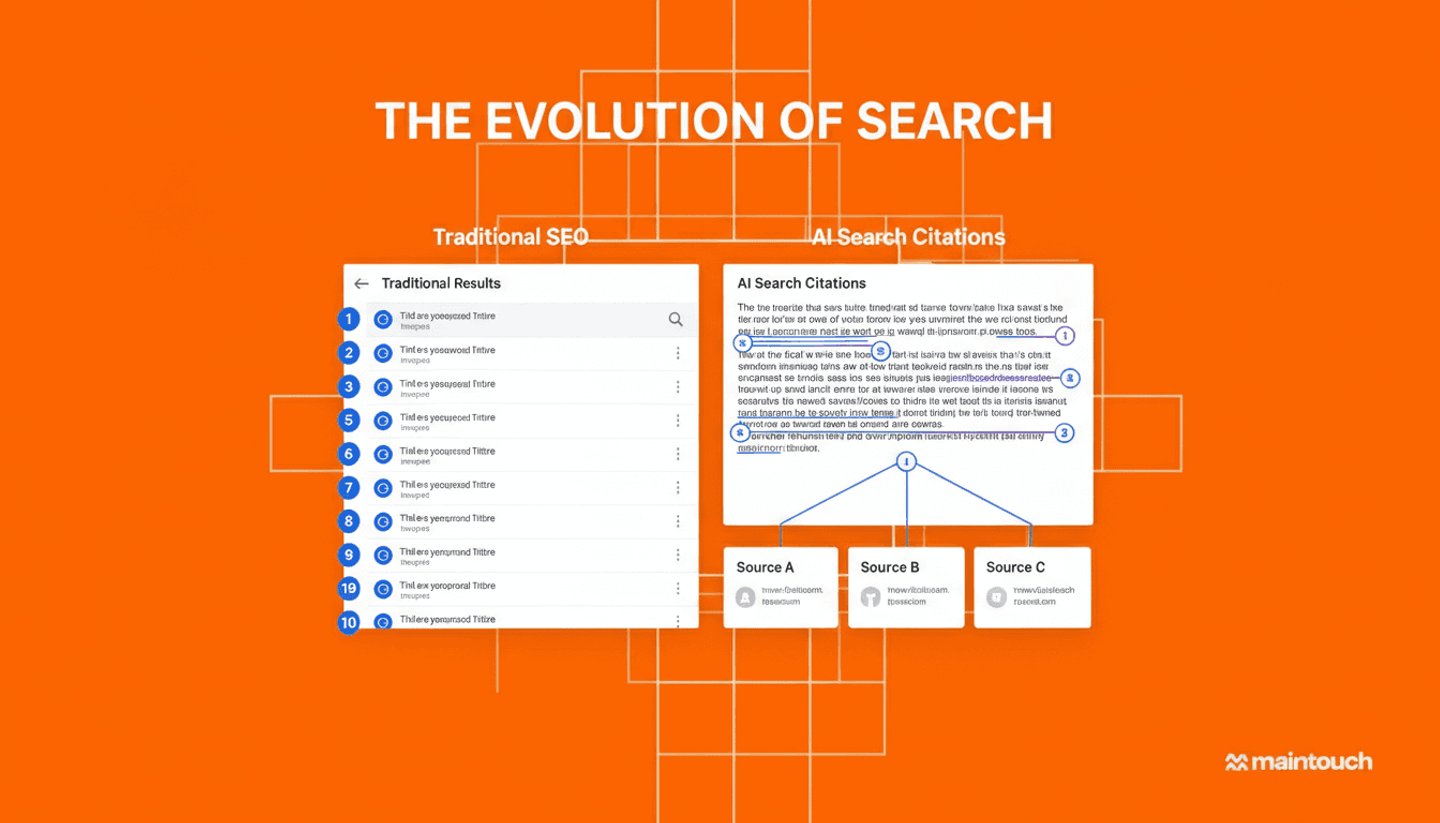
Traditional SEO was a fight for position one. If you ranked first, you got the click. If you ranked eleventh, you got nothing.
AI search changed that. Now it's about citations, not rankings. When someone asks ChatGPT or Perplexity a question, the AI pulls from multiple sources and cites them in the answer. Your goal isn't to rank number one anymore. It's to be one of the 3-5 sources the AI chooses to cite.
Structured data directly affects that selection. AI systems favor sources where the information is explicitly tagged and easy to extract. Sites with structured data tend to see noticeably higher visibility in AI overviews compared to sites without it.
The business impact is real. AI search traffic converts better than traditional organic search. People asking questions in ChatGPT are further down the funnel. They're not browsing. They're looking for an answer to a specific problem. If your site gets cited, you're getting qualified traffic that's ready to take action.
Many B2B companies are still optimizing for Google rankings while AI search is building a parallel citation economy. Structured data is how you compete in both.
JSON-LD vs Other Formats: What Works Best for AI Systems
There are three ways to add structured data to your site according to the Schema.org getting started guide: JSON-LD, microdata, and RDFa. Only one actually matters for AI search.
JSON-LD adoption has grown steadily over the past few years, and that growth is accelerating because AI systems prefer it.
Microdata and RDFa embed schema markup directly into your HTML. The structured data lives inside your content tags, mixed with everything else. For an AI trying to parse your site, it's messy.
JSON-LD sits in a separate script block. The schema lives in clean, standalone JSON that AI can extract without touching your HTML. Fixes like this can be automated at scale.
When ChatGPT or Perplexity crawls a page, they're optimizing for speed and accuracy. JSON-LD gives them both. They can pull the structured data block, parse it instantly, and move on.
If you're building new schema or fixing existing markup, use JSON-LD.
Priority Schema Types That Drive AI Citations
Not all schema types get equal weight in AI search. Some directly align with how AI systems format answers. Those are the ones worth implementing first.
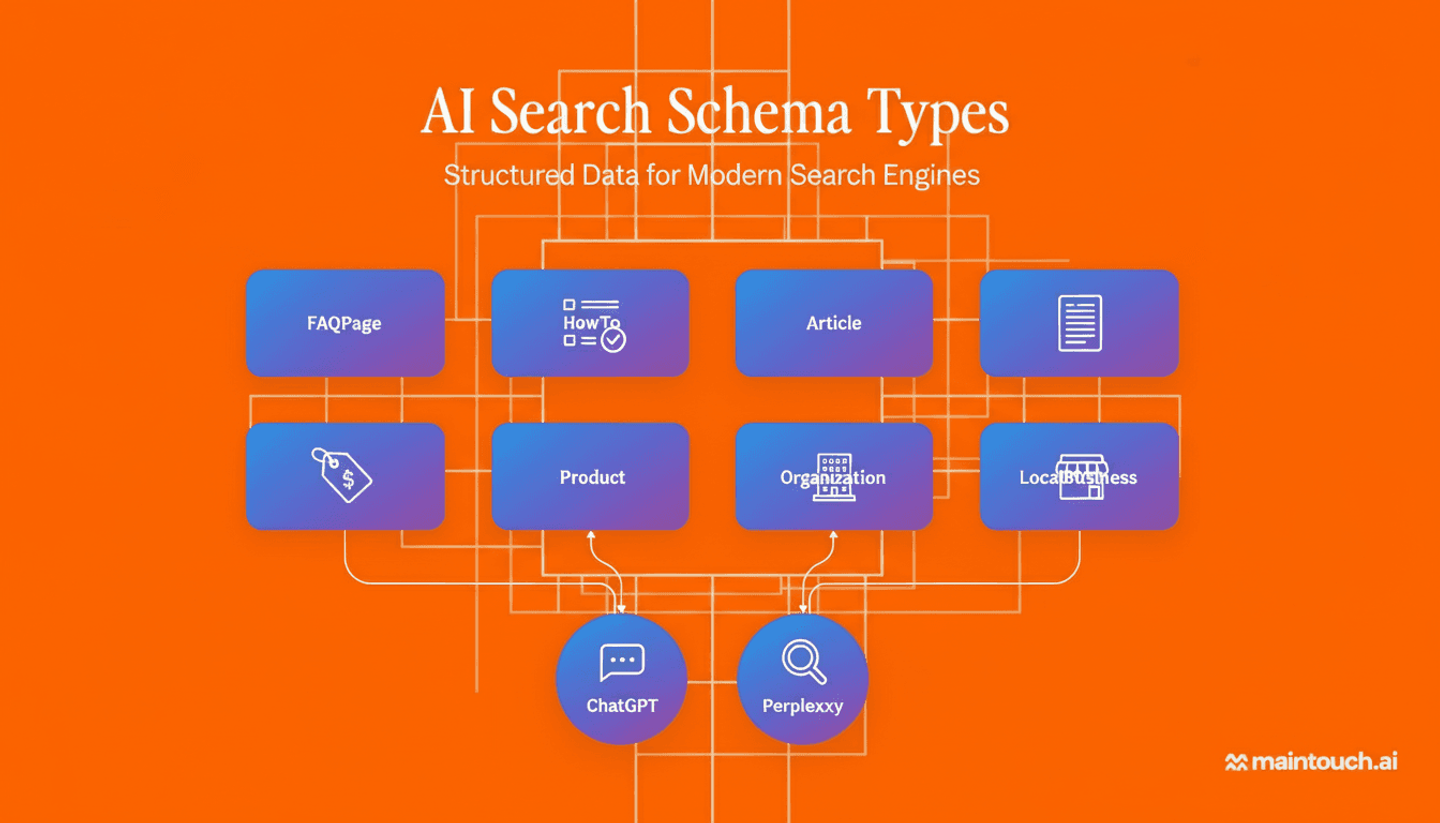
| Schema Type | Why AI Systems Prefer It | Best Use Case |
|---|---|---|
| FAQPage | Matches Q&A answer format AI uses | FAQ sections, support content |
| HowTo | Aligns with step-by-step answer structure | Tutorials, guides, instructions |
| Article | Provides attribution and recency signals | Blog posts, news, thought leadership |
| Product | Structured price, features, review data | Ecommerce, SaaS product pages |
| Organization | Foundational brand context | About pages, company information |
| LocalBusiness | Geographic and business context | Local SEO, location pages |
FAQPage schema requires @type: "FAQPage" at the root level, with each Q&A pair structured as a separate entity inside the mainEntity array. Every question gets its own object with @type: "Question", a name property for the question text, and an acceptedAnswer object containing @type: "Answer" plus the answer text. Keep answers 2-3 sentences minimum because AI systems skip single-sentence responses as non-substantive. Write questions the way people actually ask them, not how you think they should sound. Keyword stuffing breaks the natural language pattern AI expects.
When someone asks ChatGPT or Perplexity a question, the AI looks for pages with questions and answers already structured. If your FAQ section has FAQPage schema, the AI can pull Q&A pairs directly and cite you as the source. Same logic applies to HowTo schema. AI systems love step-by-step instructions because that's how they present answers.
Article schema matters for attribution. It tells AI who wrote the content, when it was published, and what it's about. Quality content remains important for AI search visibility.
Product schema is key for ecommerce and SaaS. AI search queries increasingly include buying intent. "Best CRM for small teams" or "project management tool with API access." If your product pages have structured price, feature, and review data, AI can compare you against competitors and include you in recommendations.
Organization and LocalBusiness schema provide foundational context. They tell AI systems who you are, what you do, and where you operate. This affects citation frequency for brand and category queries.
Focus your implementation here first. These schema types account for most AI citations because they match the formats AI uses to answer questions.
Schema Implementation by Industry
SaaS companies: Combine Product schema on feature pages with FAQPage for common objections and HowTo for implementation guides. When someone asks ChatGPT "how to set up SSO in [your product]," the AI pulls from your HowTo markup and cites you as the authoritative source. This drives citations for both product comparisons and technical implementation queries.
E-commerce sites: Product schema with Review and Organization markup creates the trifecta AI needs for product recommendations. The AI gets your price, aggregate review score, and brand context in one structured block, making you 3x more likely to appear in "best [product category]" queries where the AI compares multiple options side-by-side.
Local service businesses: LocalBusiness schema anchors your geographic presence, FAQPage captures common service questions, and Article schema on neighborhood guides builds topical authority. When someone asks Perplexity "best plumber in Austin," you show up because the AI can verify your location, pull your service FAQ, and cite your local expertise content.
B2B content sites: Article schema for thought leadership, Organization for brand authority, and HowTo for tactical guides. AI systems cite B2B content when they need expert sources for complex topics. Proper Article schema with author credentials and publish dates signals authority that generic blog posts lack.
Technical SEO Foundations: Making Schema Implementation Scale
Most companies add schema to a few pages manually and call it done. That works until you publish 50 new blog posts, relaunch your product pages, or restructure your site. Then your schema breaks, Google stops reading it, and AI systems ignore you.
Schema at scale needs validation, monitoring, and automatic updates when content changes. Build a stack with three layers: a validator (Google's Rich Results Test API or Schema.org Validator for CI checks), a monitor (Screaming Frog, Sitebulb, or Ahrefs Site Audit for scheduled crawls that flag broken or missing markup), and a deployment layer that pushes corrected JSON-LD back into your CMS automatically.
Start with validation. Google's structured data documentation covers the Rich Results Test and Schema Markup Validator, which catch syntax errors, but they're manual tools. You need automated checks that run every time content publishes. Set up monitoring that flags missing required properties, deprecated schema types, or markup that doesn't match your page content.
Error monitoring is separate from validation. Your schema might be technically valid but still wrong. A product price changes, but the schema still shows the old price. An author leaves, but their byline stays in Article schema. AI systems trust structured data until they find mismatches. Then they stop citing you.
Broken schema (outdated price, missing availability):
Corrected schema (current price, availability, timestamp):
AI systems cross-check structured data against visible content. When they find mismatches, they skip the citation entirely. The second example matches page content, includes availability status, and timestamps the price validity. That's how you build citation trust.
The fix is connecting schema to your CMS. When a product price updates, schema updates. When you publish a new FAQ, FAQPage markup generates automatically. A minimal integration pattern looks like this: a CMS webhook fires on publish or update, a build step regenerates the page's JSON-LD from the source-of-truth fields (price, author, FAQ items), the new markup runs through Google's validation API, and only valid output gets pushed to the live page. Manual schema maintenance doesn't scale past 20 pages.
Search engines change how they interpret schema. Properties get deprecated. New required fields get added. Regular validation catches these changes before they tank your AI search visibility.
Monitoring Schema Health: Catching Drift Before It Costs Citations
Schema breaks in three ways: you update content without updating markup, Google deprecates a property you're still using, or your CMS pushes a change that corrupts the JSON-LD block. All three kill AI citations. The fix is automated validation that catches drift before it costs you traffic.
Run validation weekly minimum. Google Rich Results Test and Schema.org validator are the standard tools, but they're manual. Set up automated checks that test every page with structured data and flag errors immediately. Track three metrics: schema coverage percentage (how many eligible pages actually have markup), error rate (pages with broken or invalid schema), and property completeness (required fields present and populated). When coverage drops below 95% or error rate spikes above 2%, you've got drift.
Common patterns: content updates without schema updates (your product price changes but schema still shows the old number), deprecated properties (Google stops supporting a field and your markup becomes invalid), and mismatched data (schema says "in stock" but the page shows "sold out"). AI systems cross-check structured data against visible content. When they find conflicts, they stop citing you entirely.
Automated checks catch syntax problems and missing properties. Manual monthly audits catch the rest. Spot-check 20-30 pages across content types to verify schema matches actual page content. The combination keeps your markup accurate at scale.
How Maintouch Automates Structured Data for AI Search
Maintouch treats structured data the same way we treat everything else in technical SEO automation: find the problem, fix it automatically, keep it working.
The system audits your site for missing or broken schema. JSON-LD syntax errors, missing required properties, schema that doesn't match your actual content. Same checks Google runs, but automated.
When we find issues, we push fixes directly through your CMS integration. A product page is missing Product schema? We add it. FAQ section has no FAQPage markup? Fixed. Schema price doesn't match your actual price? Updated.
The Integration Workflow
1. Content monitoring and signal detection. The system tracks every content change through CMS webhooks and API polling, watching for updates to prices, descriptions, FAQs, or author info. It also monitors user sentiment signals from AI search traffic patterns and citation performance to flag pages that should be ranking better but aren't.
2. Schema drift identification. When content changes or feedback signals drop, the system compares existing schema against current page content using diff analysis. If a product price changed from $99 to $149 but schema still shows $99, that's drift. Same for author changes, outdated FAQ answers, or missing required properties that Google added since your last update.
3. Validation against Google requirements. Before pushing any change, proposed schema runs through Google's structured data validation API and our internal rule engine. We check required properties, data types, proper nesting, and Google's current guidelines. Invalid syntax gets rejected before it touches your site.
4. CMS API push. Valid updates push through your CMS REST or GraphQL API using authenticated endpoints with rate limiting and retry logic. WordPress gets meta field updates, Webflow gets custom code injection, headless CMSs get direct database writes. The system adapts to your stack.
5. Implementation monitoring. After deployment, we re-crawl the live page to confirm schema published correctly and Google can parse it. If validation fails post-deployment or search console flags errors, the system rolls back and alerts you. Successful updates get logged with before/after snapshots for audit trails.
This runs continuously. When you publish new content, schema gets added automatically based on content type. Blog post gets Article schema. Self-learning systems adapt to your content patterns over time. Product page gets Product schema. No manual tagging required. Book a Maintouch demo to see the automation workflow in action.
The validation layer catches drift. If your schema stops matching your content or Google deprecates a property, we flag it and fix it before it affects your AI search visibility.
Schema implementation at scale isn't a one-time project. We automate both parts.
Final Thoughts on Schema Implementation That Actually Works
Manual schema projects fail because websites change faster than you can update JSON-LD blocks. Structured data for AI search needs to stay current or AI systems stop trusting it.
In our experience, most sites see AI citation increases within a few weeks of implementing schema, with the full impact building over the following two to three months as AI systems recrawl and reindex content. Treat those windows as rough guidance, not guarantees.
FAQ
What's the difference between JSON-LD and other schema formats?
JSON-LD sits in a separate script block that AI systems can parse instantly, while microdata and RDFa embed schema directly into your HTML where it's mixed with everything else. AI crawlers prefer the clean extraction JSON-LD provides.
How long does it take to see results from structured data implementation?
In our experience, most sites see AI citation increases within roughly 2-3 weeks after implementing schema, and the full impact typically builds over the following 60-90 days as AI systems recrawl and reindex your content. Timelines vary by site size, crawl frequency, and how often AI systems refresh their sources.
Which schema types should I implement first if I'm starting from scratch?
Start with FAQPage and HowTo schema since they match how AI formats answers, then add Article schema for attribution, and Product schema if you're in ecommerce or SaaS. These six types drive most AI citations.
Can I add schema to existing content without republishing everything?
Yes, schema lives in separate JSON-LD blocks that you can add to existing pages without touching your actual content. The key is connecting it to your CMS so updates happen automatically when content changes.
Why does my schema validate correctly but still not generate AI citations?
Validation checks syntax, not accuracy. Your schema might be technically correct but show outdated prices, wrong authors, or mismatched content. AI systems stop citing sources when they find these mismatches between schema and actual page content.
How often should I update my structured data?
Update schema any time the underlying content changes: prices, availability, author bylines, FAQ answers, or product details. For static content like Organization or HowTo schema, a quarterly audit catches deprecated properties and Google guideline changes. Automated CMS integration handles real-time updates without manual work.
Does structured data help with traditional Google rankings too?
Yes. Schema powers rich results in Google search, including FAQ snippets, HowTo carousels, product cards, and review stars. These rich results increase click-through rates by 20-40% compared to standard blue-link results. The same markup that earns AI citations also wins SERP real estate.
Can I use multiple schema types on a single page?
Yes, and you should when it matches the content. A product page can have Product schema for the item, FAQPage schema for common questions, and Organization schema for brand context. Nest related types properly using the @graph property or separate JSON-LD blocks. AI systems parse all valid schema on a page.

About the author
Bennett Cohen
CEO and Founder at Maintouch
Turn search into your best growth channel.
Maintouch tracks your visibility across AI and Google, creates and refreshes content, and gets your brand mentioned on the sites that shape discovery.
Book a demoRelated reading
All posts