
Programmatic Backlink Building for SaaS: 12 Strategies That Actually

By Bennett Cohen
Get Maintouch
Turn search and AI visibility work into a repeatable growth system.
Programmatic backlink building for SaaS means nothing if the pages you generate sit orphaned and the links never materialize. Most teams ship templated content, wait for organic discovery, and wonder why authority stays flat.
The actual system pairs page generation with active procurement. You create assets editors and partners need to cite, then you run acquisition at scale so the links show up on high-authority domains without manual outreach killing your week.
The teams that pull this off match the page format to whoever's already wired to link to tools in their category. Integration directories want one clean URL per partner. Trade editors want vertical-specific examples. Journalists want a primary stat they can cite.
I've been doing SEO for over a decade, and Maintouch runs this loop for hundreds of SaaS teams. I'll walk you through 12 page types that earn backlinks because someone on the other end actually needs them.
TLDR:
- Programmatic pages earn backlinks when they solve a real problem editors need to cite.
- Integration pages, comparison pages, and free tools pull links because they give bloggers a clean URL to send readers.
- Hub-and-spoke architecture flows link authority from one earned backlink across hundreds of spokes beneath it.
- Launch 50-100 pages first, earn backlinks to hubs, watch indexing, then scale. Dumping thousands at once gets you penalized.
- Maintouch automates the whole loop (generation, targeting, acquisition, monitoring) at pass-through cost.
Scale Programmatic Integration Pages to Earn Partner Backlinks
Every integration you ship is a backlink waiting to happen. Connect to Stripe, HubSpot, or Slack, and those partners maintain directories and "works with" pages that link back to validate the connection.
So build them programmatically. One template, one row per integration in your data feed, one page out the other end: what it does, setup steps, supported features, a screenshot. Now the partner's directory has somewhere clean to point. The link comes back contextual, on their domain, with their authority behind it.
Build Comparison and Alternative Pages That Attract Editor Citations
When a blogger writes "best CRM software for startups," they need somewhere to send the reader. A generic homepage won't cut it. A page titled "Pipedrive vs HubSpot" or "Notion alternatives for engineering teams" gives them an exact URL to cite. That's why this content pulls links from review sites and affiliate publishers.
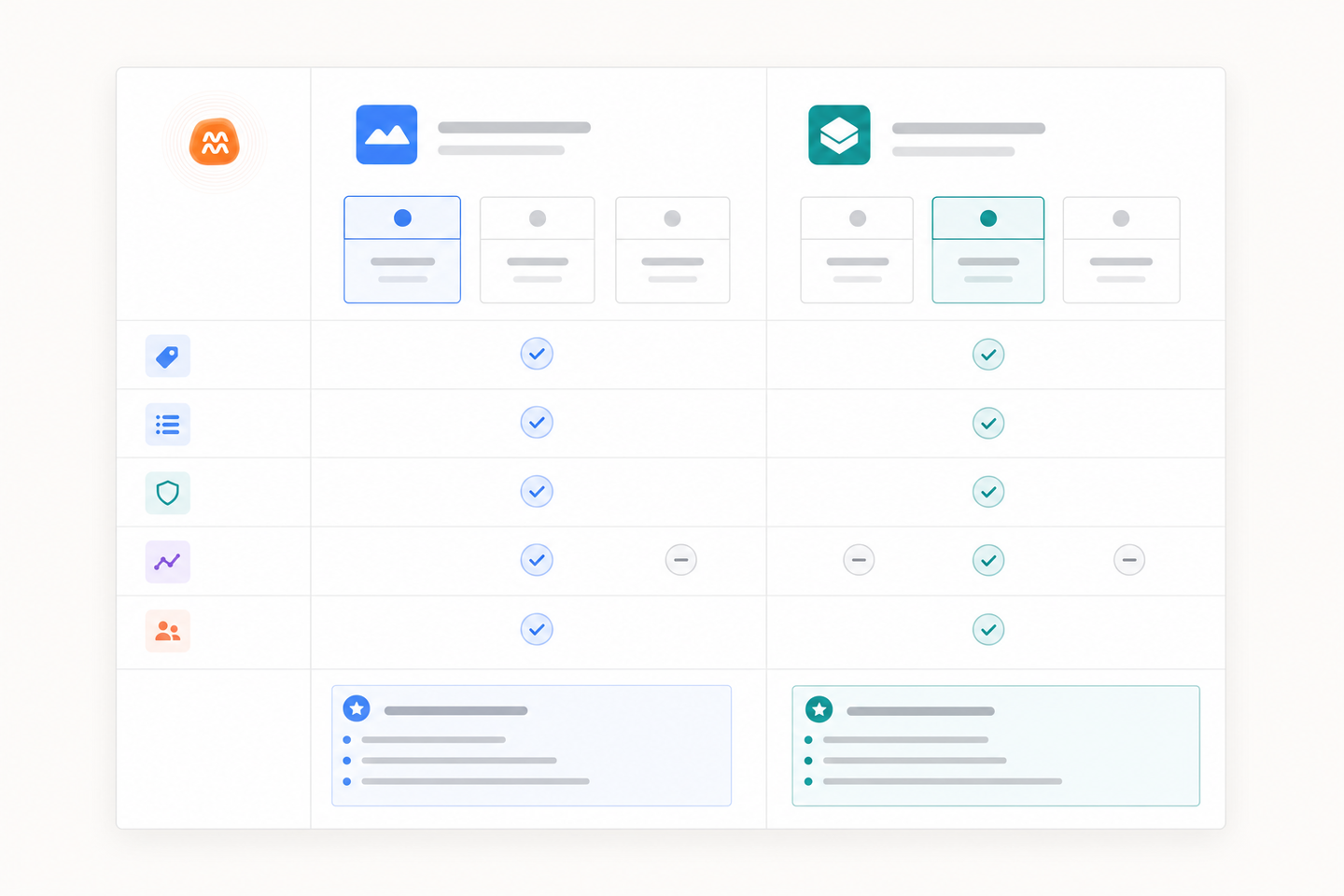
Templates make it scale. Pull data from a structured feed, then generate one page per matchup:
| Element | What to pull |
|---|---|
| Pricing tiers | Live plan data |
| Feature support | Yes/no matrix |
| Best-for use case | Segment notes |
The data makes them reference-worthy instead of thin.
Launch Template Libraries and Free Tools as Scalable Link Magnets
People link to utility. Nobody bookmarks your hot take on pricing strategy, but they'll link to a free margin calculator their readers can actually use.
That's the edge. Pick one shared framework, then spin up single-purpose assets on top of it: churn calculator, invoice template, ROI estimator, slug generator. Each one solves a narrow problem for a specific reader. One framework, fifty variants, fifty URLs, fifty backlink profiles building in parallel.
Create Data-Driven Industry Reports Using First-Party Product Data
Your product sits on data nobody else has. Aggregate it, and you own a stat the whole niche has to cite.
That's the moat. A competitor can copy your blog post in an afternoon. They can't copy the anonymized usage patterns running through your product. Pull benchmarks from your user base, strip anything identifying, and package them into an annual report: churn by company size, median onboarding time, whatever your data knows. Journalists need a primary source, and an original stat gives them one. The link comes back to you, not the scraper.
Update the dataset yearly and the citations compound.
Implement Hub-and-Spoke Architecture to Distribute Link Authority
The mistake that kills most programmatic builds: pages float with no internal links pointing in. Google can't pass authority to a page nothing connects to. Your spokes sit orphaned while your earned backlinks go nowhere.
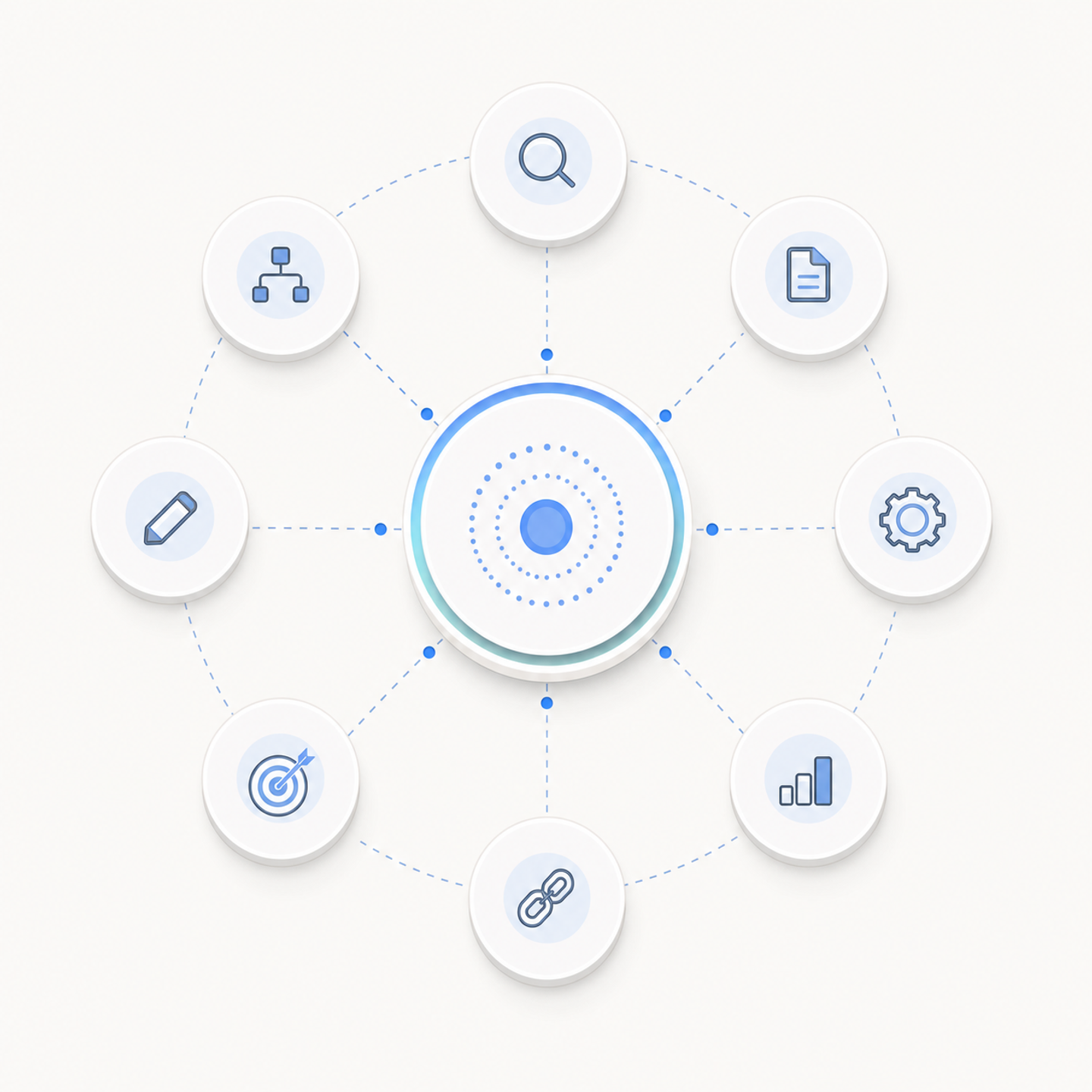
Hub-and-spoke fixes it. Build a handful of editorial hub pages worth pitching for backlinks, then point each down to its cluster of programmatic spokes:
- Hubs earn external links: a guide, a category page, a resource center.
- Each hub links down to every spoke in its cluster.
- Spokes cross-link to siblings using ranking-keyword anchor text.
One backlink now flows authority across the hundred spokes beneath it.
Build Programmatic Location Pages for Local Backlink Acquisition
Local directories, chambers of commerce, and regional business sites link to pages that serve their geography. They'll never link to your national homepage.
So give them a local URL. Generate a page per market from a template, but fill it with details a local searcher actually needs: regional pricing, a nearby case study, area-specific stats.
Thin "we serve [city]" pages get ignored and risk indexing problems. The local data is what makes the page worth a citation from a chamber site or regional directory.
Launch Programmatic Use Case Pages That Industry Publishers Reference
A trade publication writing about how law firms use automation needs a source that speaks their language. Generic product pages won't cut it.
Generate pages by use case: "appointment scheduling for dental practices," "expense tracking for construction crews." One template, one variable swap per vertical. What makes them reference-worthy:
- Industry-specific terminology a niche editor recognizes as credible
- Real workflow examples pulled from that vertical
- Data points that only apply to that segment
Trade blogs cite the page that sounds written by someone inside their world.
Deploy Educational Resource Centers with Structured Data for AI Citations
A glossary entry, a how-to guide, a FAQ hub. Each one answers a question someone is typing into ChatGPT or Google right now. Build them programmatically, one page per term or task, and wrap each in schema so AI crawlers know what they're reading. Pick the markup that fits per Google's structured data guidelines: FAQPage for question hubs, Table and Dataset for reference data.
The dual payoff: machines parse the markup for citations, and writers link to the definition when they need a source.
Build Trend Libraries That Journalists Link to as Primary Sources
A journalist writing about a shift in your space needs proof it's real. Give them a tracking page they can point to.
Build a library at domain.com/topic/trend, one URL per pattern you watch. Each documents the trend with timestamped data, updated as it moves. Writers cite the page that keeps the record. Become that record, and the links follow every news cycle.
Use Programmatic Schema to Capture Featured Snippet Citations
Featured snippets are citation bait. When a writer needs a quick definition or stat, they grab the box at the top and link the source.
Bake schema into the template once, and every page ships snippet-ready. HowTo markup for steps, FAQPage for questions, QAPage for direct answers. Hundreds of pages compete for the box automatically. Each win becomes an editorial citation.
Stage Programmatic Content Launches to Avoid Indexing Penalties
Push thousands of templated pages live in a single batch and you risk indexing throttles or a manual review. We've seen quality signals tank once a site jumps from a few hundred URLs to several thousand overnight.
Stage instead: launch 50-100, earn backlinks to your hub pages, watch indexing and quality, then scale. The gradual ramp signals quality and keeps you clear of penalties.
Monitor Programmatic Page Performance to Identify Backlink Targets
Not every page deserves a backlink. Most never will. The ones worth your budget sit in striking distance, ranking between 5 and 20, already earning impressions but stuck off page one. Those pages need the fewest links to break through.
Pull Search Console, filter for positions 5-20 with real impression volume, and point your link building there first. That's where each backlink actually moves a ranking.
How Maintouch Automates Programmatic Backlink Building at Scale
Everything above takes work. Generating pages, finding targets, negotiating, paying, confirming the link goes live. For a lean SaaS team with no SEO hire, that's a lot.
I built Maintouch to run the whole loop. It generates the pages from your structured data, flags the ones in striking distance, runs procurement across integrated marketplaces, buys the link, and monitors it stays live. Pass-through cost, no markup. Most tools hand you a list. Maintouch executes. You steer it 15-20 minutes a week.
Want to see how it'd map to your build? Shoot me a message and I'll walk you through it.
Final Thoughts on Earning Backlinks From Programmatic Content
The content types that scale and the content types that earn links are usually different. Programmatic pages can do both if you build them to solve citation problems instead of only answering search queries.
Think integration directories, comparison tables, and first-party data reports instead of generic landing pages. Pair them with hub-and-spoke internal links so one earned backlink flows authority across every spoke beneath it.
If you only take one thing from this guide, take the staged rollout: ship 50-100 pages, earn links into your hubs, watch indexing and quality signals, then scale. That sequencing is what keeps the program clear of penalties and turns each new batch into compounding authority instead of dead URLs.
If you want to see how Maintouch runs this end to end on your stack, shoot me a message and I'll walk you through it.
FAQ
Can I build programmatic backlink pages without a full-time developer?
Yes. Templates do the heavy lifting. Define the structure once, pull data from a spreadsheet or API, and generate the pages automatically. Most CMS platforms support this workflow without custom code.
Programmatic SEO backlinks vs manual outreach for SaaS?
Programmatic scales faster but requires consistent template quality and structured data. Manual outreach gives you control over every placement but won't cover 50+ integration pages or comparison variants without burning months. At scale, programmatic wins on coverage.
How long before programmatic pages actually earn backlinks?
Across the SaaS builds we've shipped on Maintouch, integration and comparison pages typically start pulling citations within a few months of being indexed, assuming the page gives partners something worth linking to. Treat that range as observed, not guaranteed. Generic "we integrate with X" pages get ignored. Pages with setup docs, feature matrices, and real screenshots get cited.
What's the biggest mistake teams make launching programmatic content for backlinks?
Dumping thousands of pages at once. Google reads that as spam and indexing stalls.
Stage instead: launch 50-100, earn backlinks to your hub pages, watch quality signals, then scale. The gradual ramp keeps you clear of penalties.
Should I focus backlinks on high-volume keywords or pages in striking distance?
Pages in striking distance, ranking 5-20 with real impressions. Those need the fewest links to break through. A page stuck at position 47 with zero impressions won't move no matter how many backlinks you point at it.
How do I know if my programmatic pages are high enough quality to avoid Google penalties?
Each page needs unique data that solves a real problem. If you can swap the variable and the page still gives someone an answer they couldn't get from your homepage, you're clear.
Generic "we serve [city]" pages with no local stats get flagged. Pages with region-specific pricing, case studies, or workflow examples don't.
What's the minimum number of programmatic pages needed to see backlink results?
From the SaaS launches we've supported on Maintouch, partner directories and niche publishers usually start finding and citing your content organically once you have a couple of hundred well-built pages live. Treat that as a directional range, not a fixed cutoff. Below that, you're relying on manual outreach. The scale itself creates discoverability.
Can programmatic backlink strategies work for early-stage SaaS with no integrations yet?
Yes, but you'll lean on comparison pages, use case pages, and free tools instead of integration directories. A margin calculator or ROI estimator pulls links even if you don't integrate with Stripe yet.
Start with utility, add integration pages as you ship connectors.
How many backlinks does a programmatic page typically need to rank on page one?
It depends on keyword difficulty and your domain authority. From the campaigns we've run on Maintouch, a page already ranking in the 5-15 range with decent content usually needs a handful of contextual backlinks from relevant domains to break into the top three. Treat that as a rough planning range, not a guaranteed number. Pages further back need more foundational work before links move the needle.
Should I build programmatic pages before or after my core product pages?
After. Get your homepage, product pages, and a handful of high-intent editorial pieces indexed and earning some authority first. Programmatic pages amplify existing domain strength; they don't create it from scratch.
What's the biggest risk of buying backlinks for programmatic content?
Buying from link farms or PBNs that Google already flagged. Stick to editorial placements on real sites with organic traffic and you're fine. The risk isn't procurement itself; it's buying garbage links that trigger manual review.
How do I track which programmatic pages are actually earning backlinks?
Use Google Search Console's Links report filtered by target page, or run a backlink audit in Ahrefs or Semrush and sort by acquisition date. Check monthly to catch new citations and reinforce what's working.
Do programmatic backlink pages need to be perfect before I launch them?
No. Launch at 80% (real data, clean structure, no placeholder text), then refine based on what actually earns links. Waiting for perfect kills momentum. Stage the launch, watch what gets cited, double down on those templates.
Turn search into your best growth channel.
Maintouch tracks your visibility across AI and Google, creates and refreshes content, and gets your brand mentioned on the sites that shape discovery.
Book a demoRelated reading
All posts