
AEO vs SEO: What's Different and Why Both Matter in 2026

By Bennett Cohen
Get Maintouch
Turn search and AI visibility work into a repeatable growth system.
I run Maintouch, and I spend my days watching how AI systems pull and cite the brands we work with. Here's what I've noticed: the SEO vs. AEO vs. GEO debate generates a lot of words and very little clarity. The acronyms multiply (AIO, LLMO, GEO, AEO) but the underlying mechanics barely change. Once you separate what each one is actually optimizing for, this gets simple fast. My goal: you walk away with a clear read on how SEO, AEO, and GEO differ, why all three still matter heading into 2026, and exactly what to do about it.
TLDR:
- SEO earns the ranked click; AEO earns the AI citation whether anyone clicks or not.
- Gartner projects traditional search volume drops 25% by 2026, and 59.7% of U.S. searches already end without a click.
- AEO doesn't replace SEO. Citations depend on the same crawlability and domain authority that rankings do.
- Win citations by writing 130-170 word self-contained passage blocks, leading with the answer, and adding schema markup.
- Maintouch tracks citation share across ChatGPT, Gemini, AI Overviews, Perplexity, and Claude inside one system.
What Is SEO
Search engine optimization shapes your content and site so it ranks in traditional search results like Google and pulls in organic traffic. No ad spend. You earn the position.
It rests on three pillars:
- On-page: the content, keywords, headings, and metadata on each page.
- Technical: crawlability, site speed, schema, canonicals, and how well search engines read your site.
- Off-page: backlinks and authority signals from other domains pointing at you.
Success gets measured through rankings, clicks, and impressions.
What Is AEO
AEO structures your content so AI systems (ChatGPT, Google AI Overviews, Perplexity) pick your passage and cite it as a direct answer. The target isn't a blue link. It's being one of the two or three sources the model names in its response. Our complete guide to answer engine optimization goes deeper if you want the full picture.
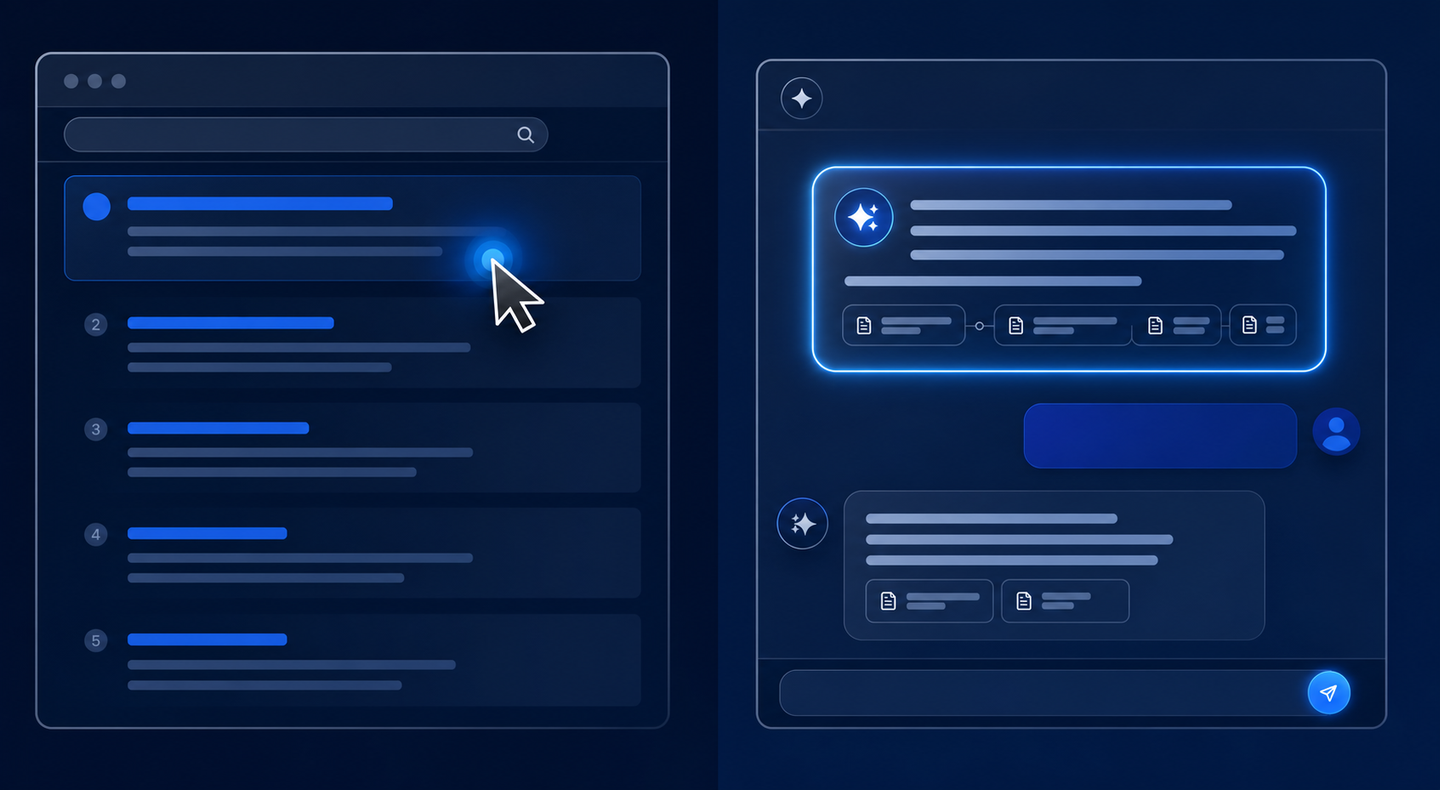
SEO chases the position that earns a click. AEO chases the citation that happens whether anyone clicks or not. That distinction is the whole game.
To get picked: answer one question cleanly in a self-contained chunk with the entity named inside it. FAQs and comparison tables get cited more often than narrative prose. Schema markup is the entry ticket. Without it, a page gets skipped before its content is even weighed.
What Is GEO
The difference between GEO and SEO is worth unpacking: GEO looks at how AI systems understand, synthesize, and represent your brand across their generated responses. Wider than a single citation. GEO cares whether the model pulls your framing, product, and context into the answer it writes, even when it never links you directly.
Princeton researchers formally introduced the term in 2023.
AEO and GEO overlap, but the distinction holds:
- AEO wins a citation slot inside a direct answer.
- GEO earns inclusion across the broader synthesis the model produces.
One gets you named. The other gets you woven in. Following best GEO practices is how you earn the second kind of inclusion.
AEO vs SEO: 5 Key Differences
Five dimensions separate them. Get these straight and the rest falls into place.
| Dimension | SEO | AEO |
|---|---|---|
| Goal | Rank high enough to earn the click | Get cited as the source in an AI answer |
| Content format | Long-form depth around a topic | Passage-level chunks that resolve one question |
| Success metric | Click-through rate, impressions, position | Citation share against competitors |
| Search surface | Google and Bing results | ChatGPT, AI Overviews, Perplexity, Gemini, Claude |
| Query type | Keyword searches | Conversational, full-sentence questions |
The goal split is where most people get turned around. SEO wants the click. AEO wants the mention, and it counts whether anyone clicks or not. That's a fundamentally different scoreboard, which is why optimizing for one while ignoring the other leaves half your search footprint dark.
The content format difference follows from that. Ranking rewards depth: long-form coverage of a topic that signals expertise. Citation rewards a clean, self-contained passage the model can lift without needing anything around it.
SEO vs AEO vs GEO: How They Compare
Line them up and the layers stack. SEO earns the ranked position. AEO earns the cited passage. GEO earns how the model describes you across its whole answer. Same work feeds all three, since AI engines run a web search before they generate, and strong rankings put you in the retrieval pool AEO and GEO draw from.
A few more acronyms you'll see:
- LLMO: LLM optimization, another label for the same AEO work.
- AIO: AI optimization, used loosely for AEO and GEO together.
The industry hasn't settled on names. The mechanics barely change.
Why AI Search Is Reshaping the SEO Playbook
Gartner projected traditional search volume would drop 25% by 2026 as chatbots absorb the answer role. That's not a rounding error. It's a structural shift in how people get information.
And people aren't simply going to ChatGPT instead of Google. Even when they stay on Google, 59.7% of U.S. searches now end without a click, jumping to 83% on queries that trigger an AI Overview. The answer is on the page. The visit never happens.
When there are fewer clicks to win, the citation matters more than the ranking. That's the shift.
Where SEO Still Holds the Advantage
Traditional search still owns the moments where a click is the point. Someone types "buy," "pricing," or "near me," they want to land on a page and act. AI won't complete a checkout or book a demo for them.
A few places where ranking beats citation:
- Transactional and local queries, where the click is the conversion.
- Bottom-of-funnel landing pages, where a visit closes the deal.
- Long-form content that builds domain authority over time, which feeds your retrieval pool.
AEO hasn't killed any of this. It sits on top of it.
How to Implement AEO
Five moves drive citations. I'll walk through each.
- Write at the passage level. Self-contained blocks of roughly 130 to 170 words, each resolving one question with the entity named inside. Getting cited in ChatGPT responses starts here. Everything else is secondary.
- Lead with the answer. First sentence delivers it, then elaborate. Skip the throat-clearing. AI systems don't scroll down to find your thesis.
- Use structured formats. FAQ sections, comparison tables, and checklists get pulled more often than narrative paragraphs. Structure is a signal, not merely a style choice.
- Add schema markup. FAQPage, HowTo, Article, Organization. Without it, a page gets deprioritized before its content quality is even considered. Schema is the entry ticket.
- Target conversational long-tail queries. Around 15% of daily Google searches are brand new, many of them full-sentence questions that AI engines field directly. Mine them.
Measuring AEO vs SEO Success
The two run on separate scoreboards.
SEO lives in Google Analytics and Search Console: clicks, impressions, average position, click-through rate.
AEO gets measured differently:
- Citation share, your mentions against competitors across ChatGPT, Gemini, AI Overviews, Perplexity, and Claude.
- Featured snippet capture and AI Overview visibility.
- Zero-click engagement, counted as a win.
Tradeoffs of AEO vs SEO
The tradeoffs are real, so weigh them before you commit budget.
- AEO can cut click volume short term. A direct answer removes the reason to visit your site.
- AEO is harder to measure. AI citation signals stay murkier than Google's ranking factors. The right AEO tools close that gap considerably.
- Formats clash. Passage-length blocks pull against the long-form depth SEO rewards, which stretches thin teams.
Does AEO Replace SEO
No. AEO runs on top of SEO, not instead of it.
The citation depends on the same infrastructure the ranking does: crawlability, domain authority, clean indexing. An AI engine that can't find or trust your site won't cite it. Doesn't matter how tidy the passage is. I've seen it happen to sites that got the content structure right and the technical foundation wrong. They built AEO on sand.
Same foundation, mutual reinforcement. The "vs." framing is a false choice.
How to Build a Unified SEO + AEO Strategy
One strategy, built in layers. Get the order right and neither half fights the other. Get it wrong and you're doing twice the work for half the result.

- Fix technical SEO first. Crawlability, site speed, clean indexing, canonicals. Nothing gets cited or ranked if engines can't read the site. This isn't optional groundwork. It's the prerequisite for everything that follows.
- Layer AEO on top. Passage-level answers, structured formats, schema markup, conversational query targeting. Don't start here. The foundation has to hold first.
- Mine zero-volume queries. Search Console strings with one or two impressions (often over ten words long) signal the exact questions AI engines are fielding directly. Understanding LLM visibility and AI search rankings helps you interpret what you find. Win enough of them in aggregate and your citation share compounds.
- Measure both scoreboards side by side. Rankings and clicks for SEO, citation share for AEO. Run them separately and you're flying half-blind.
Track them together and you see your full search footprint, not half of it.
How Maintouch Unifies SEO and AEO in One System
I built Maintouch on a simple premise: running SEO and AEO as two workflows is broken. AI chatbots run a web search before answering, so strong SEO feeds your AEO directly. One data foundation, one pipeline.
In practice:
- AI visibility tracking across all five engines: ChatGPT, Google Gemini, Google AI Overviews, Perplexity, and Claude.
- Automated schema generation plus drift monitoring, so structured data never falls out of sync.
- Passage-level optimization built for citation extraction.
- Zero-volume query discovery, surfacing the exact questions AI engines field.
Cited brands earn roughly 120% more organic clicks per impression. The right AI visibility trackers let you prove it. One roof captures that.
Start free at maintouch.com/free: 35 prompts, five engines, one year, no card.
Final Thoughts on SEO, AEO, and GEO
AEO doesn't kill SEO. It stacks on top of it. I've watched teams split their focus, treat these as competing priorities, and end up doing both poorly: worse rankings and worse citation share than teams that built the foundation first and layered AEO on top of it. Fix the technical base, layer in structured content for AI, measure both scoreboards. That's the whole playbook. If you want to talk through what it looks like on your stack, shoot me a message at [email protected].
FAQ
What's the difference between AEO, GEO, and SEO, and do I actually need all three?
SEO earns ranked positions in Google. AEO earns citation slots in AI-generated answers. GEO earns how the model describes your brand across its full response, including whether you're named and whether your framing is woven into the answer. In practice, the same foundation drives all three: AI engines run a web search before generating, so strong SEO feeds AEO and GEO directly. Fix the technical layer first, layer structured formats and schema on top, and all three move together.
Should I focus AEO over SEO if 59.7% of searches end without a click?
Don't drop SEO. Shift how you measure success. A zero-click search on an informational query is a win if you're the cited source. You answered the question, you got the mention. But transactional queries (pricing pages, demo CTAs, local intent) still convert through the click. AI isn't booking demos. Run both scoreboards simultaneously: rankings and CTR for SEO, citation share across ChatGPT, Gemini, Perplexity, and Claude for AEO.
How do I do AEO in practice? Where do I actually start?
Start with passage-level writing: self-contained blocks of 130 to 170 words, one question resolved per block, entity named inside. Add schema markup (FAQPage, HowTo, Article, Organization) before anything else. Without it, a page gets skipped before content quality is weighed. Then mine your Search Console for zero-volume queries with one or two impressions; those long, full-sentence strings are exactly what AI engines are fielding, and matching intent across many of them is how you build citation share in aggregate.
SEO vs AEO vs GEO: does Maintouch handle all three in one system, or do I need separate tools like Semrush and AthenaHQ?
Maintouch runs SEO and AEO on the same data foundation and execution pipeline: strategy, content, technical fixes, backlinks, citation tracking across all five AI engines. Semrush and Ahrefs surface AI visibility data but can't push fixes to your CMS or act on what they find. They hand you a report and leave the work to you. AthenaHQ tracks citations but doesn't generate content or build backlinks. The structural difference is execution. Maintouch closes the loop. The others open a new one.
What does AEO stand for in marketing, and why is "GEO is the new SEO" framing misleading?
AEO stands for Answer Engine Optimization: structuring content so AI systems like ChatGPT, Perplexity, and Google AI Overviews pull your passage and cite it directly. The "GEO is the new SEO" framing is misleading because it implies replacement. AEO and GEO run on top of SEO, not instead of it. Citation depends on the same crawlability, domain authority, and clean indexing that rankings do. The "vs." framing is a false choice.
Does schema markup actually matter for AI citations, or is it just a technical nice-to-have?
Schema markup is a binary qualifier, not a bonus. Without it, a page gets deprioritized before its content quality is even assessed by AI retrieval systems. FAQPage, HowTo, Article, and Organization are the types that carry the most weight. Think of schema as the entry ticket. The content itself only gets judged after you've already cleared that gate.
How often do I need to update content to keep getting cited in AI answers?
Content updated in the last 90 days gets cited far more often than stale pages. AI engines weight recency as a signal, the same way Google does for freshness-sensitive queries. A page that was strong six months ago and hasn't been touched is actively losing ground to competitors who are refreshing theirs. Set a 90-day refresh cycle as a baseline, then focus on pages where your citation share is slipping.
What's the difference between citation share and search ranking, and which one should I care about more?
They're measuring different games. Search ranking tells you where you appear in a list of ten blue links. Citation share tells you whether AI engines are naming you as a source in their generated answers, and that happens whether or not anyone clicks through. Neither replaces the other. Run both scoreboards simultaneously: rankings and click-through rate for SEO, citation share across ChatGPT, Gemini, Perplexity, and Claude for AEO.
Can small or newer sites compete in AEO, or does domain authority lock them out?
Domain authority matters, but it's not the only gate. Passage-level precision matters just as much. A newer site with tight, self-contained 130 to 170 word answers and clean schema can get cited on specific long-tail questions where incumbent sites have thin or poorly structured content. The realistic path for newer sites is narrowing the scope: target very specific conversational questions AI engines are fielding, win citations there, and build authority in parallel through backlinks. Trying to compete broadly before you have authority built is the common mistake.
Is GEO something my team needs to execute separately, or does it come out of the same work as SEO and AEO?
The same work feeds all three. AI engines run a web search before generating answers, so strong SEO puts you in the retrieval pool AEO and GEO draw from. You're not running three separate workflows. You're building one foundation (technical SEO, domain authority, crawlability) and layering structured content formats on top. GEO (how the model frames your brand across its whole answer) follows naturally when your passage-level content is tight and your entity signals are consistent.
What are zero-volume queries, and why do they matter for AEO?
Zero-volume queries are search strings showing one or two impressions in Search Console, so low that standard keyword tools ignore them entirely. They matter for AEO because they signal the exact full-sentence questions AI engines are fielding directly. Users ask ChatGPT or Perplexity things they'd never type into Google as a two-word keyword, those conversations show up as zero-volume strings in your GSC data. Mining them gives you a direct map of what AI tools are answering on your topic, and building passage-level content around them is how you earn citation share in aggregate.
Turn search into your best growth channel.
Maintouch tracks your visibility across AI and Google, creates and refreshes content, and gets your brand mentioned on the sites that shape discovery.
Book a demoRelated reading
All posts