
SEO Platform vs. SEO Agency: Which Is Right for Your Startup in 2026?

By Bennett Cohen
Get Maintouch
Turn search and AI visibility work into a repeatable growth system.
The SEO software vs SEO agency question shows up the moment you decide search matters for your startup. A few hundred dollars a month buys software that surfaces the work. A few thousand buys people who do it. The difference goes beyond price. It's speed, control, and how you scale output without adding headcount.
I've been doing SEO for over a decade, and Maintouch serves hundreds of marketers. My goal: you walk away knowing which model fits where you are right now, and where the hybrid setup beats both.
TLDR:
- SEO agencies cost $2,500-$5,000/month for full-service work; software runs $100-$500/month.
- Software fits tight budgets and product-led growth; agencies win in compliance-heavy sectors like finance, health, and legal.
- A hybrid model works best: software handles volume work, a strategist takes high-stakes calls.
- Maintouch combines both: agents run content and technical fixes while a strategist guides direction.
What Is an SEO Agency?
An SEO agency is an outside firm you pay to run your search marketing. You hand over your site, your goals, and a monthly retainer, and a team does the work for you. The model is built around people. An account manager coordinates, then farms tasks out to specialists.
What you typically get:
- Keyword and content strategy tied to your goals
- Blog posts and on-page copy
- Technical audits and fixes
- Backlink outreach
- Monthly reporting
You're trading money and control for not having to learn SEO yourself.
What Is an SEO Tool?
An SEO tool is software for search work: keyword research, technical audits, content analysis, rank tracking, reporting. Most tools stop at surfacing data. A newer breed runs the work itself. Instead of flagging a missing meta tag, it writes one and pushes it live.
That gap is what decides whether software can stand in for an agency or only feed one.
Key Differences Between SEO Platforms and Agencies
The differences come down to execution, speed, and how costs scale as you grow.
| Dimension | SEO software | SEO agency |
|---|---|---|
| Execution | Software runs the work, you approve it | People run the work for you |
| Speed | Ships in hours or days | Tied to retainer cycles |
| Pricing | Flat subscription | Monthly retainer, often with scope creep |
| Scalability | Output grows without new headcount | More volume means a bigger retainer |
Software puts you in the driver's seat. An agency takes the wheel. Less day-to-day work, less visibility into what's happening.
Two more gaps matter once you've been running either model for a while:
- Customization: with software you set the rules, templates, and brand voice once and every output follows them. An agency learns your business over weeks, and that knowledge walks out the door if you switch firms.
- Team composition: an agency stacks external specialists you never meet. Software keeps the work in-house, run by whoever on your side approves it.
Cost Comparison: What Startups Actually Pay
Full-service agency retainers in 2026 generally land between $2,500 and $5,000 per month, in line with reported ranges from agency directories like Clutch and industry surveys. Some shops charge less, some a lot more depending on scope.
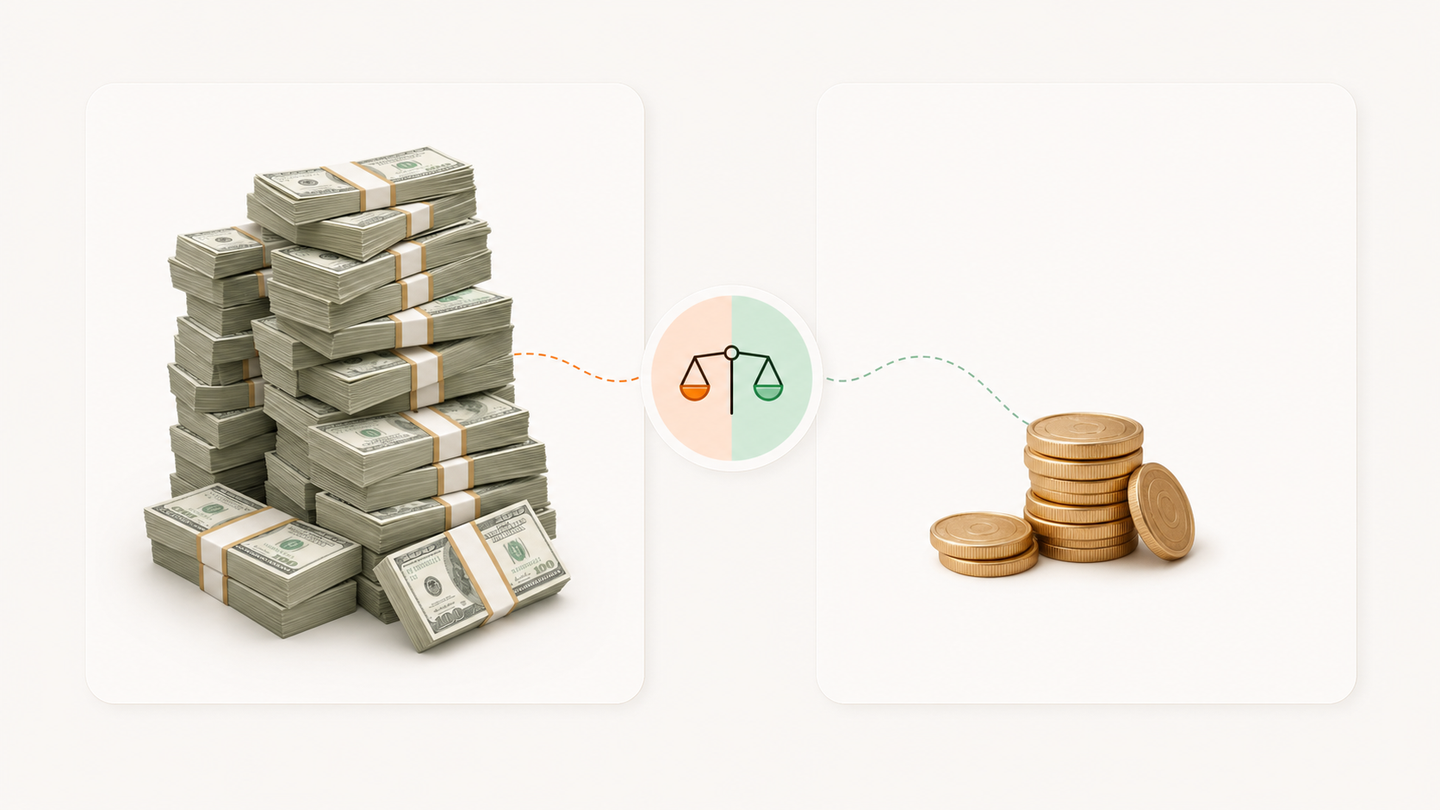
Software costs a fraction. Mainstream tools sit in the $100 to $500 per month range — Ahrefs starts around $129, Semrush around $140, and execution-focused platforms like Maintouch sit near the top of that band.
Read the sticker prices carefully. The cheaper number buys a tool that surfaces work. The retainer buys people who execute it, and that retainer only covers strategy and reporting. Content volume, premium backlinks, and consulting usually bill on top.
When SEO Platforms Make Sense for Startups
Software wins when you're moving fast with a small team and tight budget. It fits when:
- You're spending under $2,000 a month on search and can't afford a retainer.
- Your team is lean, and nobody can babysit an agency relationship.
- You're running product-led growth and shipping content weekly.
- You want to scale output without adding headcount.
- You'd rather keep control over what goes live.
If that's you, software does the work an agency would bill you for. You're closer to the output, you control the timeline, and you're not waiting on an account manager to action a request you could handle in ten minutes.
When Agencies Remain the Better Choice
Software falls short when the work demands deep human judgment or relationships you can't automate. An agency earns its retainer when:
- You're in a compliance-heavy sector (finance, health, legal) where every claim needs expert review and sign-off.
- You're fighting for high-stakes keywords in a brutally competitive market where a generalist approach loses.
- You need strategic consulting (positioning, a full migration) that goes beyond shipping content.
- Your industry is technical enough that an outsider has to learn it before writing credibly.
- You need integrated campaigns where SEO, PR, content, and brand work move together under one roof.
- You're selling into a long, multi-stakeholder B2B buyer journey where a strategist who lives in your market reads the buyer better than any automated workflow.
When the cost of getting it wrong is high, pay for people who own the outcome.
The Hybrid Approach: Combining Tools and Expert Support
Most startups don't have to pick a side. Think of it as a spending dial. Early on, when cash is tight, software carries the routine execution. As budget loosens, you layer in human help only where it earns its keep.

The split:
- Software handles the recurring volume: content drafts, technical fixes pushed to your CMS, on-page cleanup, backlink outreach, keyword research, rank tracking, reporting.
- A strategist takes the rare, high-stakes calls a tool shouldn't make alone: positioning, migration planning, sign-off in compliance-heavy sectors, penalty recovery, deep competitive analysis.
You're paying retainer money for a few hours of expertise instead of a full-service team. Agency-grade direction without the agency-grade invoice.
How Maintouch Replaces Your SEO Agency
The hybrid setup I just described is what we built Maintouch to be. Software that executes the work an agency would, with a human on strategy.
Division of labor:
- Background agents handle the work: content, technical fixes pushed to your CMS, backlink outreach, on-page optimization, reporting.
- A dedicated strategist guides direction through a standing meeting, steering what the agents run next.
What separates our content from generic AI output is what feeds it.
Maintouch pulls from four data categories before writing a word:
- Knowledge: your API docs, Notion, Confluence, brand guidelines, custom context you upload.
- Customer signals: HubSpot, Salesforce, Attio, sales call recording tools (Read.ai, Grain, Circleback, Gong, Granola), support tools that capture the exact language buyers use.
- Competitor signals: Reddit, G2, Capterra, Meta, LinkedIn showing how your market talks.
- Performance data: Google, ChatGPT, Claude, Semrush, Ahrefs, PostHog, GA4, Google Ads.
That first-party foundation produces content with information found nowhere else.
Maintouch finds the work worth doing, stack ranks it by impact, and executes once you approve.
That's why it fits SaaS startups, dev tools companies, venture-backed teams. Agency-level output without the retainer or the headcount.
Final Thoughts on the Agency vs Tool Decision
Most growing teams end up using both. Software handles the repeatable stuff. A strategist steps in when judgment matters. The split you choose comes down to budget and how much control you want over what ships.
I hope this was useful. If you want to see what a hybrid setup looks like in practice, shoot me a message and I'll walk you through how agents and strategy work together.
FAQ
SEO software vs SEO agency for a team of 3?
Software. At that size you can't afford a $3,000+ retainer, and nobody's free to manage an agency relationship. Pick a tool that executes the work instead of just surfacing data.
Can I use SEO software without hiring a full-time SEO person?
Yes, if the tool does the work instead of just surfacing it. Most platforms flag issues and stop there. Tools like Maintouch write content, fix technical problems, push changes live. You just approve what ships.
What does an SEO agency actually deliver each month?
Keyword strategy, blog posts, technical fixes, backlink outreach, and reporting. You're paying for people to coordinate specialists and execute the work, which is why retainers scale with volume instead of staying flat.
How long does it take to see results from SEO software?
Most tools surface insights immediately, but execution speed depends on whether the software does the work or you do. If it's just data, figure weeks to months depending on your team's bandwidth. If it ships content and fixes automatically, days.
What's the real cost difference between an agency and software over a year?
A typical mid-market agency retainer at $3,500/month runs $42,000 a year. Execution-focused software like Maintouch at roughly $499/month works out to about $5,988. That gap — close to $36,000 — buys a lot of control and speed if you're willing to stay hands-on.
Can SEO software handle technical fixes, or just content?
Depends on the tool. Most platforms flag technical issues and stop there. A smaller set writes the fixes and pushes them to your CMS automatically. That's the difference between a reporting tool and an execution system.
Do I need to know SEO to use SEO software effectively?
Not if the software does the work instead of just surfacing it. Tools that execute (write content, fix technical problems, procure backlinks) don't require you to be an SEO expert. You just approve what ships. Data-only tools assume you know what to do with the insights.
How do agencies scale content volume compared to software?
Agencies scale by adding writers and raising your retainer. Software scales without new headcount. You set the rules once, output grows at the same monthly price. That's why software wins for product-led growth teams shipping content weekly.
What happens if I outgrow my SEO software?
You layer in human expertise where it earns its keep — a strategist for high-stakes calls, a consultant for complex migrations, or an agency for integrated campaigns. Software handles the volume work, people handle the judgment calls. That's the hybrid model most startups land on.
Can I switch from an agency to software mid-contract?
Most agency contracts run month-to-month after an initial commitment period. Read your agreement for notice requirements — typically 30 days.
The harder part is knowledge transfer. Pull deliverables, keyword lists, and strategy docs before you leave so you're not starting from scratch.
How do I know if my startup is ready for an SEO agency?
You're ready when you're spending $5,000+ monthly on search, have someone internal who can manage the relationship, and need deep human judgment your team can't provide.
If you're under $2,000/month and nobody has 5+ hours a week to babysit an agency, stick with software.
Turn search into your best growth channel.
Maintouch tracks your visibility across AI and Google, creates and refreshes content, and gets your brand mentioned on the sites that shape discovery.
Book a demoRelated reading
All posts