
How Good Is Claude Mythos at Writing? September 2026

By Bennett Cohen
Get Maintouch
Turn search and AI visibility work into a repeatable growth system.
Claude Mythos launched as Anthropic's frontier reasoning model, targeting security and scientific research. But access is locked down: Mythos runs exclusively through Project Glasswing, capped at 150 organizations with no public API. Writers aren't in that pool.
Claude Fable 5 is the public-access version. Same 1M context window, same 128k output capacity, priced at $10 input and $50 output. That's where your workflow lives.
I'll walk through the writing benchmarks that matter and what Fable 5 brings to long-form content.
TLDR:
- Claude Mythos 5 ships with a 1M token context window and 128k output ceiling, but access stays locked behind Project Glasswing for critical infrastructure orgs.
- Claude Fable 5 gives you the same Mythos-class model at $10 input and $50 output per million tokens through standard Claude subscriptions.
- For long-form writing past 5,000 words, Claude holds structure better than ChatGPT, with benchmark jumps on multimodal (59.0% vs 27.1%) and technical accuracy (77.8% vs 53.4% on SWE-bench Pro).
- The 1M token context means you can drop entire research folders and past drafts into one prompt without the model losing consistency across paragraph 40.
- Maintouch runs on Claude Opus 4.8 to handle keyword research, content gap analysis, and draft creation through conversational commands, executing SEO work autonomously instead of just reporting what needs doing.
What Claude Mythos Is and How It Differs From Standard Claude Models
Anthropic announced Claude Mythos in April 2026. The name throws people off because it skips the Opus, Sonnet, Haiku naming you already know. Mythos is a separate model tier, not a point release.
Claude Mythos Preview performs strongly across the board, with a particular edge on computer security tasks. The full release, Claude Mythos 5, is Anthropic's most capable model for cybersecurity and biology research per Anthropic's official documentation.
That framing matters. Mythos exists as its own tier because Anthropic is targeting frontier reasoning in security and scientific domains, not bumping a version number in AI-powered content creation.
On raw specs, Mythos 5 ships with a 1M token context window and up to 128k output tokens per request, the same baseline it shares with Claude Fable 5.
Claude Mythos Writing Performance: Benchmarks That Actually Matter for Content Creation
Benchmarks rarely map cleanly to writing, so let me translate the ones that do.
Mythos scores 93.9% on SWE-bench Verified, the highest publicly documented score per Anthropic's Mythos technical report. That matters the moment you ask it to write or audit code documentation. On SWE-bench Pro, Mythos Preview hits 77.8% against Opus 4.6's 53.4% in the same report, a real jump in agentic coding that shows up when content involves technical accuracy.
Multimodal is the other one worth watching. Anthropic's internal evals released alongside the April 2026 Mythos announcement put Mythos Preview at 59.0% versus Opus 4.6's 27.1%. It reads charts, screenshots, and diagrams far better when you feed them in.
| Benchmark | Mythos | Opus 4.6 |
|---|---|---|
| SWE-bench Verified | 93.9% | - |
| SWE-bench Pro | 77.8% | 53.4% |
| Multimodal (internal) | 59.0% | 27.1% |
Stronger reasoning carries over to holding a long article's structure together. That's the part you actually feel in the draft, especially when you're worried about whether Google penalizes AI content.
Context Window and Output Capacity for Long-Form Content
A million tokens lands at roughly 750,000 words of input. Drop an entire research folder, a competitor's full site export, and three past drafts into one prompt. The model still tracks what you said at the top.

That matters most for consistency. When you draft a 6,000-word pillar piece, the model holds your terminology, your claims, and your section logic across the whole thing. Paragraph 40 doesn't contradict paragraph 4.
Book-length work behaves the same way. Feed it eight chapters and it remembers a character's arc instead of drifting.
The 128k output ceiling is the other half. A single request returns up to 96,000 words. You get a long draft in one pass instead of stitching together five truncated responses.
Access Restrictions and Pricing: Who Can Actually Use Mythos for Writing
Here's the part that matters before you plan a workflow around any of this: you probably can't touch Mythos directly.
Claude Mythos Preview runs only through Project Glasswing, limited to 12 founding partners and roughly 40 vetted critical-infrastructure organizations. No public API, no claude.ai, no Pro, Max, Team, or Enterprise plan includes it.
Access has opened slightly. On June 2, Anthropic expanded the cybersecurity model to 150 organizations across more than 15 countries. Writers still aren't the target.
On pricing, Mythos Preview runs $25 per million input tokens and $125 per million output, though writing with agents instead of after them changes the cost equation. The full Mythos 5 release drops to $10 and $50, in line with Anthropic's published API pricing.
The workaround is Claude Fable 5. Publicly available, priced identically at $10 and $50, and shares the same specs as Mythos 5. For writing, that's the model you'll actually use.
Claude vs ChatGPT for Writing: Where Mythos-Class Models Excel
Where Claude pulls ahead is prose. Across long-form work, subtle tone, and layered style instructions, Claude writes more naturally and hedges less than GPT-4o. In our experience working with hundreds of marketers on Maintouch, that's the model professional writers tend to reach for once quality past a few hundred words is on the line.
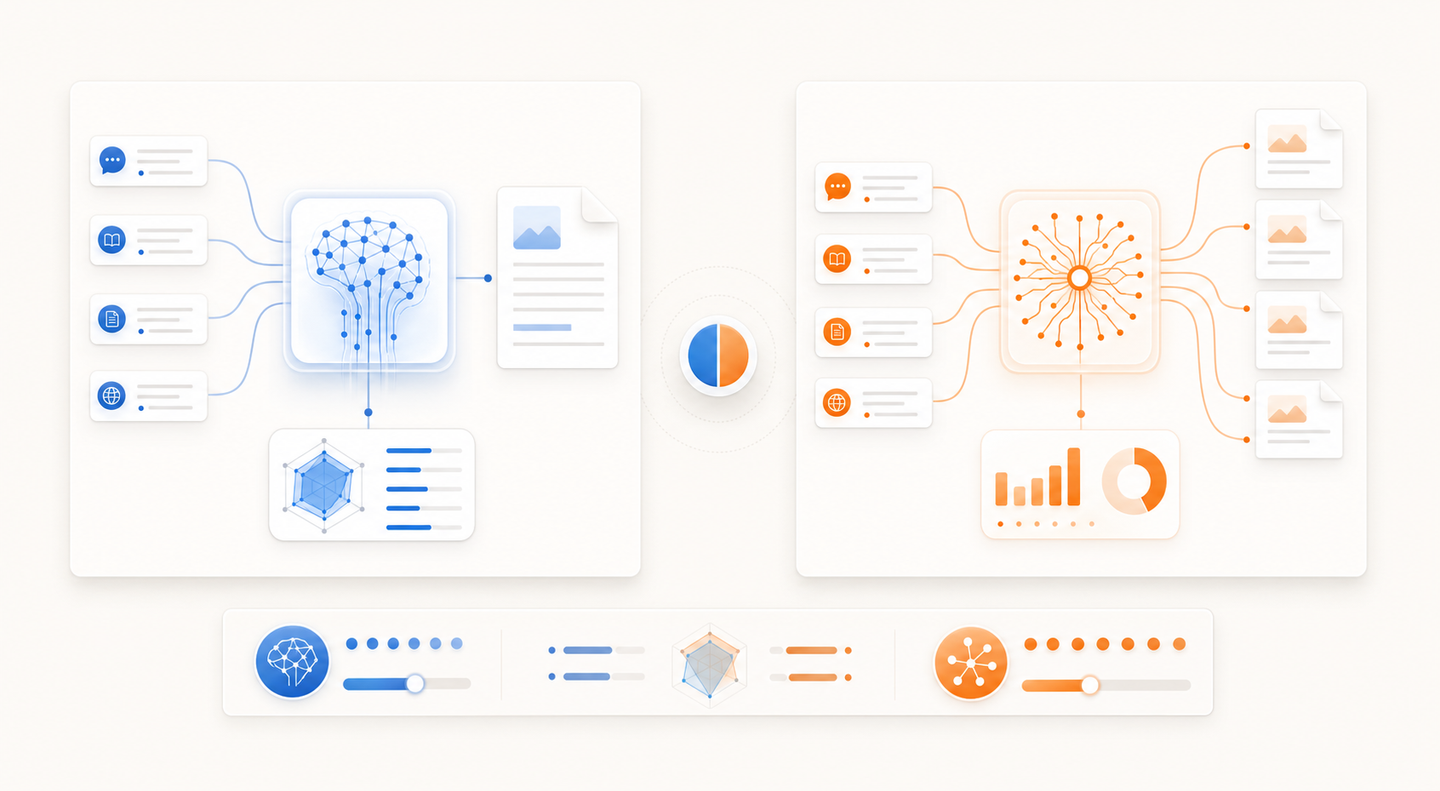
ChatGPT still wins on breadth. Image generation, voice, web browsing, a bigger app ecosystem. If you want one tool that does a bit of everything, that's its lane.
Claude's strength is depth. More natural writing style, agentic coding, and analytical approach. It's the pick for developers, writers, and analysts who need a model that holds a thought instead of skimming the surface.
Mythos-class models inherit all of that and add the reasoning headroom to keep a 5,000-word draft coherent. That's what ChatGPT struggles with at length.
What Claude Fable 5 Means for Everyday Content Teams
On June 9, Anthropic released Claude Mythos 5 as a preview through Project Glasswing and shipped Fable 5 alongside it. Same model, extended safeguards. Fable 5 is the version you can actually reach.
It's Anthropic's most capable widely released model, built for demanding reasoning and long-horizon agentic work. Mythos 5 carries the same capabilities but stays locked behind Project Glasswing.
For a content team, that distinction is academic. You get the Mythos-class engine through standard Claude subscriptions. Same $10 and $50 token pricing, no waitlist.
The one real difference is the guardrails. Fable 5 includes safety classifiers that can decline certain requests. Mythos 5 ships without them. For writing and SEO work, you'll rarely hit a classifier, so the tradeoff costs you almost nothing in practice.
Using Maintouch for SEO Content at Scale With Claude-Powered Workflows
Models like these only matter once something runs them on your behalf. That's where Maintouch comes in.
I've been doing SEO for over a decade, and Maintouch serves hundreds of marketers. I built it to replace your SEO agency with one system that handles strategy, content, technical SEO, backlinks, and citation tracking automatically. It runs on Claude Opus 4.8 as the base model for strategy, research, and content optimization.
The General Agent handles keyword research, content gap analysis, and draft creation through conversational commands, covering the full pipeline from discovery to AI citations. The agentic document editor lets you refine drafts in plain language, adding sections or running optimization without leaving the page.
Background agents execute the queued work continuously. Content creation, technical fixes, on-page cleanup.
You spend 15 to 20 minutes a week steering. The agents write; the system ships.
Final Thoughts on Using Claude Mythos for Content Work
Fable 5 gives you Mythos-class reasoning without the waitlist. For writing work, that's all you need.
The million-token context means you can load an entire brief, three competitor articles, and your brand guidelines into one prompt and get a draft that actually follows all of it. The technical accuracy is better than GPT-4o. The prose reads more naturally. The reasoning holds across long documents instead of wandering off halfway through.
If your content operation runs on quality over volume, Claude is the model.
Maintouch replaces your SEO agency by executing the full content and link-building operation autonomously, if you'd rather skip the prompt layer and let the system execute.
Frequently Asked Questions
Is Claude Mythos good for writing compared to standard Claude models?
Claude Mythos performs strongly on technical accuracy and multimodal comprehension, scoring 59.0% on internal multimodal evals versus Opus 4.6's 27.1%. For long-form content, the 1M token context window holds article structure and terminology across 6,000+ word drafts without drift. That matters more than raw benchmark scores for content teams.
Claude Mythos vs ChatGPT for long-form content?
Claude writes more naturally and hedges less than GPT-4o across long-form work. For anything past a few hundred words where quality matters, it's the better pick. ChatGPT wins on breadth: image generation, voice, web browsing. Claude excels at depth and holding coherent structure across extended drafts.
Can I actually use Claude Mythos for writing without Project Glasswing access?
No. Claude Mythos Preview runs only through Project Glasswing, limited to vetted critical-infrastructure organizations. No public API access.
The workaround is Claude Fable 5: publicly available, identically priced at $10 input and $50 output per million tokens, and shares the same 1M context window and 128k output specs as Mythos 5.
How does the 1M token context window improve content creation workflows?
A million tokens holds roughly 750,000 words of input. Drop entire research folders, competitor site exports, and past drafts into one prompt, and the model tracks everything.
For a 6,000-word pillar piece, paragraph 40 doesn't contradict paragraph 4. The model holds your terminology and claims across the whole draft.
What does Maintouch use Claude for in its content workflows?
The General Agent defaults to Claude Opus 4.8 as the base model for strategy, research, and content optimization. That covers keyword research, content gap analysis, backlink strategy, and draft creation through natural language commands.
Background agents execute the queued work continuously, and the agentic document editor lets you refine drafts in plain language without leaving the page.
What's the real difference between Claude Mythos 5 and Claude Fable 5?
Same model, different guardrails. Fable 5 includes safety classifiers that can decline certain requests. Mythos 5 ships without them for critical infrastructure use cases.
For writing and SEO work, you'll rarely hit a classifier. The practical difference is access: Fable 5 is publicly available through standard Claude subscriptions, Mythos 5 requires Project Glasswing approval.
How much does it cost to run Claude Fable 5 for long-form content?
Claude Fable 5 runs $10 per million input tokens and $50 per million output tokens.
A typical 3,000-word draft with a loaded context window (competitor research, brand guidelines, past articles) might cost $0.50 to $2.00 per piece depending on how much input you feed in and how many iterations you run.
Can I use Claude Mythos directly through the Claude.ai interface?
No. Claude Mythos Preview and Mythos 5 run exclusively through Project Glasswing, limited to roughly 150 vetted critical-infrastructure organizations as of June 2026. There's no public API, no claude.ai access, and no Pro, Team, or Enterprise plan that includes it.
Writers and content teams should use Claude Fable 5 instead. Same 1M context window, same 128k output ceiling, same $10 input and $50 output per million tokens. It's available through standard Claude Pro, Max, Team, and Enterprise subscriptions, plus the public API. The only practical difference is that Fable 5 ships with safety classifiers Mythos doesn't, which writing and SEO work almost never trips.
Does the 1M token context window apply to both Mythos and Fable?
Yes. Both Claude Mythos 5 and Claude Fable 5 ship with a 1M token context window and 128k output ceiling by default.
That's roughly 750,000 words of input capacity. Drop entire research folders, competitor content, and past drafts into one prompt without the model losing coherence.
Is Claude Fable 5 better than GPT-4o for SEO content?
Claude writes more naturally and holds structure better across long-form content. For anything past a few hundred words where quality matters, it's the stronger pick.
GPT-4o wins on breadth with built-in image generation and web browsing. But Claude's prose, technical accuracy (77.8% vs 53.4% on SWE-bench Pro), and reasoning depth make it the model most writers reach for.
Will Claude Mythos eventually become publicly available?
Unknown. Anthropic designed Mythos for frontier reasoning in security and scientific domains through Project Glasswing. Access remains locked to vetted organizations.
Fable 5 is the public release with the same capabilities. For content work, there's no reason to wait for Mythos access that may never open.
Can I feed screenshots and diagrams into Claude for content research?
Yes. Claude Mythos Preview scores 59.0% on internal multimodal evals versus Opus 4.6's 27.1%. It reads charts, screenshots, and diagrams far better when you feed them in.
Fable 5 shares the same multimodal capabilities. Drop competitor landing pages, data visualizations, or product screenshots directly into your prompt for content analysis.
How does Claude handle technical documentation and code examples in blog posts?
Claude Mythos hits 93.9% on SWE-bench Verified, ahead of any publicly documented model. That shows up when writing or auditing code documentation.
For technical content involving API references, SDK examples, or developer guides, Claude maintains accuracy across complex code blocks and explains technical concepts more reliably than GPT-4o.
Turn search into your best growth channel.
Maintouch tracks your visibility across AI and Google, creates and refreshes content, and gets your brand mentioned on the sites that shape discovery.
Book a demoRelated reading
All posts