
7 Best GEO Tools That Actually Execute [September 2026 Update]

By Bennett Cohen
Get Maintouch
Turn search and AI visibility work into a repeatable growth system.
The GEO tool category is full of dashboards that are very good at finding problems and very bad at fixing them. You log in, you get a score, maybe a color (red is bad, green is good, orange is... vibes), and then you close the tab feeling vaguely informed. Six weeks later your site still isn't getting cited in AI answers, but at least you have a score. Knowing about the gap isn't the fix. Closing it is. Every tool in this ranking gets judged on execution depth, not feature count, so you can figure out which one actually moves the needle for your situation.
TLDR:
- GEO works at the passage and schema level: it decides whether an AI engine cites your site, or only ranks it
- Most GEO tools score and recommend, then hand the work back to you; the gap between insight and execution is where citations get lost
- Surfer SEO, Clearscope, Semrush, Frase, Profound, and Peec AI each solve one part of the problem (scoring, tracking, or reporting) but none close the full loop
- Backlink procurement and CMS push are the two capabilities absent from every tool in this list except one
- Maintouch tracks 1,000+ concurrent prompts across ChatGPT, Gemini, Google AI Overviews, Perplexity, and Claude, with a free tier covering all five engines for a full year
What Are GEO Tools?
GEO (generative engine optimization) is the practice of structuring your content and schema so AI systems pull your words directly into their answers. Ask ChatGPT, Perplexity, or Google AI Overviews a question and they assemble a response from passages extracted off the open web through a process known as retrieval-augmented generation. GEO is about whether one of those passages comes from your site.
It's easy to conflate GEO with AEO, so let me draw the line. AEO covers whether you show up across AI answer engines at all: domain authority, citation share, presence in the retrieval set. GEO is the execution layer underneath — it works at the passage and schema level, deciding which specific text gets extracted and surfaced inside a generated answer.
AEO is the scoreboard. GEO is the plays that move it.
How We Ranked These GEO Tools
Every tool here gets judged against one question: does it execute the work, or just tell you what to do? That axis matters more than how many features a tool ships. A dashboard that flags fifty problems and fixes none of them loses to a system that fixes ten.
Five criteria shaped the ranking:
- Execution depth. Can the tool push changes to a live CMS, or does it stop at recommendations you hand to a developer?
- AI engine coverage across ChatGPT, Gemini, Google AI Overviews, Perplexity, and Claude.
- Passage-level and schema optimization, the layer that decides citations.
- Backlink procurement, since retrieval systems weight authority signals when picking what to surface.
- A human strategy layer to steer the automation.
For tools focused on the broader visibility layer, see our best AEO tools ranking.
These rankings draw from public features and documented limitations. Nobody paid for placement.
Best Overall GEO Tool: Maintouch
I built Maintouch because running two separate strategies — one for Google, one for AI — is broken. The retrieval layer underneath both is the same. So instead of a point tool that scores your content and hands you a list, Maintouch runs the full operation most teams pay an agency to do. Here's what that looks like in practice:
- Agents handle content strategy, creation, passage-level optimization, schema, and publishing across WordPress, Webflow, Sanity, Strapi, Contentful, Storyblok, Payload, HubSpot, and Ghost (plus Framer in beta), no developer queue.
- Visibility tracking across ChatGPT, Google Gemini, Google AI Overviews, Perplexity, and Claude, with 1,000+ concurrent prompts.
- Automated backlink procurement at zero markup. A $100 link costs you $100.
- A free tier: 35 prompts tracked across all five engines for a full year, no card, Claude included.
- Every paying account gets a dedicated strategist, weekly syncs, and a Slack channel.
Most tools hand you a recommendation and walk away. Maintouch closes the loop — no manual handoff to a developer, agency, or spreadsheet required. That's the whole game.
Surfer SEO
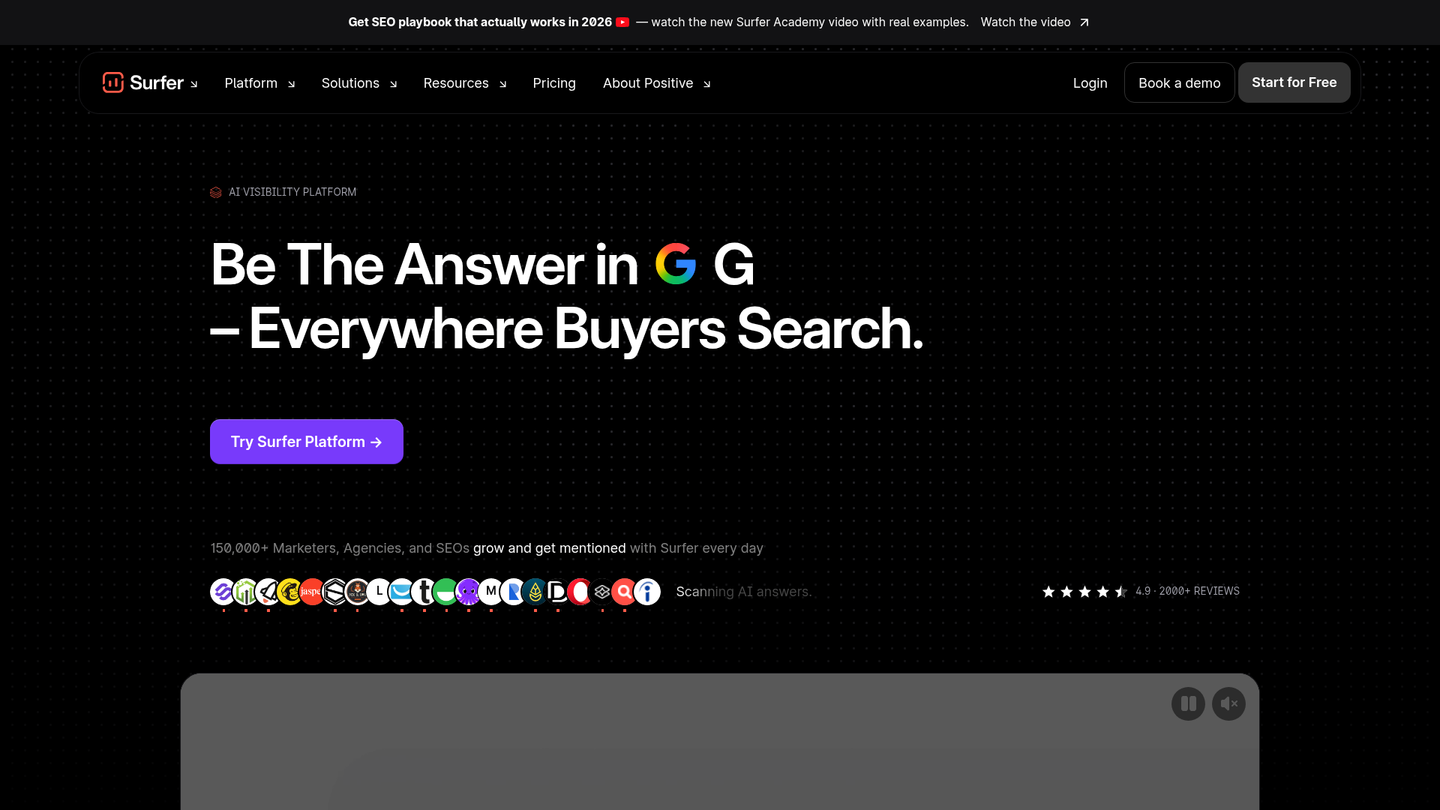
Surfer SEO scores your draft against the pages already ranking for your target term and hands you real-time recommendations as you write. It's a solid editor-layer tool that's been around long enough to have a real user base. More recently it added an AI Visibility Tracker watching brand mentions across ChatGPT, Google AI Overviews, Google AI Mode, Perplexity, and Gemini — though what you actually get depends heavily on your tier.
What They Offer
- Real-time content scoring against top-ranking SERP pages as you write
- AI Visibility Tracker covering five AI surfaces, bundled at higher plans or as an add-on
- Topical maps for building content cluster coverage
- Surfer AI, a draft generator built into the editor
Good for: content teams that already have a strategy and want live on-page scoring while writing individual articles.
Limitation: Surfer scores and recommends, then hands the work back to you. On the Standard plan ($99/mo billed annually), AI tracking covers ChatGPT only — 25 prompts refreshed weekly. Full multi-surface coverage requires the Pro plan at $182/mo, per Surfer pricing breakdowns. If Perplexity matters to you, see how to optimize content for Perplexity AI. There's no CMS push, no backlink procurement, no self-learning from your edits. The same manual pass repeats on every piece, forever.
Bottom line: a solid scorer if you're writing your own content, but scoring isn't executing.
Clearscope
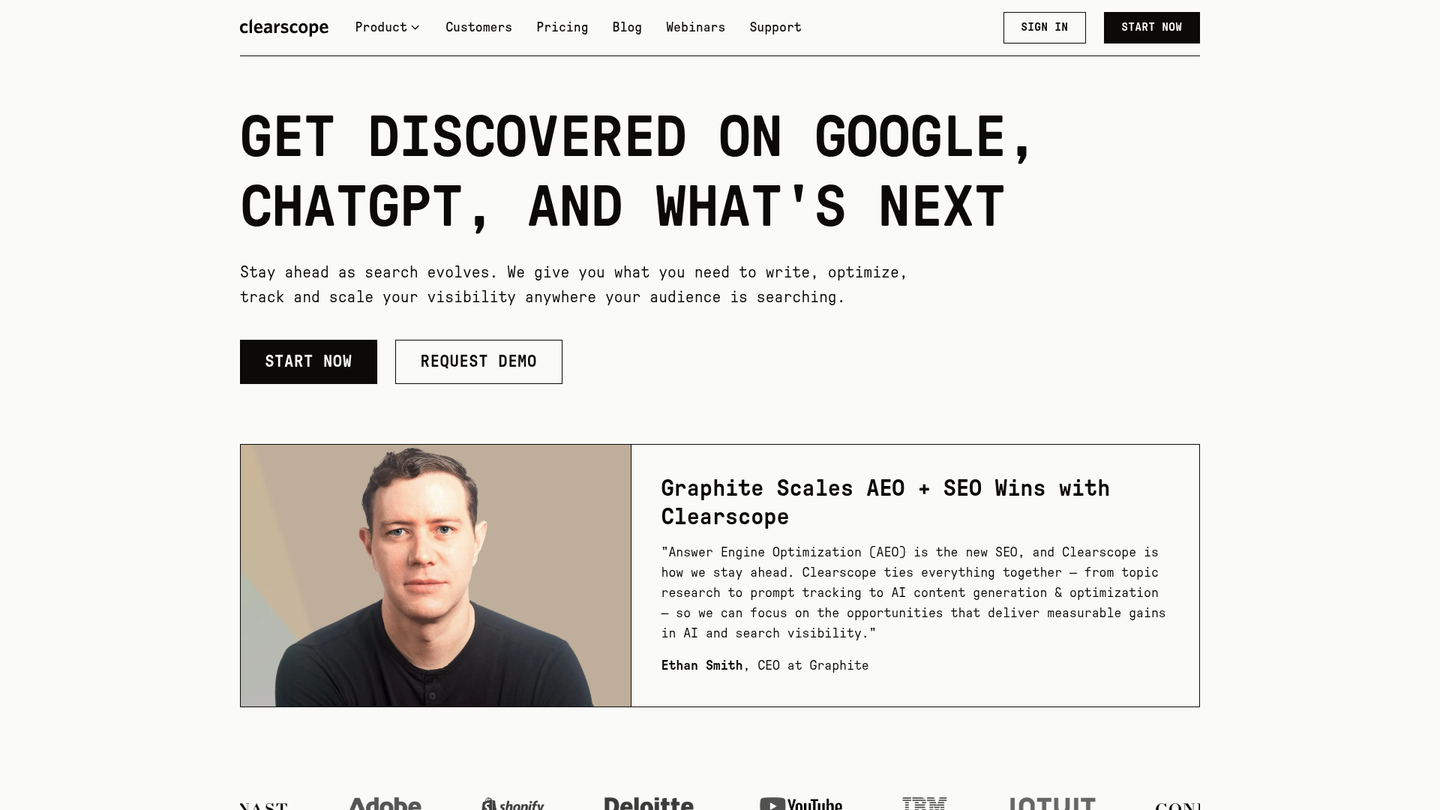
Clearscope grades your draft against the top-ranking pages for your target term and gives you a letter score — A to F — showing where your coverage and keyword usage stand before you publish. Simple, clean, and genuinely useful if you have a writer who'll act on the report.
What They Offer
- Real-time A to F grading inside its editor, Google Docs, and WordPress
- Topic Explorations for planning content clusters
- Content Inventory for refreshing live pages
- Unlimited users on every plan, no per-seat pricing
Good for: mid-market content teams and agencies that need structured briefs and editorial workflow across multiple writers.
Limitation: Clearscope stops at grading. It won't write, publish, build backlinks, or track how you're doing in AI answers. At $129/mo for Essentials, per Clearscope's pricing page, you're paying for a score, not execution. Someone still has to do the work.
Bottom line: Clearscope is one layer of a content stack, not the whole stack.
Semrush
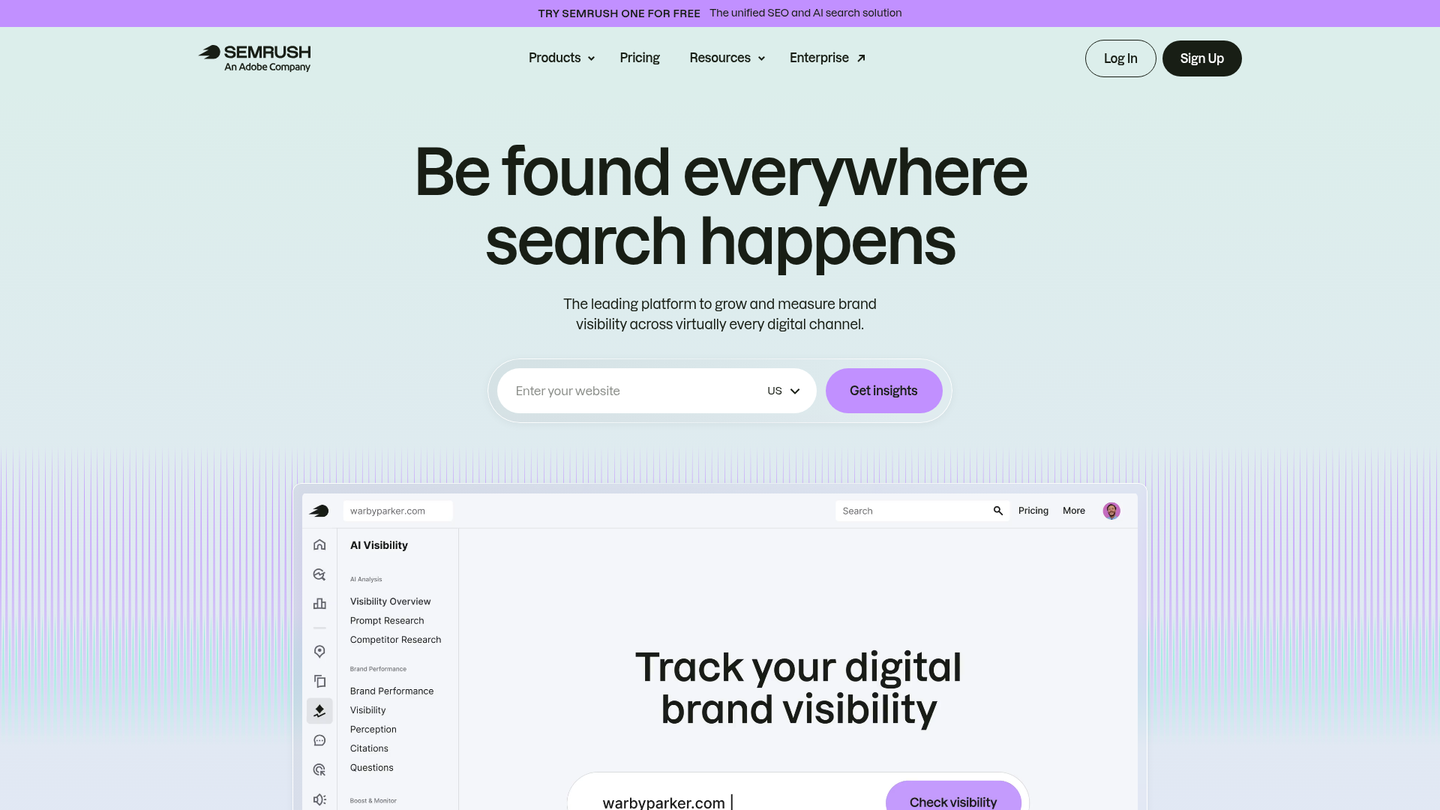
Semrush is the data suite most SEO teams already have open in a tab, and for good reason — its keyword research, competitive analysis, rank tracking, and technical audit capabilities are best-in-class. More recently it's surfaced AI visibility data, mostly for Google AI Overviews, inside its reporting layer.
What They Offer
- Keyword research, competitive gap analysis, and rank tracking at scale
- Technical site auditing across metadata, page speed, and schema
- Content optimization through the SEO Writing Assistant
- AI Overview tracking and visibility reporting
Good for: mid-market and enterprise teams with in-house SEO staff or an agency who can turn the data into shipped work.
Limitation: Semrush reports and stops. It won't push fixes to a live CMS, acquire backlinks, or make changes for you. If your team doesn't have the bandwidth to act on what it surfaces — and most don't — the reports pile up.
Bottom line: it's the benchmark for data tooling, and data without execution is an insight nobody acted on.
Frase
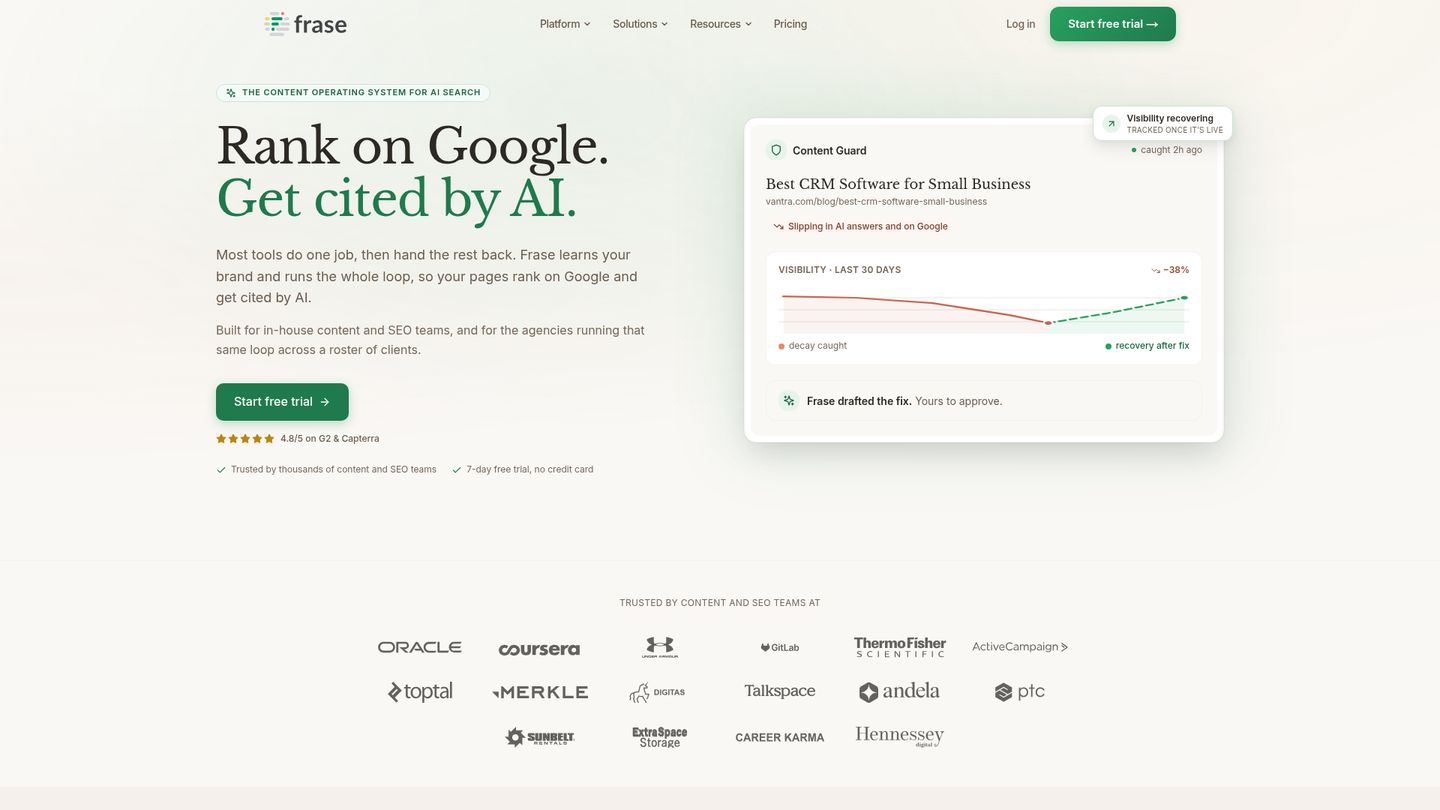
Frase started as a content research and briefing tool. In January 2026 it rebuilt around dual SEO and GEO scoring — so instead of checking two separate tools, you get live scores for Google ranking readiness and AI citation readiness inside the same editor. That's a real workflow improvement for content-first teams.
What They Offer
- Dual SEO and GEO content scoring in the editor, live as you write
- AI visibility tracking across eight AI surfaces from the Starter tier
- Content briefs and an outline builder pulled from SERP and competitor analysis
- CMS publishing to WordPress, Sanity, Webflow, Wix, and FraseCMS
Good for: writers who want fast briefs plus dual Google and AI scoring in one workflow.
Frase covers research and scoring, then stops. There's no backlink procurement, no sales-call mining, no dedicated strategist, and no self-learning loop that updates your brand voice and content rules from edits over time. You get a better brief, you still have to execute it. For a deeper look at the visibility tracking side, our complete guide to LLM visibility tracking covers this in full.
Bottom line: a strong brief-and-score tool for content-first teams, up to the point where execution begins.
Profound
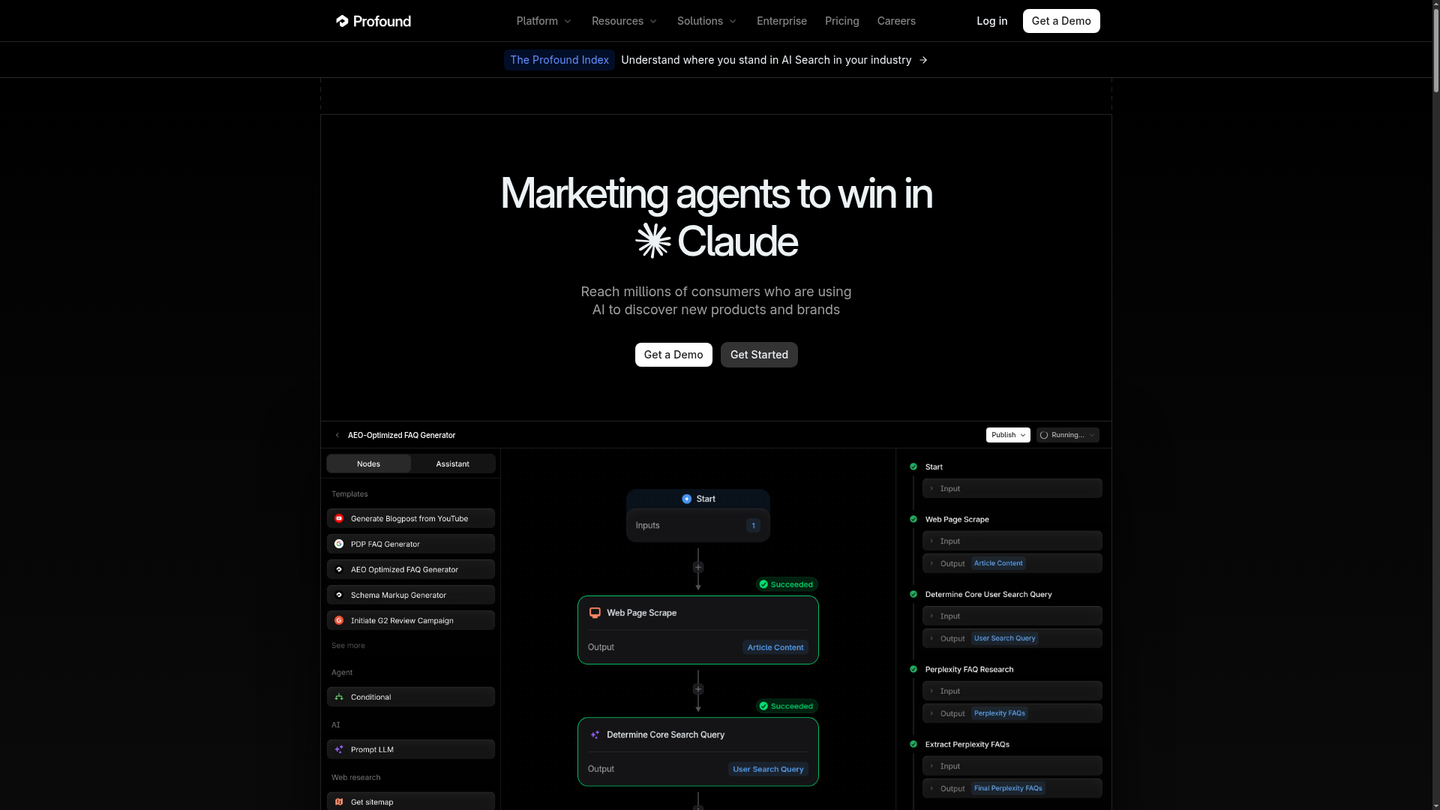
Profound was one of the first tools to parse ChatGPT responses for brand mentions, which gave it a real head start in visibility tracking. Agencies noticed. Since then it's layered on content creation features and a Zapier-style workflow builder that lets you configure custom AEO pipelines without writing code.
What They Offer
- Brand mention tracking across multiple answer engines
- A workflow builder for custom AEO pipelines
- Content creation features, thinner than full-stack tools
- CMS integrations with WordPress and Sanity
Good for: agencies wanting a configurable pipeline builder with time to maintain client workflows.
Limitation: the self-serve Starter plan tracks ChatGPT only. Claude sits behind Enterprise pricing. Profound doesn't source backlinks or put a strategist in your corner — the workflow builder is powerful if you have someone to run it, but that's a real 'if.'
Bottom line: if you're an agency with a team to maintain the pipelines, Profound is worth a look. If you're not, the gap between what it tracks and what it fixes is a problem you're solving on your own.
Peec AI
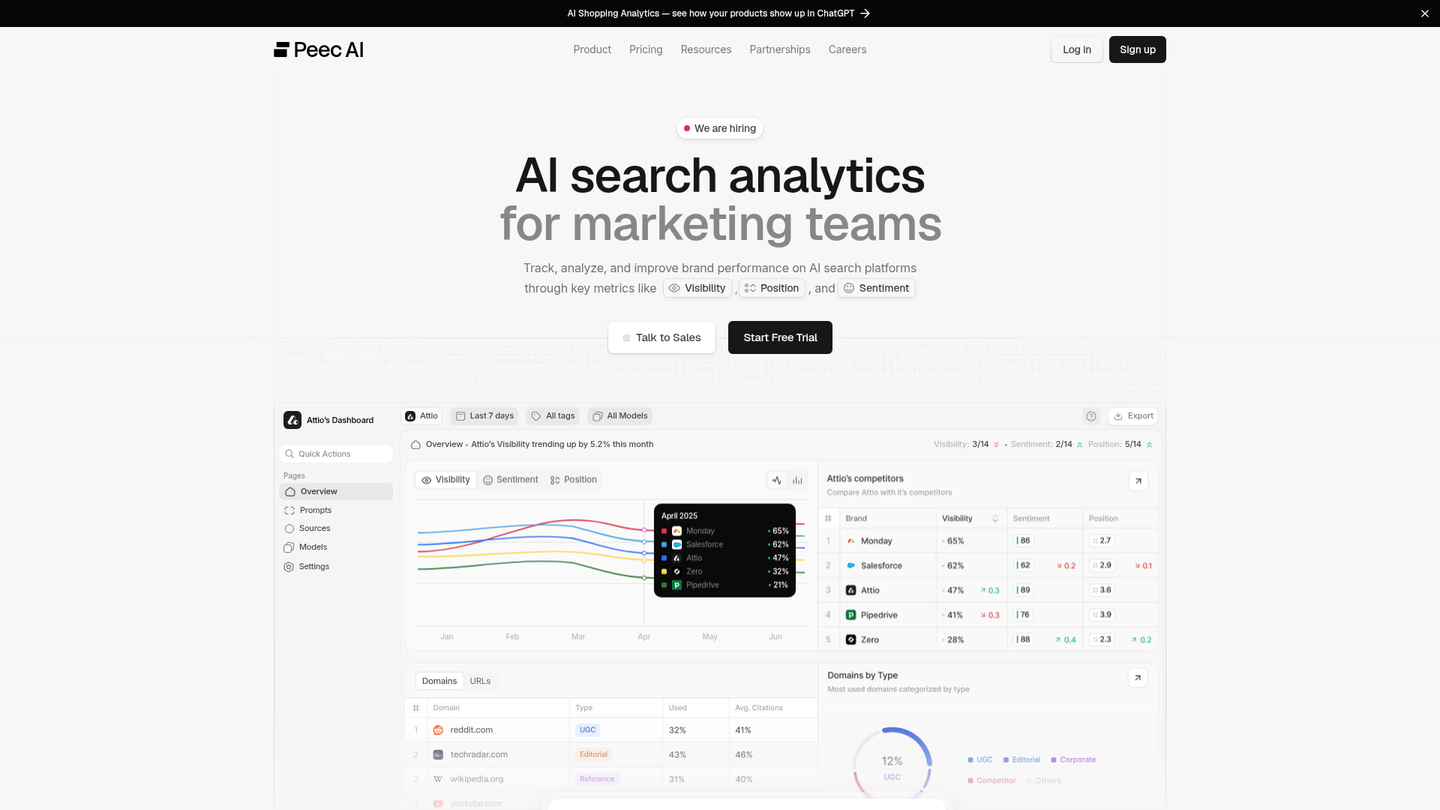
Peec AI is a monitoring dashboard built for teams that need to report AI search visibility to clients. The interface is clean, the competitive benchmarking is solid, and share-of-voice metrics make it easy to show a client where they stand against named competitors.
What They Offer
- Brand visibility monitoring across AI engines with competitive benchmarking
- Looker Studio export on higher tiers
- Multi-country tracking on the Advanced tier
- Prompt-level tracking with share of voice metrics
Good for: agencies wanting a tidy dashboard to report AI visibility across multiple client projects.
Limitation: Peec AI is analytics-only. No execution layer, no content creation, no backlink procurement, no strategist. The Starter plan runs $95/mo for 50 prompts across three engines, a reasonable reporting spend if that's literally all you need, but it doesn't get you any closer to fixing what it finds.
Bottom line: Peec AI surfaces the data and leaves the next step on your desk.
GEO Tool Feature Comparison
Here's how they stack up on the capabilities that actually decide whether an AI engine cites you — not just whether a dashboard can track it.
| Feature | Maintouch | Surfer SEO | Clearscope | Semrush | Frase | Profound | Peec AI |
|---|---|---|---|---|---|---|---|
| Passage-level content optimization | Yes | Yes | Yes | Partial | Yes | No | No |
| Schema generation and health monitoring | Yes | No | No | No | No | No | No |
| CMS push (publish and fix without developer) | Yes | No | No | No | Partial | Partial | No |
| AI citation tracking (all 5 engines) | Yes | Partial | No | Partial | Yes | No | Partial |
| Backlink procurement | Yes | No | No | No | No | No | No |
| Dedicated human strategist | Yes | No | No | No | No | No | No |
| Free AI visibility tier | Yes | No | No | No | No | No | No |
| Self-learning from human edits | Yes | No | No | No | No | No | No |
| Sales call mining for content strategy | Yes | No | No | No | No | No | No |
Why Maintouch Is the Best GEO Tool
I built Maintouch to close the loop every other tool here leaves open. The pattern I kept seeing: a team buys a monitoring tool, gets a clean dashboard, and then six weeks later asks who's actually going to do the work. The answer is usually nobody, or they bring in an agency and the total cost triples. Maintouch replaces that whole sequence — it pushes technical fixes to your CMS, regenerates schema on every publish, and sources backlinks at zero markup, with a dedicated strategist running weekly syncs alongside the automation.
The free tier is worth knowing about. Thirty-five prompts across all five engines, no credit card, good for a full year. Claude included — which tools like Profound gate behind enterprise pricing.
Final Thoughts on Choosing GEO Tools That Actually Execute
Every tool on this list tracks something useful. Where they split is on what happens after the data comes in. If you've got a team ready to act on recommendations every week, a scoring or monitoring tool gets you far. If you don't, the insight just sits there — and in my experience, most teams don't. I've watched enough teams spend three months staring at a dashboard and then ask who's going to do the work. The answer isn't always Maintouch. But it should be a real answer, not a tab you check and close. If you want to talk through what the execution layer looks like for your stack, shoot me a message at [email protected].
FAQ
How do I choose the right GEO tool from this list for my needs?
Start with one question: do you need a tool that executes the work, or one that tells you what to do? If you have in-house writers and an SEO team ready to act on recommendations, Surfer SEO, Clearscope, or Frase give you solid scoring and briefs. If you want the content created, published, and optimized — without building an internal operation around it — Maintouch is the only tool on this list that closes that loop.
Is Surfer SEO or Frase better for writers who want live GEO scoring while drafting?
Both score content as you write, but Frase pulls ahead for teams that want dual SEO and GEO scoring in one pass: it grades for Google ranking readiness and AI citation readiness simultaneously, whereas Surfer SEO's AI visibility tracking is tiered and limited to ChatGPT on the Standard plan. Neither publishes to your CMS or builds backlinks, so both stop at the recommendation layer.
Is Profound or Peec AI better for agencies reporting AI visibility to clients?
Peec AI is built for that reporting use case: clean dashboards, competitive benchmarking, and Looker Studio export for client decks. Profound gives agencies more configurability through its workflow builder, but its self-serve tier only tracks ChatGPT. If your clients are asking about Claude coverage, both tools make you pay to find out.
When should I use Semrush for GEO instead of a dedicated GEO tool?
Semrush makes sense when your team already has the bandwidth to act on what it surfaces: keyword gaps, technical audit findings, AI Overview visibility data. It's genuinely the benchmark for data depth. Where it breaks down is when those insights sit in a dashboard and nobody has time to ship the fixes — which is most companies, most of the time. If that's your situation, adding another data tool compounds the problem instead of solving it.
What does "execution depth" actually mean when comparing these GEO tools?
Execution depth is whether a tool pushes changes to a live CMS or hands the work back to you. Maintouch pushes technical SEO fixes, regenerates schema on every publish, and sources backlinks inside the same system. Every other tool on this list stops before that point: they score, recommend, or report, and someone on your team has to do the rest. That gap is the difference between a monitoring dashboard and a system that runs.
What's the difference between GEO and AEO, and do I need both?
GEO (generative engine optimization) works at the passage and schema level — it's the execution layer that decides whether an AI engine extracts and cites your content inside a generated answer. AEO (answer engine optimization) is the broader scoreboard: your domain authority, citation share, and presence across AI retrieval systems. You need both, but they're not separate strategies. Strong SEO feeds AEO directly because AI engines run a web search under the hood before generating answers — the same content and technical work drives both.
How does schema markup actually affect whether an AI engine cites my content?
Schema is a binary qualifier for AI citation. Without it, a page gets deprioritized from the retrieval set before content quality is even evaluated, and your writing never gets a chance to compete. Schema types like FAQPage, Article, HowTo, and Organization, the vocabulary defined in Google's structured data markup guidelines, tell AI engines exactly what a page is about and how to extract relevant passages. The subtler problem is schema drift: your content gets updated, the schema doesn't, and citations disappear without any visible change in content quality. It's one of the most common silent losses I see. The fix is automating schema regeneration on every publish, which is what Maintouch does.
Do I need to optimize for each AI engine separately, or does one strategy work across all of them?
The foundation is shared: passage-level content optimized for direct extraction, structured data, and a strong backlink profile all improve citation rates across ChatGPT, Gemini, Google AI Overviews, Perplexity, and Claude simultaneously. Where the engines diverge is in how they weight freshness, authority, and structured formats. The practical answer is one content strategy executed well beats five fragmented ones — the engines are picking from the same open web, and the same signal quality that earns a citation in Perplexity tends to earn one in ChatGPT too.
How many prompts do I actually need to track to get useful GEO data?
It depends on your keyword surface area, but a useful signal starts with the questions your buyers actually type into AI tools — not just the ones they search on Google. Zero-volume queries in Search Console (1-2 impressions) are a reliable proxy for what buyers are asking ChatGPT and Perplexity, and those are the prompts worth tracking first. Maintouch supports 1,000+ concurrent prompts across all five engines for large-scale tracking, and the free tier covers 35 prompts for a full year if you're starting out.
Can GEO tools help with Google AI Overviews specifically, or just other AI engines?
Most GEO tools track Google AI Overviews as part of their AI visibility coverage, since it's the highest-volume surface where citation losses directly hit organic traffic. The same passage-level optimization and schema work that earns citations in AI Overviews applies to ChatGPT and Perplexity — the retrieval mechanics are similar. Where tools differ is in how many engines they track: Surfer SEO's Standard plan covers ChatGPT only, while Frase and Maintouch cover multiple engines from entry-level tiers.
What's the fastest way to see if my site is already being cited in AI answers?
The fastest starting point is a free AI visibility tracker. Maintouch's free tier tracks 35 prompts across ChatGPT, Google Gemini, Google AI Overviews, Perplexity, and Claude for a full year with no credit card — it takes about five minutes to set up and shows exactly where you're being cited and where competitors are showing up instead. From there, the gaps you find tell you whether the fix is a content problem, a schema problem, or an authority problem.
Turn search into your best growth channel.
Maintouch tracks your visibility across AI and Google, creates and refreshes content, and gets your brand mentioned on the sites that shape discovery.
Book a demoRelated reading
All posts