
Structured Data for AI Search Citations, Oct 2026

By Bennett Cohen
Get Maintouch
Turn search and AI visibility work into a repeatable growth system.
Updating your content without updating its schema leaves two versions of the facts on the same page. A rewritten FAQ or changed product price can leave your JSON-LD out of date, even when a validator reports no errors. That's an easy gap to miss when you're using structured data for AI search, and validation alone won't close it. My goal: you walk away knowing exactly how to check both layers and keep them in sync after publishing.
TLDR:
- Use JSON-LD to label your content's meaning. Schema doesn't guarantee AI citations.
- Match FAQPage markup to visible, self-contained answers under clear headings.
- Check your FAQ answers and product prices against JSON-LD after every publish.
- Track AI citations alongside rankings. Schema validators don't test citation eligibility.
- Maintouch regenerates JSON-LD through CMS webhooks when you publish or update content.
What Structured Data Actually Is (and What It Isn't)
Structured data is machine-readable code that labels what your webpage’s content means. A shared vocabulary such as Schema.org provides explicit labels for content, including an article’s author or a product’s price. For example, bolding “By Bennett” makes a byline stand out to readers, but it doesn't create an explicit author relationship in schema; an Article object's author property identifies who wrote the article without changing how the byline looks.
JSON-LD, Microdata, and RDFa express the same vocabulary. For structured data for AI search, use JSON-LD for its ease of ongoing maintenance.
Headings and tables organize visible content; schema supplies machine-readable labels. Treat markup as a separate implementation task within your technical SEO work.
How AI Search Engines Use Structured Data to Decide What to Cite
When ChatGPT, Perplexity, Gemini, or Google AI Overviews use retrieval-augmented generation (RAG), they retrieve content, then write an answer using those passages. Your page must reach that retrieved set before it can contribute.
XSeek describes structured data for AI search as helping pages become easier to retrieve and quote: explicit fields clarify meaning. That's one proposed path toward getting cited in AI Overviews, not proof every engine checks schema or guarantees inclusion. Keep your markup accurate, but don’t treat it as a substitute for content quality.
The Citation Economy: How AI Search Differs from Traditional Rankings
Traditional search puts your page in a ranked list. AI search selects sources to cite, with the number varying by response. Outside that set, your page gets no visible credit for that answer.
Track citations alongside rankings as part of broader AI visibility optimization so a strong Google position doesn't hide a gap.
XSeek reports that fewer than 33% of websites implement schema beyond the basics, attributing the figure to W3Techs (2024); treat it as XSeek's reported figure, not an independently verified statistic. Start by checking where your structured data stops at basic markup and what you can improve.
The Schema Types That Matter Most for AI Visibility
Start with Organization, then choose page-specific schema types by page relevance. No supplied evidence shows which type delivers the biggest gains for structured data for AI search.
| Type | Content and signal | Implementation checklist |
|---|---|---|
| Organization | Company identity | Keep name, url, and verified sameAs profiles consistent. |
| FAQPage | Question-answer pairs | Match each Question and acceptedAnswer to visible text. |
| HowTo | Ordered instructions | Include task name and ordered HowToStep entries. |
| Article | Editorial authorship | Supply headline, author, and accurate publication dates. |
| Product | Item details | Include name; match offers and availability to visible content. |
FAQ Schema: The Most Effective Structured Data for AI Answers
FAQPage pairs questions with explicit answer fields. Stackmatix calls these pre-formatted question-answer pairs ready for AI citation, but that doesn't prove FAQ schema outperforms other types.
For each entry:
- Use a buyer's question: “Does Ghost support complex content models?”
- Start with a direct answer.
- Name the subject: “Ghost supports...” stays clear outside the question.
- Make answers self-contained, including necessary conditions.
- Target 130-170 words only when depth warrants it. That's an editorial target, not a schema requirement. Cut padding and split unrelated questions.
Structured Data vs. Structured Content: Two Different Jobs
Accurate Product markup can't fix a comparison page that buries useful details in long paragraphs. A readable comparison table can still leave product relationships unspecified in code. Structured data supplies machine-readable meaning; structured content makes relevant passages easier to find and extract during retrieval, a distinction central to understanding how GEO differs from SEO.
Work on both layers when using structured data for AI search. Neither guarantees citations. Pick one target question, put its answer under a descriptive heading, then check that your markup describes the same subject and facts.
Schema and Entity Authority: Why Consistency Across the Web Matters
When unrelated businesses share your company name, consistent entity references help systems connect facts to the right brand. Structured data for AI search needs that consistency across your site and external mentions.
- Give your
Organizationa stable@idand reuse it in article publisher references. - Use
sameAsfor verified profiles identifying that exact organization. - Check external directory listings for conflicting company names or descriptions.
Linked data ties these references together as part of a wider answer engine optimization strategy, but markup alone can't prove authority or guarantee citations. Fix conflicting identity details before adding more schema.
What Schema Drift Is and How It Kills Citations
Schema drift happens when your live content changes but its JSON-LD doesn't. Rewritten FAQ answers or updated prices leave conflicting facts for retrieval systems, risking citation accuracy. A universal retrieval penalty remains unproven.
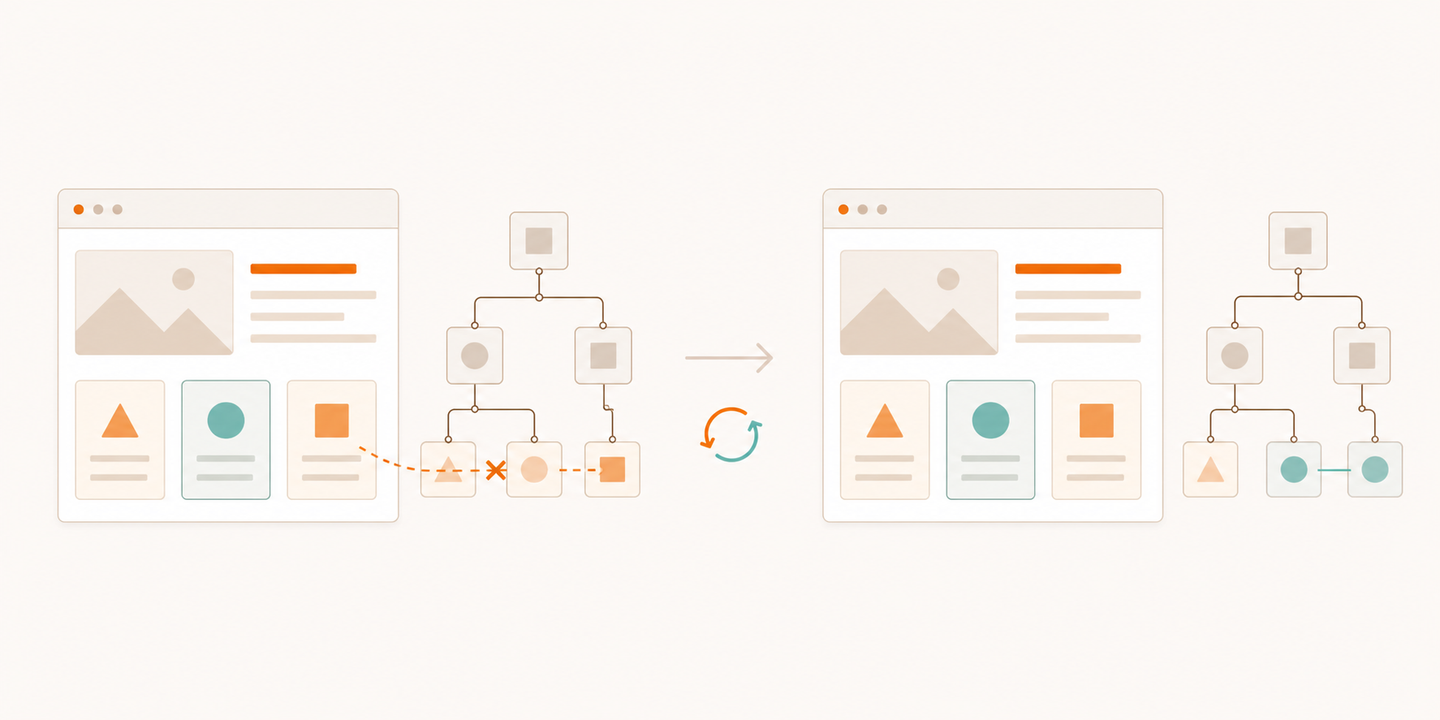
Audit FAQPage and Product first because answers and offers change frequently:
- Compare live answers and prices against JSON-LD values.
- Fix mismatches and remove markup for deleted questions.
- Repeat after each publish. Syntax validation won't catch a valid but outdated price.
JSON-LD Is the Right Format: How to Implement It Correctly
JSON-LD keeps schema separate from HTML attributes for simpler schema maintenance than Microdata or RDFa.
- Add a
<script type="application/ld+json">block to your page’s<head>or<body>. - Write a JSON object with
@contextpointing to Schema.org, a content-matched@type, and properties describing your page. - Include required fields for your intended rich result. Use ISO 8601 dates.
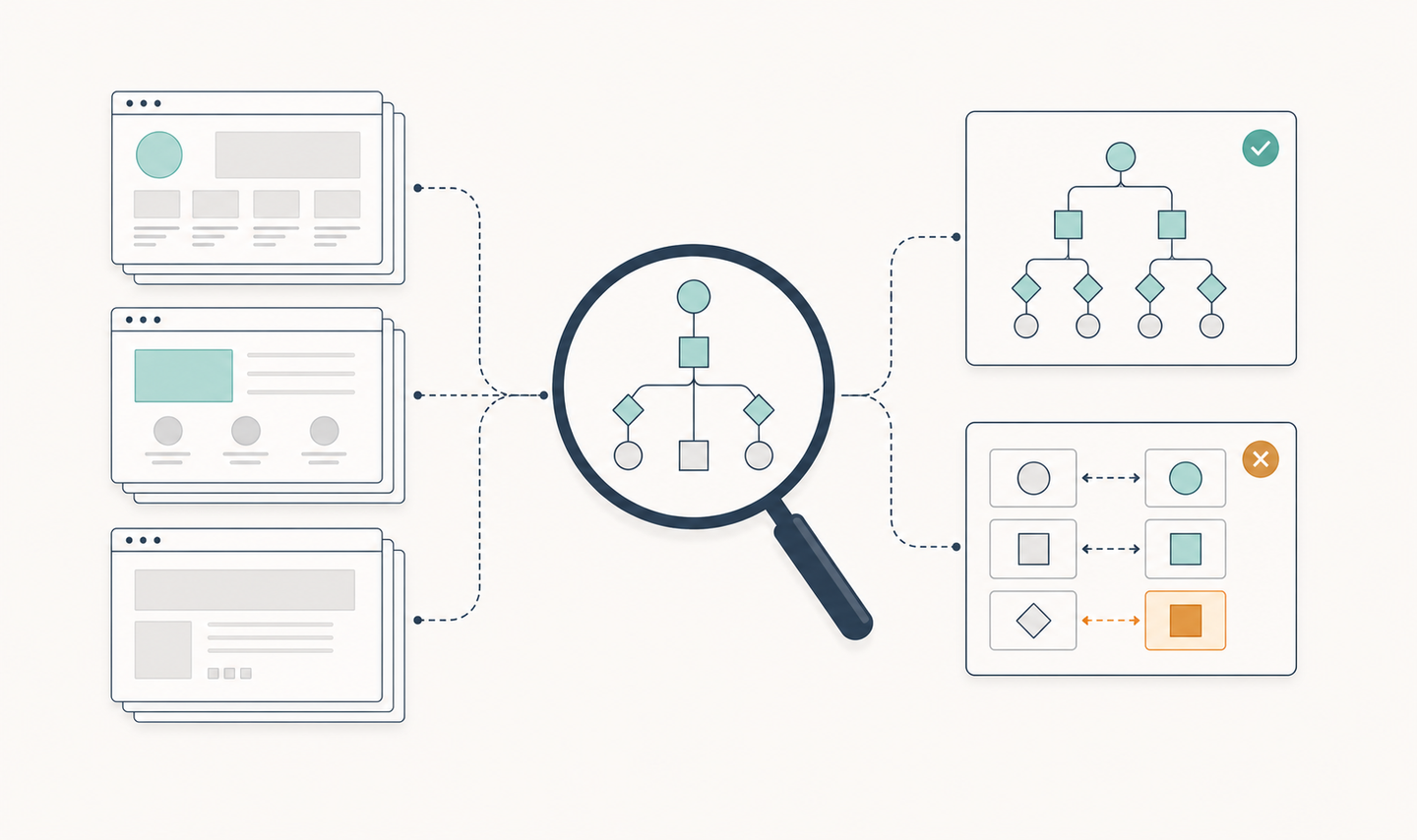
- Check vocabulary and syntax in Schema.org Validator, then supported search features in Google's Rich Results Test. Neither tool tests AI citation eligibility, including when you optimize content for Perplexity AI.
How to Audit and Validate Your Schema for AI Search
Audit structured data for AI search by page template to catch shared defects:
- Inventory URLs with and without expected schema.
- Check Google Search Console’s rich result reports for affected URLs.
- Retest flagged pages in Rich Results Test; use Schema Markup Validator for vocabulary errors.
- Compare extracted values with visible page text.
Parsing errors can block processing. Warnings flag missing recommended properties, not invalid markup or proven underperformance. Assign an owner, repeat checks after template releases, and investigate accumulating defects without assuming they caused citation loss.
How Maintouch Automates Structured Data for AI Citation
I built Maintouch to keep your structured data in sync with your content without waiting on developers. It monitors schema coverage, errors, completeness, and content mismatches across published pages as part of tracking AI visibility across ChatGPT, Gemini, Google AI Overviews, Perplexity, and Claude, then regenerates JSON-LD automatically on every publish or update.
Final thoughts on making content clear for AI search
Your content and schema have different jobs. You need readable answers alongside markup that labels the same facts. I've been doing SEO for over a decade, and the teams I work with on Maintouch run into this exact gap constantly. If you want to talk through what schema automation would look like on your stack, shoot me a message at [email protected].
FAQ
Should you refresh old posts or publish new content to earn citations in ChatGPT and Perplexity?
Refresh an existing post when it already covers the buyer’s question but contains outdated facts, weak answers, or mismatched schema. Publish a new page when the question needs a distinct answer your existing content doesn’t cover. Changing a publication date alone adds no useful evidence for ChatGPT or Perplexity to cite.
Is FAQPage schema worth keeping if Google doesn’t show your FAQ rich results?
Yes, if the page contains genuine, visible questions and answers that the markup accurately describes. Google’s FAQ rich result eligibility is separate from whether content can appear as a source in AI answers, so a missing rich result isn’t a reason to delete accurate markup. Keep it current, but don’t expect FAQPage alone to increase AI citations.
How do you combine Article and FAQPage markup using Schema.org on your blog?
Use a JSON-LD @graph containing separate Article and FAQPage nodes, each with a distinct @id and properties matching the visible page. Keep editorial details in Article and visible question-answer pairs in FAQPage, then check both with Schema Markup Validator. Check your existing CMS output first so you don’t add duplicate or conflicting markup.
How can you tell in Maintouch whether ChatGPT or Perplexity read your page versus cited it?
Use agent crawler analytics to check recorded bot visits and AI visibility tracking to check citations in sampled answers. Maintouch gets visit signals through supported request-log integrations, while prompt tracking shows which sources appear in responses. A crawler visit isn’t proof of a citation, and a citation appearing after a schema change doesn’t prove the markup caused it.
Turn search into your best growth channel.
Maintouch tracks your visibility across AI and Google, creates and refreshes content, and gets your brand mentioned on the sites that shape discovery.
Book a demoRelated reading
All posts