
Best Programmatic SEO Tools for Scaling Content in October 2026

By Bennett Cohen
Get Maintouch
Turn search and AI visibility work into a repeatable growth system.
Dog, you've got the keyword data. You've got the template. You need 1,000 pages live by next quarter. Programmatic SEO tools will build those pages, but the cheap ones stop there. The right tool keeps working after publishing: analyzing your edits to improve future content, connecting internal links based on Search Console performance, and buying backlinks for your best pages. That's the difference between page count and pages that rank.
TLDR:
- Programmatic SEO tools automate page creation at scale using templates and data feeds
- Most tools stop at content generation; few handle strategy, optimization, and backlinks
- Template quality matters more than volume because Google penalizes find-and-replace spam pages
- Maintouch builds programmatic content that learns from your edits and executes the full workflow
- Free options like Typemat work for basic WordPress exports; paid tools start around $89/month
What Are Programmatic SEO Tools?
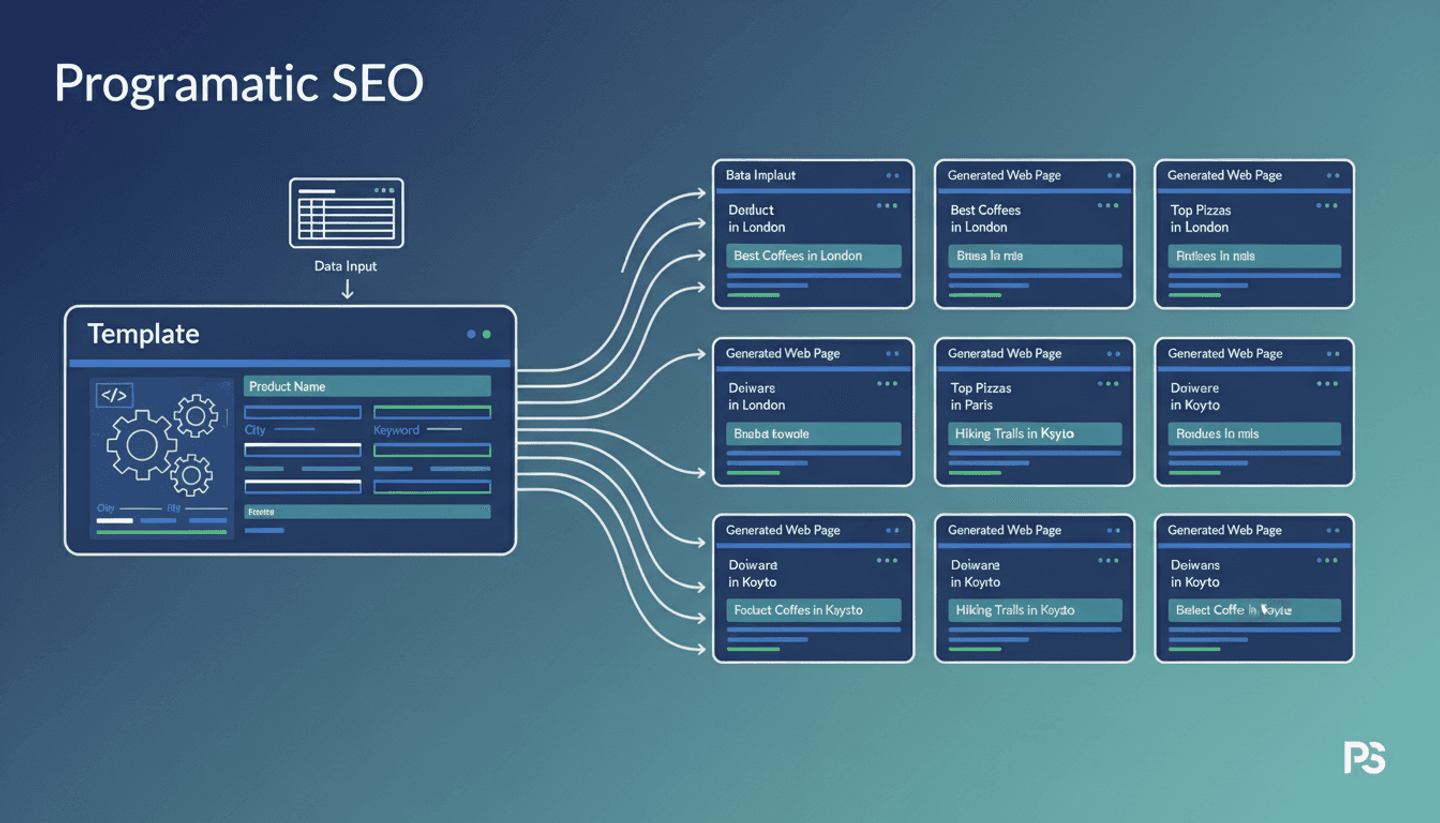
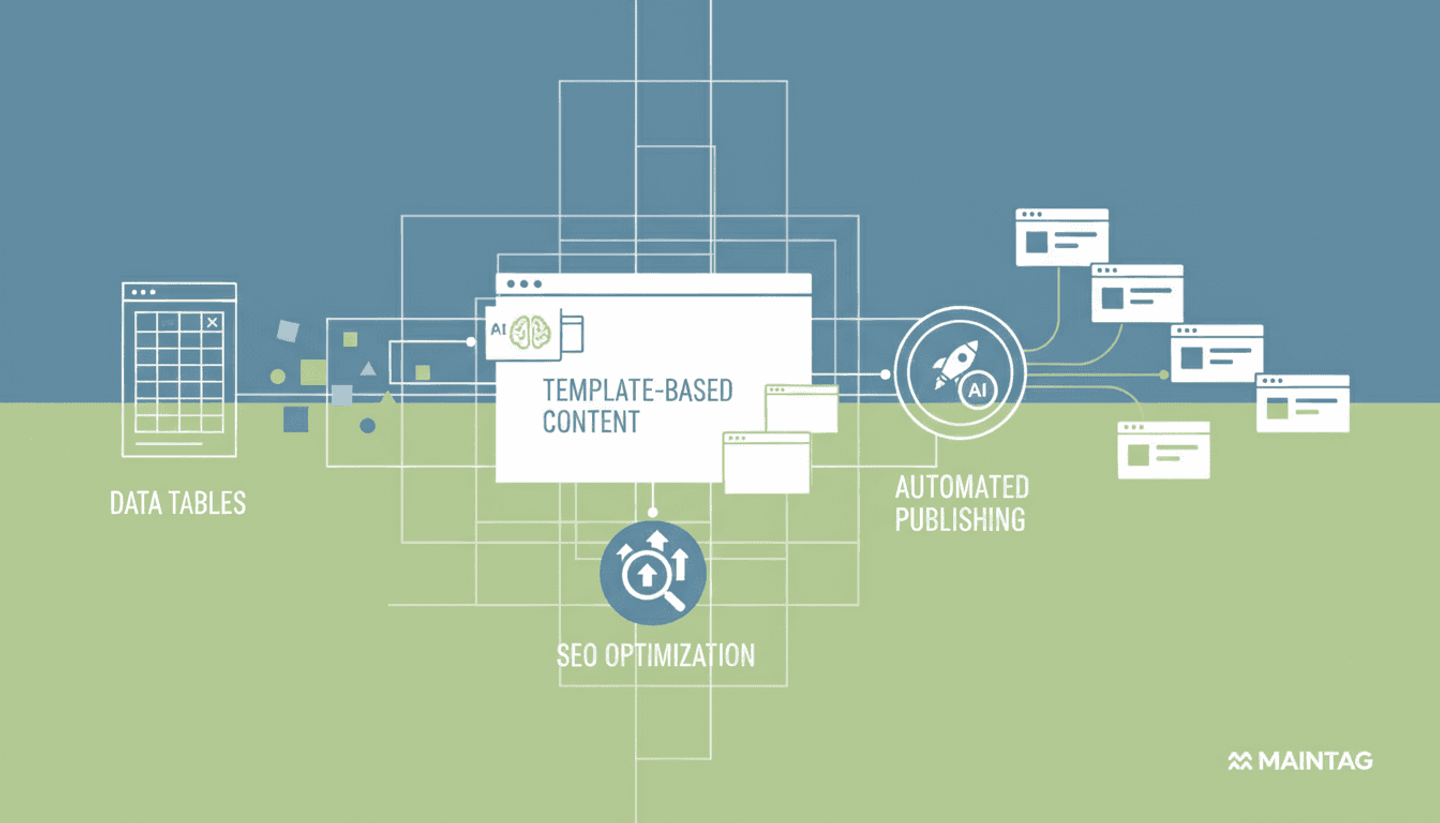
Programmatic SEO tools automate the creation of hundreds or thousands of optimized pages using templates and structured data. You build one template, feed it data, and generate variations at scale.
The use case: target long-tail keywords without spending months writing. Real estate sites create pages for "homes in [city]" across every city. B2B SaaS builds comparison pages or glossary entries for every relevant term.
These tools solve the manual content bottleneck. You get volume without sacrificing metadata, internal linking, and on-page optimization. The right tool generates pages that rank instead of pages that only exist.
How We Ranked Programmatic SEO Tools
I tested each tool against what actually matters when you're scaling content. Can it generate unique pages that don't read like template spam? Does it connect to your CMS and publish automatically? Can you feed it structured data from spreadsheets or APIs?
I also looked at template flexibility, technical SEO automation, and whether they avoid duplicate content penalties. Google's spam policies on scaled content abuse are clear: pages that are mostly find-and-replace with city names can get demoted or removed from results.
The best programmatic SEO tools handle the full workflow: keyword research, template building, content generation, and publishing. Programmatic SEO examples show that execution quality matters more than page count. I ranked tools on their ability to create pages that rank instead of pages that only exist.
Best Overall Programmatic SEO Tool: Maintouch
Maintouch is the only programmatic SEO tool that acts on your behalf. You're building a system that learns your brand, pulls from your first-party data, and gets smarter every time you edit something.
You create custom content templates, and Maintouch fills them with content that pulls from multiple data sources at once. Need a programmatic series that combines product info, testimonials, and competitive intel? Done.
The self-learning engine is where it gets interesting. Every time you edit AI-generated content, Maintouch analyzes what you changed and updates your knowledge base, blog rules, and brand voice automatically.
It identifies high-performing programmatic pages and acquires backlinks to push them higher.
On the execution side, Maintouch handles publishing to your CMS, requests indexing from Google, generates on-brand images, and builds internal links using actual ranking data from Search Console. It spots high-performing programmatic pages and acquires backlinks to push them higher.
I built this because programmatic SEO shouldn't just be about volume.
SEOmatic
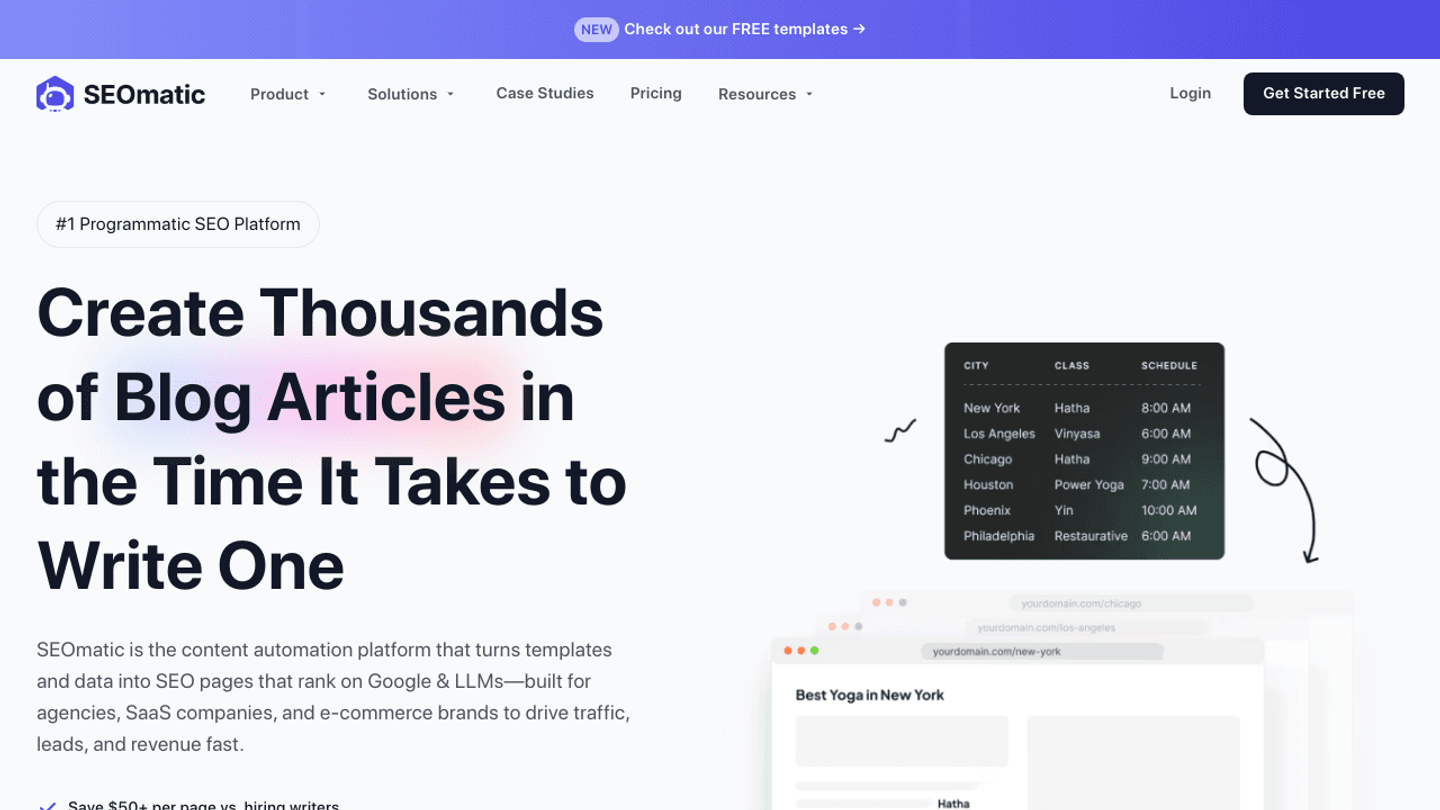
SEOmatic turns templates and data into SEO pages using AI prompts, variables, and spin syntax. Built for agencies, SaaS companies, and e-commerce brands automating landing page creation at scale.
What They Offer
- AI content engine generating unique pages by filling templates with variables, prompts, and spin syntax
- Automatic updates that auto-create new pages and refresh existing ones as data sources grow
- Direct CMS integrations or SEOmatic hosting with drip publishing and scheduled releases
- CSV upload and external data connections for programmatic page generation
Good for: Teams creating location-based service pages or product variations needing straightforward template-to-page workflow.
Limitation: No self-learning context system adapting to your edits. Manual template updates instead of a system improving from feedback. No automated backlink building or keyword discovery from sales calls.
Bottom line: SEOmatic handles basic programmatic page generation. Maintouch delivers content creation with strategic planning, automatic optimization, and backlink procurement.
AirOps
AirOps is an AI workflow builder for content teams running SEO at scale. It's a content operations system that goes beyond basic page generation.
The tool offers workflow templates for briefs and optimization, a grid feature for bulk operations, CMS integrations with WordPress and Webflow, and SERP data for content improvements.
Good for technical teams with existing SEO workflows who want faster execution through automation.
The catch: according to MarketerMilk's AirOps review, task consumption gets unpredictable with heavy editing after generation. You'll need developers managing custom configurations. No automated backlink building or strategic keyword discovery.
Maintouch gives you the complete system including strategy development, self-learning optimization, and automated backlink building without technical configuration requirements.
Typemat
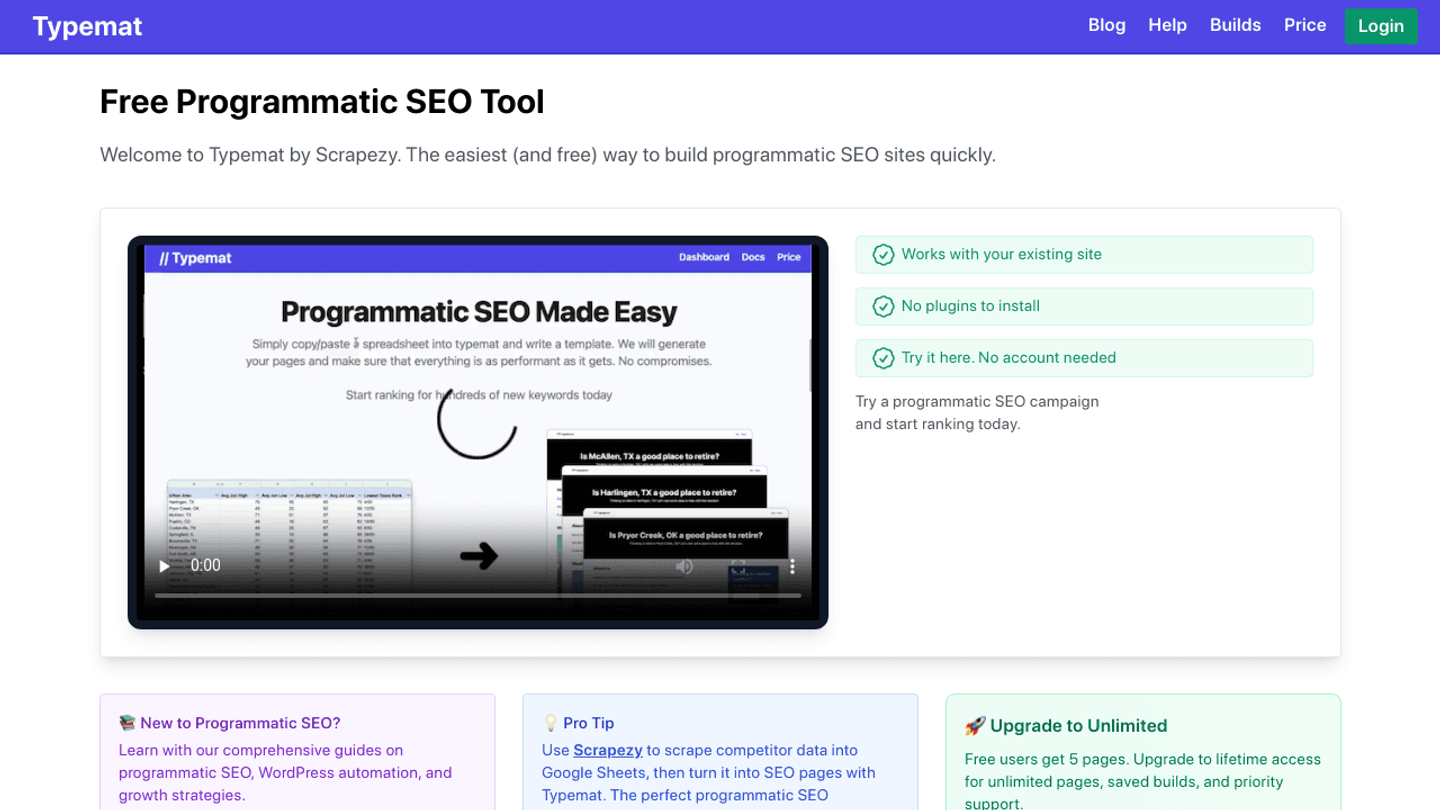
Typemat is a free programmatic SEO tool that creates optimized pages in bulk for WordPress and other site builders. No account required to test basic functionality.
- Google Sheets integration that fetches data and maps columns to post elements
- XML file export for direct WordPress and Wix import
- Free tier with 5 pages and lifetime access upgrade for unlimited pages
Good for solo entrepreneurs or small businesses starting with programmatic SEO who need a basic, budget-friendly tool generating WordPress pages from spreadsheet data.
Limitation: No AI-powered content generation beyond basic template filling. No keyword research or competitive analysis. No CMS automation beyond XML export.
Bottom line: Typemat handles simple spreadsheet-to-WordPress conversion. Maintouch provides an intelligent programmatic SEO system with AI content generation, automatic optimization, and end-to-end automation from research to backlinks.
Surfer SEO
Surfer SEO analyzes top search results and gives you data-driven recommendations for on-page optimization. It supports content creation at scale, but it's not built primarily for programmatic workflows.
- Content Editor with real-time optimization scores based on term density, structure, and word count
- One-click AI article generation
- Entity optimization and topical mapping
- SERP analysis and content auditing
- Template validation to define master templates and keep pages consistent
- Integration into existing content creation workflows
Good for content teams optimizing individual pages or small batches who focus on SERP analysis and on-page scoring over true programmatic scale.
The limitation: Costs start at $89 per month with additional charges of $19 per AI article (capped at 30 on the basic plan). That makes large-scale programmatic content expensive fast. It lacks automated CMS publishing and the self-learning intelligence that Maintouch provides.
Using Spreadsheets and Airtable Yourself
You can build programmatic SEO yourself using Google Sheets or Airtable. You'll set up data structures, write templates, and connect them through plugins or custom code to generate pages.
Airtable acts like a database that can push content to Webflow, Make, Zapier, or Whalesync. Google Sheets gives you free storage with basic automation. Both give you full control over your data and templates.
This works if you're technical and have time to build everything yourself. But you're handling template creation, data connections, and publishing automation on your own. No AI writing, no SEO strategy, no automated optimization. For most people, the time sink outweighs the money saved.
Feature Comparison Table of Programmatic SEO Tools
The table below breaks down what each tool actually does. Look at self-learning capabilities and strategic automation to see where tools stop at content generation versus where they keep optimizing. Self-learning matters because programmatic pages need ongoing refinement: a tool that learns from your edits gets closer to your brand voice on every new batch, instead of forcing you to rewrite the same patterns. Strategic automation (keyword research, internal linking from Search Console, backlink acquisition) is what turns a pile of generated pages into pages that actually rank. Tools that skip these steps push the work back to you.
| Feature | Maintouch | SEOmatic | AirOps | Typemat | Surfer SEO | Spreadsheets/Airtable |
|---|---|---|---|---|---|---|
| AI Content Generation | Yes | Yes | Yes | No | Yes | No |
| Self-Learning from Edits | Yes | No | No | No | No | No |
| Conversational Strategy Agent | Yes | No | No | No | No | No |
| Custom Data Sources | Yes | Yes | Yes | No | No | Yes |
| Strategic Keyword Research | Yes | No | Yes | No | Yes | No |
| Automated CMS Publishing | Yes (multi-collection) | Yes | Yes | No | No | No |
| Backlink Building | Yes | No | No | No | No | No |
| Sales Call Integration | Yes | No | No | No | No | No |
| Technical SEO Fixes | Yes (V2 with site scanning) | No | No | No | No | No |
| Content Templates | Yes | Yes | Yes | Yes | Yes | Yes |
| Image Generation | Yes | No | No | No | No | No |
Why Maintouch Is the Best Programmatic SEO Tool
SEOmatic, Typemat, and Surfer SEO stop at content generation. Maintouch keeps going.
You get keyword research that mines your sales calls for zero-volume queries your competitors miss. Custom templates that pull from multiple data sources. AI content that learns from your edits and updates itself.
Maintouch publishes to your CMS across multiple collections (blog posts, case studies, landing pages to different collections within Webflow, Framer, and Sanity), requests Google indexing, generates on-brand images, and builds internal links using your Search Console data. It spots your best programmatic pages and buys backlinks to push them higher.
I built this because programmatic SEO needed to be more than spreadsheets and find-and-replace.
If you want to talk through your programmatic SEO setup, book a call.
Final Thoughts on Scaling SEO Content
Picking the right programmatic SEO tool comes down to whether it stops at content generation or keeps optimizing after publish. You can build pages fast with any tool, but most leave you hanging when it's time to rank them. Maintouch learns from your edits, automates the technical work, and acquires backlinks to push your best pages higher. Jump on a demo if you want to see the full system in action.
FAQ
Which programmatic SEO tool is best for beginners with limited budgets?
Typemat is your starting point if you're testing programmatic SEO on a budget. It's free for 5 pages and handles basic spreadsheet-to-WordPress conversion. But you'll outgrow it fast once you need AI content generation or automation beyond XML exports.
How do I choose between programmatic SEO tools if I need more than basic page generation?
Focus on three things: does it generate unique content or just fill templates, does it publish automatically to your CMS, and does it keep optimizing after launch. Most tools stop at generation. Look for self-learning capabilities, strategic keyword research, and technical SEO automation if you want pages that actually rank.
Can programmatic SEO tools handle content for B2B SaaS or only e-commerce and local businesses?
They work for B2B when you're creating comparison pages, glossary entries, or long-tail keyword variations around your product category. The difference is your data source. B2B programmatic content needs customer language from sales calls and competitive intel instead of spreadsheet data about cities or product specs.
What's the real cost difference between DIY programmatic SEO with spreadsheets versus using a dedicated tool?
Spreadsheets are free but you're building everything yourself: templates, data connections, publishing automation, SEO optimization. You'll spend weeks on setup and maintenance. Dedicated tools cost $89+ per month but handle the full workflow. Run the math on your own setup: if DIY takes you roughly 40 hours and a tool runs $100/month, break-even at a $50/hour rate is about 20 months. Bump your hourly rate to $100 and break-even drops to about 10 months. If your time is worth more than that, the tool pays for itself.
When should I add backlink building to my programmatic SEO strategy?
Typically once your programmatic pages start ranking between positions 5-20 and getting consistent impressions. That's the band where links tend to move pages into top positions, because Google already considers the page a candidate for the query. Building links to pages that don't rank yet wastes money. Fix the content and technical SEO first.
Do programmatic SEO tools work for small sites or only large-scale operations?
They work for any size if you have a repeatable content structure and enough data points to make automation worth it. You usually need roughly 20-30 variations before automation beats writing pages by hand, because template setup, data prep, and QA take a few hours regardless of output volume. A local business with 5 locations probably doesn't need programmatic SEO. A directory with 500 entries does.

About the author
Bennett Cohen
CEO and Founder at Maintouch
Turn search into your best growth channel.
Maintouch tracks your visibility across AI and Google, creates and refreshes content, and gets your brand mentioned on the sites that shape discovery.
Book a demoRelated reading
All posts