
2026 SEO Checklist: Technical, Content, and AI Search

By Bennett Cohen
Get Maintouch
Turn search and AI visibility work into a repeatable growth system.
If your SEO checklist doesn't account for AI citations yet, you're optimizing for a version of search that's already shrinking. Pages get skipped in AI-generated answers not because the content is bad, but because the schema is stale or the structure isn't built for passage-level retrieval. I'll walk you through every category — and be specific about where automation handles the repetitive execution so your time goes toward decisions, not maintenance.
TLDR:
- Set up Google Search Console, GA4, and canonical redirects before touching any on-page work or your results go untracked.
- Schema is a binary qualifier for AI citation eligibility: pages without JSON-LD markup get skipped before content quality is even considered.
- Pages updated in the last 90 days get cited by AI engines more often than stale ones, so content freshness is a ranking factor for two separate systems.
- 68.01% of Google searches in early 2026 ended without a click, which means backlinks now drive brand visibility through AI-cited sources instead of direct traffic.
- Maintouch runs every category in this checklist autonomously, pushing technical fixes directly to your CMS with a dedicated account strategist handling prioritization and agents handling execution — human time commitment is under 30 minutes a week.
SEO Setup: Tools and Tracking Before You Optimize
Get this wrong and nothing else in the checklist matters. Before you touch a title tag or build a link, lock in your measurement and crawl infrastructure. Everything downstream is untracked noise without it.
Five setup steps first:
- Connect Google Search Console and verify your property so Google can report on crawl errors, indexing issues, and search performance directly.
- Set up GA4 and confirm data is flowing before you start any optimization work you'll want to measure later.
- Verify all URL variants (http, https, www, non-www) redirect to one canonical version so you're not splitting authority across duplicates.
- Confirm your sitemap is submitted and your robots.txt isn't accidentally blocking Googlebot from the pages you care about.
- Check that key pages are indexed by running
site:yourdomain.comin Google.
If any of these are broken, you're either flying blind or optimizing pages Google can't see. Fix these first. Then optimize.
Keyword Research Checklist
Start with seed keywords tied to what your product actually does, not what you wish it ranked for. Pull your top 10–15 core terms from Search Console impressions first, then expand with keyword research tools like Ahrefs or Semrush to find adjacent phrases buyers actually use.
Build the full keyword map from there:
- Identify seed keywords by category: product features, use cases, pain points, and competitor names
- Map search intent for each cluster: informational, navigational, or transactional
- Filter by keyword difficulty against your current domain authority (don't chase DR 80 terms if you're at DR 30)
- Surface long-tail variations with 3-5 word phrases that show clear buying intent
- Pull SEO keyword competitor analysis using Ahrefs' Content Gap tool against your top 5 competitors
Don't skip zero-volume queries. A keyword showing 1–2 impressions in Search Console is often the exact phrase a buyer typed into ChatGPT or Perplexity before they ever hit Google. Build content around those and you're positioning for AI citations alongside traditional rankings.
Revisit this quarterly. How buyers describe their problems shifts faster than most teams expect.
On-Page SEO Checklist
Every element here feeds the same goal: help Google understand what a page is about, and give the person reading the search result enough signal to click.
- Title tag: include your primary keyword, keep it under 60 characters, and write it for the human reading it first
- Meta description: 150-155 characters, one clear value statement, no keyword stuffing
- H1: one per page, includes the primary keyword naturally, matches the page's core intent
- H2/H3 hierarchy: break up structure logically, where each H2 represents a distinct subtopic
- Primary keyword: appears in the first 100 words of the body copy
- URL: short, lowercase, hyphens between words, keyword included, no trailing parameters
- Image alt text: descriptive, includes the keyword where it fits naturally, skip "image of" as an opener
- Internal links: every new page should link to at least 2-3 related pages using anchor text that reflects the target page's primary keyword
- Breadcrumb navigation: add it to every page deeper than the homepage for both users and crawlers
The thing teams miss most consistently: internal linking isn't a one-time task. When you publish something new, go back to older related posts and link forward to it. Search Console shows you exactly which pages are already generating impressions for related queries — start there.
SEO Content Writing Checklist
Good content ranks. Generic content doesn't. At the writing level, here's what actually separates the two:
- Author byline: real name, credential bio, and relevant experience. Google's quality raters check this, and LLMs use it to gauge trustworthiness.
- E-E-A-T signals: include first-hand experience, link to original sources, and make claims you can actually back up. Hedged, vague language is a quality signal in the wrong direction.
- Passage-level structure: write in self-contained chunks of 130-170 words that answer one question completely. Name the entity inside the block. AI engines pull passages, not full articles.
- Structured formats: FAQ sections, comparison tables, and numbered lists get cited more often than dense prose. Build them into the content from the start.
- Content freshness: pages updated in the last 90 days get cited by AI engines far more frequently than stale ones. If a post is older than that and still getting impressions, refresh it.
One habit worth building: open every section with a direct answer before the supporting detail. AI engines treat the first sentence under a heading as the candidate answer to that query. If your first sentence is a setup clause, you've already lost the citation.
Technical SEO Checklist
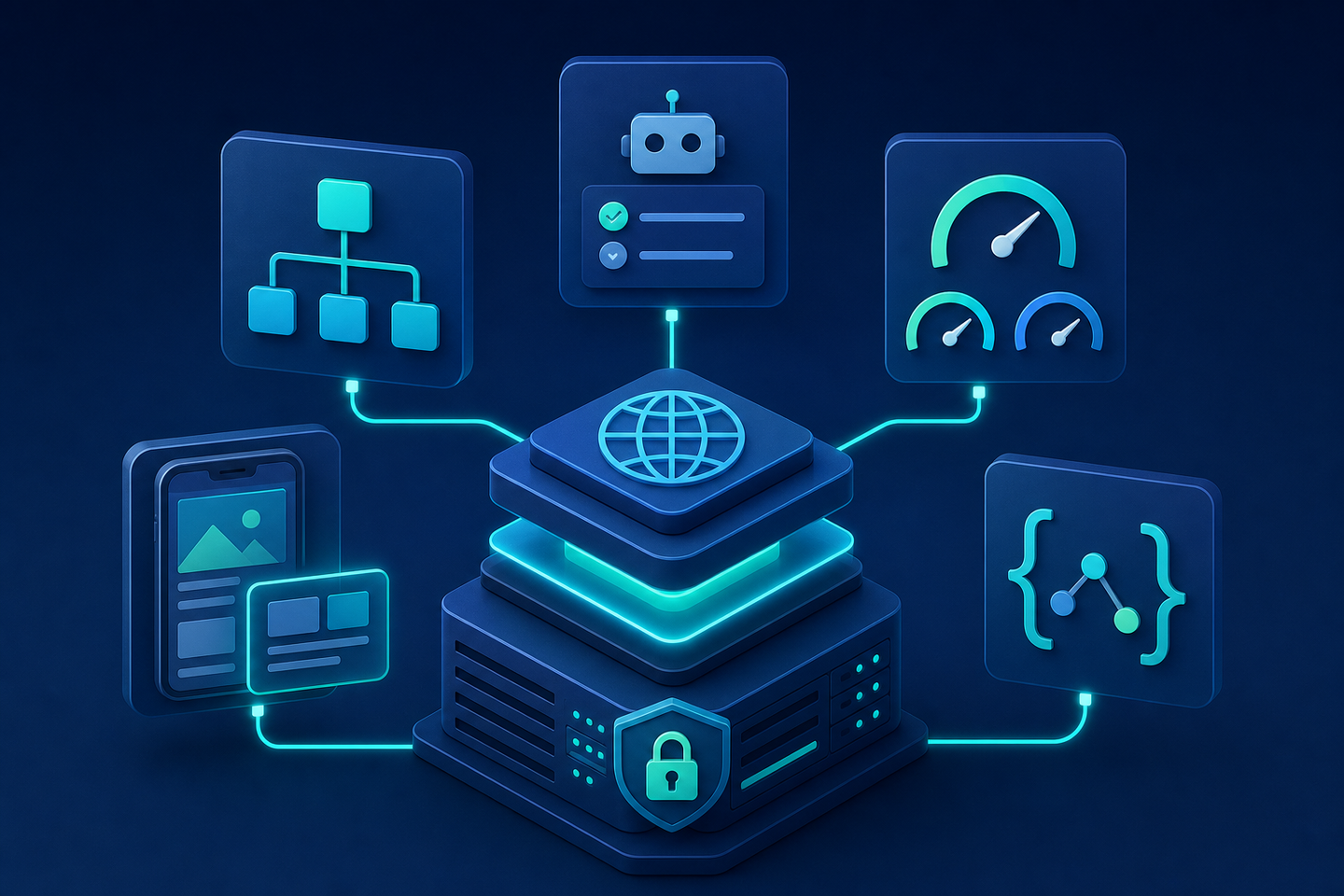
Technical SEO is the floor everything else sits on. If crawlers can't reach your pages or your schema is broken, content quality is irrelevant — it doesn't matter how good the writing is.
Run through this list:
| Technical Check | Pass Criteria |
|---|---|
| Sitemap | Submitted to Search Console; updates automatically on new publishes |
| Robots.txt | No blocks on key pages or CSS/JS files crawlers need to render content |
| Canonicalization | Every page declares its canonical URL; no self-referential conflicts |
| Redirect chains | No chain longer than one hop; all 404s resolved with 301s to the closest relevant page |
| HTTPS | No mixed content warnings; full site runs on SSL |
| Core Web Vitals | LCP under 2.5s, CLS under 0.1, INP under 200ms |
| Mobile-friendliness | Passes Google's Mobile-Friendly Test; no viewport or tap-target failures |
| JSON-LD schema | Article, FAQPage, HowTo, and Organization markup on every relevant page |
That last row isn't optional if AI visibility matters to you. Schema is a binary qualifier — a page without valid JSON-LD gets filtered out before content quality is even considered. The best-written page on your site loses to a mediocre one with clean markup if yours is missing it.
Link Building Checklist
Backlinks still determine whether your pages end up in the retrieval set AI engines draw citations from. According to Similarweb, 59.7% of Google searches ended without a click in 2024. Off-page authority has quietly shifted from driving referral traffic to determining citation share — two different outcomes, but the same underlying signal.
- Audit your existing backlink profile in Ahrefs or Semrush: flag toxic links pointing to your domain and disavow them.
- Find pages with the highest organic potential but weakest link counts. Those are your priority targets.
- Check anchor text distribution: over-optimized exact-match anchors are a manual penalty risk, so aim for a natural mix.
- Score high quality backlinks by referring domain authority, not raw link count.
- Monitor for lost backlinks monthly and reclaim them where possible.
Two things teams consistently skip: brand mention tracking and internal page prioritization. Ahrefs Alerts surfaces unlinked mentions you can turn into backlinks without manual outreach — one email, done. For which pages to target, let Search Console guide you. Pages already ranking 11–20 are your best candidates for a link push. You're already close.
AI Search Optimization Checklist
Ranking on page one doesn't get you cited by AI engines. A site can hold a first-page result and be completely absent from AI-generated answers — two separate visibility problems with two separate fixes. Most teams are only solving one of them.
- Write in self-contained 130-170 word blocks that answer one question completely. Name the entity inside the block. AI engines pull passages, not full articles, and the first sentence under each heading is the candidate answer being assessed.
- Add schema markup for every eligible page type: FAQPage for Q&A content, HowTo for step-by-step guides, Article for editorial content, Organization on your homepage. Schema is a binary qualifier, not a ranking boost.
- Keep content updated. Pages refreshed in the last 90 days get cited more often than stale ones.
- Use direct, definitive phrasing. Hedged language deprioritizes a passage as a citation candidate.
- Track citation share across ChatGPT, Gemini, AI Overviews, Perplexity, and Claude separately as part of AI citation visibility optimization. Each engine has different retrieval behavior, and ranking well in one doesn't mean you're appearing in others.
If GA4 is your only visibility signal, you have no idea whether AI engines are citing you or skipping you entirely. That's a big blind spot in 2026.
Content Refresh and Update Checklist
Declining impressions aren't a vanity metric problem. They're a signal that Google is questioning whether your page is still the best answer — and AI engines are already skipping you for something newer. The fix is usually faster than teams expect.
How to run the update cycle:
- Open Search Console and filter for pages with impressions dropping over the last 90 days compared to the prior period. Those pages are your update queue.
- Sort by potential: pages ranking 11-20 get the most from a content refresh vs. new content decision. You're already close, and stale content is the gap.
- Update the copy to reflect current information, add new examples, and answer questions the original version missed.
- Rewrite the meta title and description if CTR is low. A ranking page with poor CTR is a content problem, not a link problem.
- Fix internal links: check that the page links out to relevant newer content and that updated pages elsewhere link back to it.
- Regenerate schema after every content update. Running a content audit for rankings helps catch schema drift, where your markup no longer matches your content, which is one of the fastest ways to lose AI citations without changing a word of copy.
The trigger: impressions dropping over 90 days, high impressions with cratering CTR, or schema that hasn't been touched since the original publish. Any one of those puts a page in the queue.
Two hours on the right page can recover months of compounding impression loss.
How to Automate Your SEO Checklist
Running every item on this checklist manually is a full-time job. That's not hyperbole — between keyword monitoring, schema drift, content refresh scheduling, and link tracking, the execution layer alone will eat your week. Automation earns its keep there. Human judgment belongs on the decisions that shape what gets built.
The strongest candidates:
- Technical audits: crawlers can detect broken redirects, canonical conflicts, missing schema, and Core Web Vitals failures automatically and continuously
- Schema generation and drift monitoring: any time content changes, schema should regenerate to stay in sync
- Internal linking: tools can map your full content library against Search Console keyword data and insert contextual links on every publish
- Content refresh scheduling: flag pages with declining impressions and queue them for updates as part of automated SEO optimization without manual monitoring
- Backlink identification: surface which pages need links and where unlinked brand mentions exist across the web
Content strategy, brand voice, and editorial review before anything publishes — those still need a person. SEO AI agents run the execution loop in the background. You review before it goes live. Human time drops to under 30 minutes a week.
How Maintouch Runs This Checklist Autonomously
Every category in this checklist, Maintouch runs autonomously.
Agents handle keyword discovery, content creation, technical SEO fixes pushed directly to your CMS — WordPress, Webflow, Framer, Sanity, Strapi, Contentful, Storyblok, Payload, HubSpot, Ghost, and custom stacks via API — backlink procurement at zero markup, schema generation, drift detection, and content refresh scheduling. The loop closes inside one system. No handoff to a developer queue, no agency back-and-forth.
Every paying account gets a dedicated account strategist — a forward-deployed marketer embedded in your growth motion — who runs weekly syncs and stays reachable via Slack. They handle prioritization. Agents handle execution. Your time commitment is under 30 minutes a week.
If you want to start with AI visibility tracking before committing, the free tier at maintouch.com/free tracks 35 prompts across ChatGPT, Google Gemini, AI Overviews, Perplexity, and Claude for a full year — no credit card required.
Final Thoughts on Using an SEO Checklist to Drive Consistent Results
SEO compounds when you work the checklist consistently. It stalls when you treat it as a one-time project. Your best opportunities are almost always already sitting in Search Console: pages ranking 11–20, impressions dropping, schema that hasn't been touched since the original publish. Two hours on the right page beats a month of scattered effort.
If you want to talk through what any of this looks like on your stack, shoot me a message at [email protected].
FAQ
What does a complete SEO solution include beyond content creation?
A complete SEO solution covers keyword research, technical fixes, internal linking, schema generation, backlink procurement, content refresh scheduling, and AI citation tracking across ChatGPT, Perplexity, and Google AI Overviews. Content creation is one layer of that loop — not the whole thing. The parts teams most often leave unattended are schema drift monitoring and content refresh cadence. Both are among the fastest ways to lose AI citations without changing a word of copy.
How much time does a team actually need to spend on SEO each week when using an AI-powered tool?
If the tool executes instead of just reporting, the realistic weekly time commitment drops to under 30 minutes. That means reviewing flagged updates and approving content before it publishes — not running audits, chasing developers for fixes, or managing agency back-and-forth. The distinction is whether your tool surfaces what needs doing and stops there, or closes the loop by doing the work itself.
What's the best Semrush alternative for a startup that wants execution instead of just data?
Semrush is a data product. It surfaces keyword gaps, tracks rankings, and shows you what's broken. It doesn't write the content, push technical fixes to your CMS, build backlinks, or regenerate schema after a content update. For a startup that wants the work done instead of just reported, the right comparison is a full-stack execution system like Maintouch — one that handles the entire loop without handing tasks back to your team or a separate agency.
How do I know which pages to focus on when running an SEO content refresh?
Open Search Console and filter for pages where impressions have dropped over the last 90 days. Then sort by pages ranking 11–20 for their target keyword — you're already close to page one, and stale content or weak schema is typically the gap. Pages with high impressions but dropping CTR belong in the queue too. That's a sign the title and meta description no longer match what searchers expect to find.
What's the difference between ranking on page one of Google and getting cited by AI engines like ChatGPT or Perplexity?
A first-page Google ranking and an AI citation are two separate visibility outcomes with different qualifying criteria. Google ranks pages on authority, relevance, and user signals. AI engines pull passages from pages with clean schema and content structured in self-contained 130–170 word blocks that answer one question directly. A site can hold a first-page result and be entirely absent from AI-generated answers if its schema is incomplete or its content is dense prose. Separate problems, separate fixes.
How often should I run through an SEO checklist for an existing site?
Technical checks — crawl errors, Core Web Vitals, schema validity — should run continuously or at least monthly. Keyword research and competitive gap analysis are worth a full revisit every quarter; search behavior and SERP composition shift faster than most teams expect. Content freshness audits should trigger the moment Search Console shows impressions dropping over a 90-day window. A quarterly full-checklist pass keeps stale content and drifted schema from quietly eroding both rankings and AI citations.
Does fixing technical SEO issues actually improve AI Overview citations?
Yes, directly. Schema markup is a binary qualifier: pages without valid JSON-LD are filtered out before content quality is even evaluated. Core Web Vitals and crawlability don't influence citations the same way, but they determine whether the page gets indexed and surfaced to AI crawlers at all. The fastest path to AI Overview and ChatGPT citations usually runs through schema cleanup — not more content.
What's the right way to handle keyword cannibalization when two pages are competing for the same term?
Start in Search Console: filter for the target keyword and check which URL is getting the impressions. That's your canonical page. If the topics overlap substantially, consolidate the weaker page's content into it and 301 redirect the merged URL. If both pages cover meaningfully different angles, differentiate the intent clearly enough that Google reads them as separate questions. Cannibalization is almost always two pages chasing one intent instead of each owning one cleanly.
How do I know if my robots.txt or noindex tags are hurting my SEO without realizing it?
Run a site:yourdomain.com search in Google and compare the indexed page count against your actual live page count. A significant gap means something is blocking pages. Open Search Console's Coverage report and look for "Excluded" URLs tagged as "noindex" or "blocked by robots.txt." The most common accidental blocks are staging environment directives left in production and CSS or JavaScript files that crawlers need to render your pages.
Is link building still worth the effort in 2026 given how many searches end without a click?
Zero-click search makes direct traffic from backlinks less predictable, but authority signals still determine which pages end up in the retrieval set AI engines draw from. A strong backlink profile from credible referring domains is what gets your page into the pool ChatGPT, Perplexity, and Google AI Overviews consider when generating answers. The payoff has shifted from referral traffic to citation share — same underlying work, different scoreboard.
Can I use this SEO checklist if I'm just starting out with a brand new domain?
Most of the checklist applies immediately, but link building and programmatic SEO need context. New domains don't have the authority base to compete for head terms or scale programmatic content without risking Google spam classification. Start with foundational setup, keyword research focused on low-competition long-tail queries, and content built to earn your first handful of quality backlinks. Technical and on-page work compounds faster on a new domain than any link volume play would.
How do I prioritize which item on the SEO checklist to tackle first?
Start with the setup and tracking layer before anything else — if Search Console and GA4 aren't confirmed working, you can't measure the impact of anything downstream. Then fix technical blockers: crawl errors, broken redirects, missing canonicals. Those affect every page at once, so the leverage is highest there. On-page and content work come next. They compound the fastest once the foundation is solid.
What's the difference between on-page SEO and technical SEO?
On-page SEO covers the elements you control inside the content itself: title tags, meta descriptions, heading structure, keyword placement, internal links, image alt text. Technical SEO covers everything that affects how search engines access and interpret your site: crawlability, indexing, site speed, schema, canonicalization, redirect chains. Both matter — but technical issues block on-page work from taking effect. A perfectly optimized page is useless if Googlebot can't reach it.
How long does it typically take to see results after working through an SEO checklist?
Technical fixes and indexing changes can show up in Search Console within days to a few weeks. Content improvements and new pages typically start generating impressions within 4–12 weeks, though meaningful ranking movement for competitive terms takes longer. In my experience, most sites see measurable impression lift within 60–90 days of consistent execution — don't expect revenue from month one, expect data.
Should I run through the full SEO checklist for every page on my site, or just the most important ones?
Start with your highest-traffic and highest-intent pages: product pages, service pages, and the blog posts already generating impressions in Search Console. Running the full checklist across every page at once is how teams lose momentum. Prioritize by revenue proximity first, then work outward. The technical checks (schema, canonicals, Core Web Vitals) do need to cover the whole site eventually, but page-level content work should be prioritized by impact.
Does this SEO checklist apply to e-commerce sites or just content-focused ones?
Every category applies to e-commerce. The on-page work, technical checks, schema markup, and link building are especially high-leverage for product and category pages. E-commerce sites have one additional priority worth adding: product schema (price, availability, reviews) is a direct qualifier for Google Shopping placements and AI engine citations in purchase-intent queries. If you're running e-commerce, treat product schema as part of the schema row in the technical checklist, not optional.
What's the fastest way to find out which SEO issues are hurting my site the most right now?
Open Search Console's Coverage report and look for crawl errors, noindex tags on pages you intended to be live, and excluded URLs you weren't expecting. Then run a quick Core Web Vitals check in Search Console's Page Experience report. Those two reports surface the issues with the broadest blast radius — the ones hitting every page, not just isolated posts. From there, move to the content layer: filter for pages ranking 11-20 with declining impressions. That's your prioritized repair list.
How do I know if my content is actually structured well for AI engine citations, not just Google?
Check two things: whether your content is written in self-contained 130-170 word blocks that answer one question directly, and whether you have valid JSON-LD schema on every relevant page type. If your content is dense prose without clear passage-level structure, AI engines can't reliably pull candidate answers from it. If your schema is missing or mismatched to the current page content, the page gets deprioritized before content quality is even evaluated. Both problems are fixable — structure is an editing problem, schema is an automation problem.
Turn search into your best growth channel.
Maintouch tracks your visibility across AI and Google, creates and refreshes content, and gets your brand mentioned on the sites that shape discovery.
Book a demoRelated reading
All posts