
5 Best Tools for AI Brand Visibility in October 2026

By Bennett Cohen
Get Maintouch
Turn search and AI visibility work into a repeatable growth system.
The difference between AI visibility tools is smaller than the marketing suggests — until you ask one question: does it fix the problem or just report it? Most stop at the report. A few go further. I've tested most of them as a buyer, stress-tested the rest as a builder, and eventually built a product that competes with them. My goal: you walk away knowing exactly which tool fits your situation, and why the gap between reporting and execution is the only distinction that actually matters.
TLDR:
- Cited brands earn roughly 120% more organic clicks per impression than sites ranking below the AI-generated box, and 59.7% of Google searches end without a click.
- Most AI brand visibility tools only track citations across select engines and stop there, leaving execution to you.
- The key split in this category: tools that report what needs fixing versus systems that do the fixing inside one workflow.
- Profound starts ChatGPT-only, Peec AI caps at 3 engines, AthenaHQ starts at roughly $400/month, and OtterlyAI has no execution layer.
- Maintouch tracks all 5 AI engines, handles content creation, technical SEO, backlink procurement, and CMS publishing, with a free tier covering 35 prompts for one year.
What is AI Brand Visibility?
AI brand visibility measures how often your brand gets mentioned, cited, or recommended when someone asks a question to ChatGPT, Gemini, Perplexity, Claude, or Google AI Overviews. It's the difference between ranking on a search results page and actually showing up inside the answer.

Traditional rankings still matter, but they're incomplete. AI brand visibility shapes whether you appear in those answers at all — and 59.7% of Google searches now end without a click. The user gets the answer from the AI summary and moves on. If your brand isn't in that summary, you're invisible at the exact moment someone's consideration set is forming.
Cited brands earn roughly 120% more organic clicks per impression than sites ranking below the AI box. Those are buyers mid-decision, not browsers. Answer engine optimization is how you get into those answers — and if you're not in the answer, you're not in the consideration set.
How We Ranked These AI Brand Visibility Tools
Every tool here was scored against the same criteria. I'm laying them out upfront so you can run your own evaluation if none of these fit your situation exactly.
- Engine coverage: how many of the five major AI engines (ChatGPT, Gemini, Perplexity, Claude, Google AI Overviews) does the tool track? Tracking the right AI visibility metrics and KPIs matters more than the totals.
- Execution capability: does it report data and stop, or does it act on what it finds? A dashboard that shows you're missing citations but can't fix the problem is half a product.
- Content and technical SEO integration: can it create or optimize content, generate schema, and handle on-page fixes inside the same workflow?
- Backlink marketplace support: does it identify link gaps and go get the links, or leave that to a separate tool and budget?
- Human strategy layer: is there a real person helping you sort what matters most, or are you reading charts alone?
- Pricing transparency: can you find what it costs without booking a sales call?
- CMS connectivity: can it push changes live to your site, or does every fix route through a developer queue?
Most tools do one or two of these well and punt on the rest. That's the gap I kept running into — and it's why execution is weighted so heavily in this list.
Best Overall AI Brand Visibility Tool: Maintouch
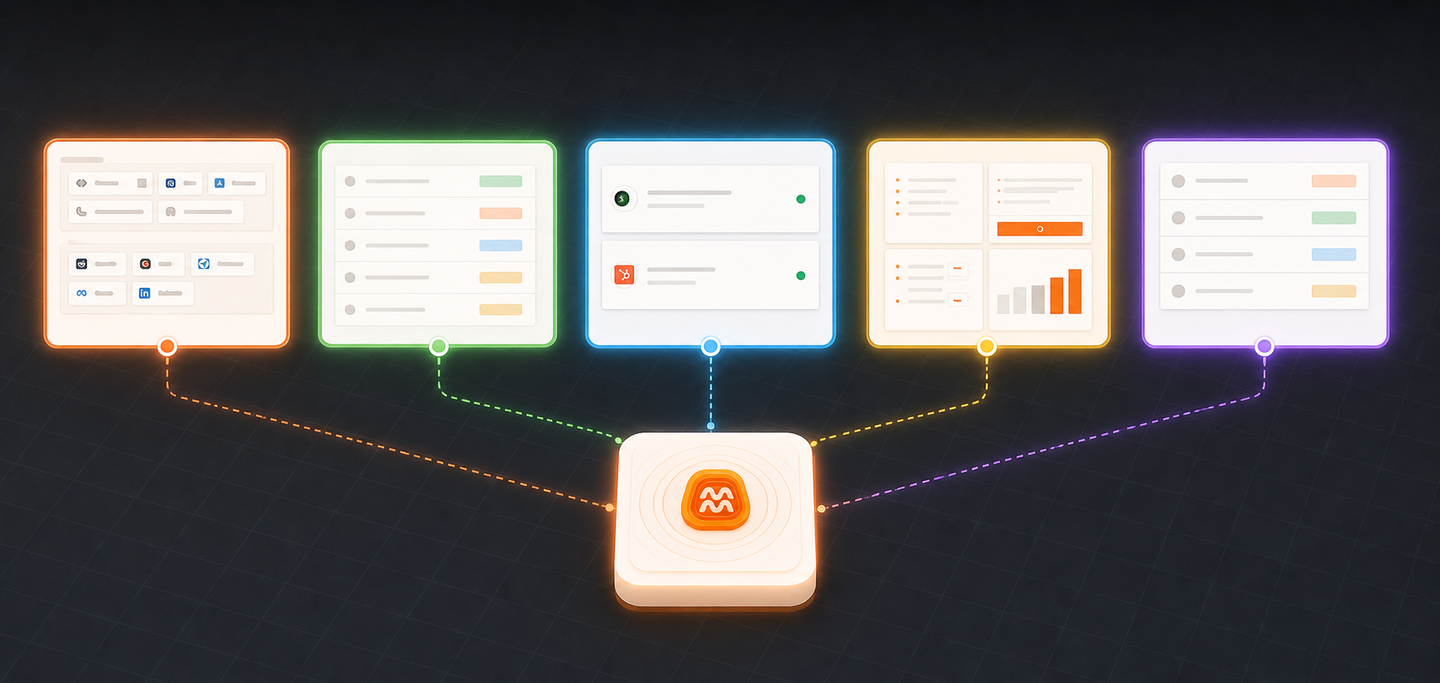
I built Maintouch because every other tool I looked at stopped at the dashboard. Knowing you're missing citations is useful. Having a system that actually fixes them is something else entirely. Maintouch runs the full operation — keyword discovery through CMS publishing through backlink procurement — from one place.
- AI visibility tracking across all 5 AI engines with a free tier (35 prompts, one full year, no credit card — tracking only)
- Closes the loop: keyword discovery, content strategy, content creation, CMS publishing, technical SEO remediation, backlink procurement, and AI visibility tracking all run without manual handoffs
- The Agentic Document Editor ("cursor for SEO") learns from every human edit, automatically updating KB, Brand Voice, and Blog Rules so output gets sharper over time
- Every paying account gets a dedicated account strategist with weekly standing syncs and a dedicated Slack channel
- SOC 2 Type 2 compliant
Maintouch replaces $200k+ in annual SEO headcount. If you want to check your AI visibility before committing to anything, the free tier at maintouch.com/free is the right place to start — no credit card, no sales call required. Tracking only; content creation and full-system capabilities require a paid plan.
Profound
- AI visibility analytics and prompt tracking across select engines
- Content brief generation by scraping highly-referenced pages on a topic
- WordPress and Sanity CMS integrations
- Bi-weekly account manager check-ins on higher-tier plans
Good for: Teams or agencies that need a deep prompt tracking dashboard and have dedicated SEO staff to act on the data themselves.
Limitation: Profound's Starter plan tracks ChatGPT only. Claude coverage requires a custom Enterprise plan. There's no execution layer — no backlinks, no technical SEO fixes, nothing pushed to a CMS. Teams frequently end up hiring an external contractor (roughly $2,000/month) on top of their subscription just to act on what the dashboard shows. The sticker price is the starting point, not the total cost.
If you need a system that acts on what it finds, the Maintouch vs Profound breakdown is worth reading — the cost of ownership climbs fast once you factor in the people required to close the loop.
Peec AI
- Prompt-based brand visibility monitoring across up to 3 AI models of choice
- Multi-country tracking on advanced plans with Looker Studio integration
- Project-based workspace organization (1 project on Starter, up to 5 on Advanced)
- API access and SSO on Enterprise tier
Good for: Marketing teams or agencies that need structured, prompt-level brand monitoring and are comfortable directing their own content and SEO strategy from a dashboard.
Limitation: The Starter plan caps you at 3 AI engines and 50 prompts for $95/month — and there's no execution layer. No content creation, no technical SEO fixes, no backlink procurement. The data lands in your lap and what you do with it is your problem. For broader engine coverage before you spend anything, Maintouch's free tier tracks all five engines with 35 prompts for a full year at no cost.
For a detailed side-by-side, the Maintouch vs Peec AI breakdown is worth reading — per-prompt pricing adds up fast.
AthenaHQ
AthenaHQ solves GEO measurement. Founded by former Google Search and DeepMind leaders and backed by Y Combinator, it tracks how your brand appears across all five major AI engines with a proprietary GEO Score. The pedigree is real — and the product is built for teams that want structured, enterprise-grade tracking to match it.
- GEO Score tracking and prompt analytics across five AI engines
- Competitor benchmarking and AI sentiment analysis
- Enterprise-grade localization covering 60+ countries
- Actionable recommendations surfaced in the dashboard
Good for: Enterprise teams or growth-stage companies that want structured GEO tracking and competitor benchmarking across multiple AI engines and global markets.
Limitation: Pricing starts at roughly $400/month. That's a real spend for a monitoring tool — one that doesn't create content, push technical SEO fixes, build backlinks, or include a strategist. Every improvement after reading the dashboard is yours to coordinate, fund, and execute separately.
AthenaHQ gives you strong visibility intelligence. The loop on AI citation visibility optimization stays open — Maintouch's free tier covers the same five engines at no cost, and the paid system handles the execution AthenaHQ hands back to you.
OtterlyAI
OtterlyAI solves diagnostic coverage. It monitors brand presence across six AI engines — including Copilot and AI Mode, which most tools in this category skip — and pairs that with a GEO audit covering 25+ factors for citation readiness.
- Brand visibility monitoring across ChatGPT, Perplexity, Google AI Overviews, Gemini, Copilot, and AI Mode
- GEO audit with 25+ factors analyzed for AI citation readiness
- Looker Studio connector for custom reporting
- Country-level AI visibility tracking across 50+ countries
Good for: Content teams or agencies that want broad multi-engine monitoring with geographic granularity and a standalone GEO audit for diagnosing citation gaps.
Limitation: No execution tools, no traffic attribution from AI engines to site visits, no content creation, no technical SEO, no backlinks. You take the audit data and run improvements through entirely separate workflows — fine if your team has the capacity, a real problem if they don't.
OtterlyAI does the diagnostic job well. If your team can move fast on what it surfaces, that's enough. If you need the full loop closed inside one system, Maintouch handles tracking through publishing and link procurement without the handoffs.
Feature Comparison Table of AI Brand Visibility Tools
| Feature | Maintouch | Profound | Peec AI | AthenaHQ | OtterlyAI |
|---|---|---|---|---|---|
| All 5 AI Engines Tracked | Yes | No (Claude requires Enterprise) | No (3 engines, user's choice) | Yes | No (Claude not included) |
| Free Tier Available | Yes | No | No | No | No |
| Content Creation | Yes | Limited | No | Limited | No |
| Technical SEO Execution | Yes | No | No | No | No |
| Backlink Procurement | Yes | No | No | No | No |
| Human Strategy Layer | Yes | Limited (bi-weekly) | No | No | No |
| CMS Integration | Yes (10 CMS platforms) | Yes (WordPress, Sanity) | No | No | No |
The table tells one story fast: most AI visibility trackers stop at tracking. They'll show you where you're cited and where you're not — but closing that gap is your problem. Maintouch is the only tool here that closes the full loop: citation data through content creation, technical SEO, and backlink procurement, all inside one system, with a dedicated strategist on every paying account.
Why Maintouch is the Best AI Brand Visibility Tool
Every other tool on this list tells you where you're missing. Maintouch does the work. Citation tracking, content creation, schema automation, CMS publishing, backlink procurement — one system, one strategist who meets with you weekly. No handoffs to a dev queue. No separate tool for the thing the dashboard just told you to fix. That's the difference between a dashboard and an operation.
If you want to see where you stand before committing, the free tier at maintouch.com/free tracks 35 prompts across all five AI engines for a full year — no credit card required. Start there, see your gaps, and go from there.
Final Thoughts on the Best Tools for AI Brand Visibility
Citation gaps don't close on their own. A monitoring tool tells you how wide they are — it doesn't close them. The actual work is content, schema, backlinks, and execution, in the right order, at the right pace. I've watched enough teams spend three months reading dashboards and lose a full quarter of real execution time. If you want to talk through what closing the loop would look like on your stack, shoot me a message at [email protected].
FAQ
How do I choose the right AI brand visibility tool for my needs?
Start with one question: do you need tracking or execution? If you have an in-house SEO team that can act on data quickly, Profound, Peec AI, or AthenaHQ may be enough. If you need the work done without routing fixes through a dev queue or hiring contractors on top of your subscription, Maintouch is the only tool here that closes the full loop.
Is Maintouch better than Profound for teams without dedicated SEO staff?
Yes. Profound surfaces data but leaves execution to you — and teams frequently end up hiring an external contractor (roughly $2,000/month) on top of their subscription just to act on what the dashboard shows. Maintouch includes content creation, technical SEO fixes, backlink procurement, and a dedicated strategist in one system. You're not paying twice to get the same thing done.
What is the real difference between AthenaHQ and OtterlyAI for AI citation tracking?
AthenaHQ tracks five AI engines with GEO scoring and competitor benchmarking, starting at roughly $400/month. OtterlyAI covers six engines including Copilot and runs a 25+ factor GEO audit at a lower price point. Both are monitoring tools — neither creates content, fixes technical SEO, or builds backlinks. Every improvement after reading the report is yours to execute.
When should I consider Peec AI over the other tools on this list?
Peec AI fits teams that only need prompt-level brand monitoring and are comfortable directing their own content and SEO strategy from a dashboard. The Starter plan caps you at 3 AI engines and 50 prompts for $95/month, so if you want broader engine coverage before spending, Maintouch's free tier tracks all five engines with 35 prompts for a full year at no cost.
Can I track AI brand visibility for free before committing to any paid tool?
Yes. Maintouch's free tier at maintouch.com/free tracks 35 prompts across all five AI engines — ChatGPT, Gemini, Google AI Overviews, Perplexity, and Claude — for one full year, no credit card required. No other tool on this list offers that. The free tier is tracking only; content creation and full-platform features require a paid subscription.
What does AI brand visibility actually affect — does it drive real traffic?
Yes, and the numbers are real. Cited brands earn roughly 120% more organic clicks per impression than sites ranking below the AI-generated box — they're capturing buyers who already have a specific question and are already mid-decision. The channel is also growing: 59.7% of Google searches now end without a click, which means AI-generated summaries are often the last thing a buyer reads before forming a consideration set.
How is AI brand visibility different from traditional SEO rankings?
Traditional SEO ranking puts you on a list of ten blue links. AI brand visibility determines whether you appear inside the answer itself — in ChatGPT, Gemini, Perplexity, Claude, or Google AI Overviews — before a list of links is ever shown. You can hold a first-page Google ranking and be entirely absent from AI-generated answers if your structured data, content format, or passage-level structure isn't optimized for citation. They require parallel work, not sequential.
What is answer engine optimization and why does it matter for AI brand visibility?
Answer engine optimization (AEO) is the practice of structuring content so AI engines cite your brand when answering relevant questions. It matters because AI engines don't pull citations from rankings the way Google pulls results — they pull from pages whose structured data, schema markup, and passage-level formatting make the answer unambiguous. A brand that ignores AEO can rank on Google and still be invisible across every AI engine simultaneously.
How do AI visibility tools actually track citations across different engines?
Most tools submit a defined set of prompts to each AI engine on a recurring schedule and record whether your brand is mentioned, cited, or recommended in the response. The quality gap is in engine coverage — some tools track only two or three engines, which means you're blind to citation behavior on the others. Maintouch runs this across all five AI engines and also surfaces fan-out queries: the sub-questions AI engines break prompts into before generating an answer, which is where most citation decisions actually happen.
Does improving AI brand visibility require separate work from regular SEO?
Less than most people expect. AI chatbots run a web search before generating their answers, so strong SEO directly feeds AI citation performance — same foundation. What AEO adds on top: passage-level content structure (self-contained 130–170 word blocks that answer one question completely), schema markup (FAQPage, Article, HowTo), and freshness. Pages updated in the last 90 days get cited far more often than stale ones.
Which AI engine should I prioritize tracking first if I'm just starting out?
Start with ChatGPT and Google AI Overviews — they carry the most traffic volume and represent the widest range of buyer queries. Perplexity skews toward research-heavy, high-intent users, making it valuable for B2B brands. Claude is growing quickly and is gated behind enterprise pricing on some tracking tools, so it's worth confirming your tool covers it before assuming it does. Tracking all five gives you the full picture; tracking only one or two leaves you optimizing with incomplete data.
Can a monitoring-only AI visibility tool be enough if my team already handles execution?
It depends on your team's capacity and how fast they move. AthenaHQ, OtterlyAI, and Peec AI work well if you have dedicated SEO staff who can act on the data immediately. Where teams run into trouble is the handoff cost: every fix routed through a dev queue, content creation coordinated separately, backlinks procured through a different tool and budget. It adds up fast — in time and in dollars. I've watched teams spend three months in dashboards and lose a full quarter of execution. If you're already moving fast, monitoring alone is fine. If you're not, the loop stays open.
How do I know if my content is actually optimized for AI citation, not just SEO rankings?
The two signals diverge quickly. You can hold a first-page Google ranking and still be invisible across every AI engine if your structured data is incomplete or your content isn't formatted for citation. The clearest diagnostic: check whether your key pages have FAQPage, Article, or HowTo schema, whether they're updated within the last 90 days, and whether they answer the question completely in a self-contained 130–170 word block with your entity named inside it. If none of those three things are true, you're optimizing for rankings that don't translate to AI citations.
What's the difference between AI visibility tracking and traditional rank tracking?
Rank tracking tells you where your URL sits in a list of ten blue links. AI visibility tracking tells you whether your brand gets mentioned, cited, or recommended when someone asks an AI engine a direct question — which is an entirely different signal. You can rank first on Google and not appear in a single AI-generated answer. Tracking both is how you catch that gap before it costs you a full category of buyer traffic.
Do these AI brand visibility tools work for B2B companies specifically, or are they more useful for B2C?
All of them can be used in B2B contexts, but the use case is sharper there. B2B buyers spend longer in the research phase and are more likely to use AI tools to shortlist vendors before ever hitting a search results page — which means AI citation behavior shapes your consideration-set inclusion before a demo request ever happens. For B2B SaaS and venture-backed companies in particular, getting cited in Perplexity and ChatGPT responses to category-level questions is a direct pipeline input, not a vanity metric.
Can I improve my AI brand visibility without completely rebuilding my content strategy?
Yes, and most of the high-impact work doesn't require rebuilding anything from scratch. The three moves that carry the most weight: add or update schema markup on your highest-traffic pages, restructure key sections into self-contained 130–170 word answer blocks that name your entity, and refresh any pages that haven't been touched in 90+ days. Those three changes address the most common structural reasons pages get skipped by AI engines even when the underlying content is solid.
Is SOC 2 compliance something I should be asking AI brand visibility tools about?
Yes — especially if you're connecting Search Console data, CMS credentials, or sales call recordings to the platform. Most tracking tools don't surface their compliance posture publicly. Maintouch is SOC 2 Type 2 compliant; Profound's compliance posture isn't publicly equivalent. If your team is enterprise or security-conscious, compliance posture is worth asking about before you connect any live systems.
How long does it typically take to see improvement in AI citation rates after making changes?
In most cases, pages updated with schema, structured answer blocks, and freshness signals start showing up in AI citations within a few weeks — faster than traditional SEO rankings, which can take months to move. The variable that matters most is crawl frequency: pages that AI engines have already indexed and refreshed recently respond faster than pages that haven't been crawled in months. Don't expect overnight results, but citation rate improvements are measurable and show up well before organic ranking changes do.
Turn search into your best growth channel.
Maintouch tracks your visibility across AI and Google, creates and refreshes content, and gets your brand mentioned on the sites that shape discovery.
Book a demoRelated reading
All posts