
Best AI Visibility Tracking Tools for All Five Engines

By Bennett Cohen
Get Maintouch
Turn search and AI visibility work into a repeatable growth system.
Still comparing subscription prices without knowing what it'll cost to track all five engines? Add-ons, enterprise access, and credit limits can change the bill. A monitoring subscription may also leave all the content and technical work with your team. The useful comparison is what your plan tracks and what the software does after finding a gap. My goal: you walk away knowing exactly which tradeoffs to check against your budget and your team's capacity to do the work.
TLDR:
- Check whether your AI visibility tool ships changes or only reports citation gaps.
- Verify ChatGPT, Gemini, Google AI Overviews, Perplexity, and Claude coverage by tier.
- Track brand mentions, linked citations, crawler visits, and referral clicks separately.
- Check prompt limits, credits, and engine add-ons before you compare subscription costs.
- Maintouch Hypergrowth includes five-engine tracking and CMS publishing at $799/month.
What Are AI Visibility Tracking Tools?
AI visibility tracking tools check AI answers for brand mentions, linked citations, and competitor appearances. A mention names your brand; a linked citation points to a source page. Competitor appearances show which other brands appear for your tracked prompts.
Keep these separate from crawler visits (bots accessing your site) and referral traffic (people clicking through). An appearance in a sampled answer doesn't prove either happened.
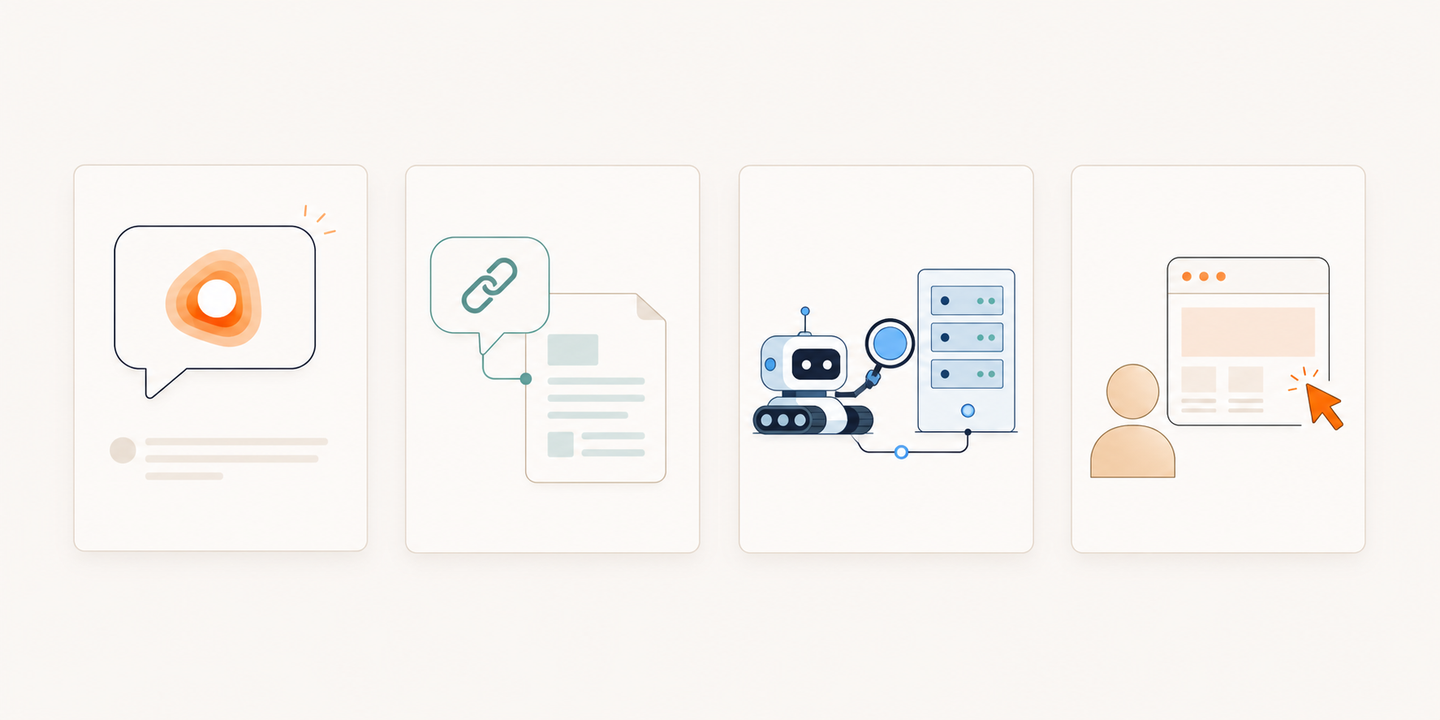
Here, “all five engines” means ChatGPT, Gemini, Google AI Overviews, Perplexity, and Claude. Other engines exist. Check coverage by tool and subscription tier before you commit.
How We Ranked AI Visibility Tracking Tools
I built Maintouch, so I have a commercial stake. Rankings reflect vendor pricing pages, public documentation, and third-party reviews cited throughout, not hands-on testing.
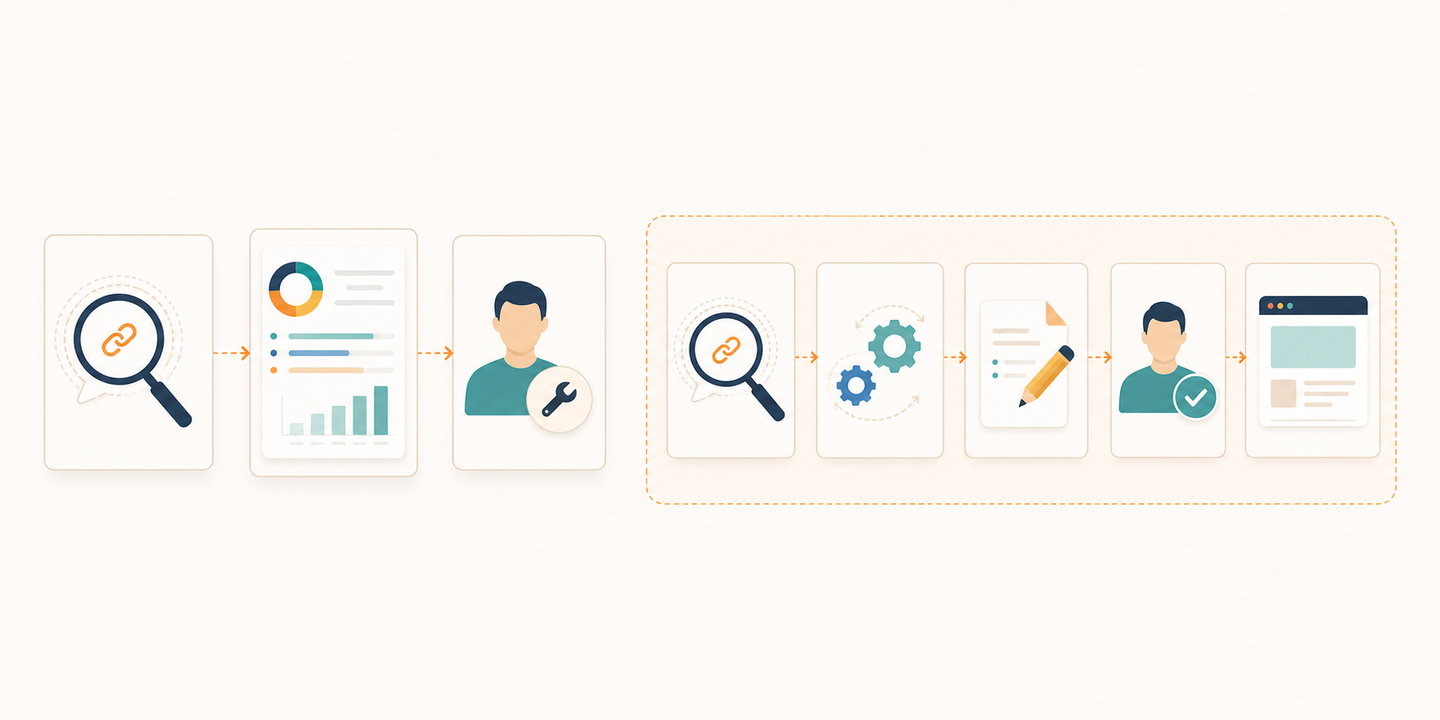
The central question: does the tool execute work or only report what needs doing? Five criteria:
- Engine coverage: included access versus paid additions and enterprise-only access.
- Citation analysis: clarity of cited-source reporting.
- Live crawler visibility: documented tracking capabilities.
- Execution: findings becoming shipped changes within the same system.
- Plan restrictions: limits on usable scope and cost.
Execution credit requires documented actions beyond reporting.
Unverified details are labeled; missing documentation doesn't prove a feature is absent.
Best Overall AI Visibility Tracking Tool: Maintouch
I built Maintouch to turn visibility gaps into published improvements, connecting AI visibility tracking with SEO and AEO execution.
Tracking and Execution
- Request-level AI crawler analytics and competitor citation tracking.
- Content creation, CMS publishing, technical fixes, and backlink procurement on Hypergrowth and above.
Good for: teams wanting tracking and execution together, including those weighing Maintouch vs Peec AI. Hypergrowth covers all five engines at $799/month, with a 5-day free trial. Connect your CMS and Google Search Console for full execution.
I rank it first because it acts on visibility gaps inside the same system. For ongoing strategist support, choose the custom plan.
Loamly
Loamly's fit for AI visibility tracking remains unverified in the available research, so I can't classify it as a monitoring tool or an execution system. To assess its reporting, request a sample showing the tracked prompt, the engine's answer, and the cited source URLs, with brand mentions separated from linked citations. Ask which of ChatGPT, Gemini, Google AI Overviews, Perplexity, and Claude your intended subscription includes, alongside prompt limits and checking frequency. For execution, ask Loamly to show what happens after it identifies a citation gap: does it recommend an update, generate a draft, or publish a change to your CMS? Those distinctions determine whether you're buying reporting for an existing team or software that carries out the work; the available documentation doesn't confirm where Loamly fits.
Coverage and Reporting
- Engine coverage: unverified.
- LLM citation tracking and pricing: unverified.
Good for: no audience recommendation until supporting documentation is available.
Limitation: missing verification prevents a fair review; it isn't evidence of a product shortcoming.
Bottom line: before shortlisting Loamly, request current documentation showing supported engines, citation reports, plan terms, and whether the software executes work or only reports what needs doing.
Scrunch
Scrunch helps you investigate crawler behavior alongside brand visibility in AI answers.
Tracking and reporting
- Named tracking for ClaudeBot, GPTBot, and PerplexityBot.
- GA4-connected AI referral reporting.
- AI answer monitoring, with Claude coverage on the enterprise tier, according to the cited review.
Good for: technical teams equipped to run their own crawler analysis as part of a wider LLM visibility program.
Limitation: its monitoring-first design leaves implementation to your team.
Bottom line: choose Scrunch for technical analytics. If you need execution alongside tracking, compare it with Maintouch Hypergrowth and above, which include CMS execution and backlink procurement.
Otterly.AI
Otterly.AI serves teams looking for lower-cost AI visibility monitoring.
Monitoring scope
- Scalenut's Otterly.AI review reports seven AI engines. That count alone doesn't confirm coverage of the specific five engines compared here, so the table leaves that match unresolved.
- Entry pricing starts at $25/month, but complete engine coverage costs more. Confirm engine-related add-ons before buying.
Good for: teams comparing monitoring subscriptions on a limited budget as part of a broader look at why AI brand visibility matters.
Limitation: the entry price isn't the full cost of your required engine coverage. Request that total before comparing subscriptions.
Bottom line: compare monitoring costs with Maintouch's live crawler analytics and execution capabilities. Ask whether Otterly.AI executes work or only reports findings; don't treat unverified features as absent.
AthenaHQ
AthenaHQ solves brand monitoring in AI answers through a dedicated, credit-based subscription.
Subscription scope
- Prompt monitoring and AI answer analysis.
- A paid Starter subscription at approximately $400/month.
Good for: teams matching AI visibility tracking tools to their monitoring workload, a decision I break down further when AI brand visibility tools are compared.
Limitation: credits affect capacity. Confirm consumption before setting prompts and refresh frequency.
Bottom line: does the software execute work or only report findings? Maintouch Hypergrowth and above connects findings to content workflows, technical SEO fixes, CMS publishing, and backlink procurement. Ask AthenaHQ to document its execution scope alongside its monitoring allowance, the same way my Profound AI review looks at citation tracking and limits.
Peec AI
Peec AI supports prompt-based monitoring across selected AI engines.
What You Get
- Three selected models in the base plan.
- Unlimited team seats.
Good for: teams tracking a selected group of engines.
Limitation: the cited engine coverage comparison lists Claude as an add-on available on Peec AI's enterprise tier, but doesn't show that enterprise access is required in every case. Confirm Claude availability and add-on costs for your intended tier before budgeting for citation tracking.
Bottom line: compare those terms with Maintouch's five-engine Hypergrowth subscription, which includes search execution workflows. Ask Peec AI to document whether it executes work after finding a citation gap or leaves that work to your team.
Feature Comparison Table of AI Visibility Tracking Tools
Does it execute or report? “Unverified” means undocumented, not absent.
| Tool | Coverage | Limits | Live crawlers | Execution |
|---|---|---|---|---|
| Maintouch | All five: Hypergrowth | 235 prompts; 13,200 runs/month | Request-level logs | Content, CMS publishing, technical fixes, backlinks |
| Loamly | Unverified | Unverified | Unverified | Unverified |
| Scrunch | Four Core; nine Enterprise | Claude: enterprise | Named crawlers | Recommendations/audits |
| Otterly.AI | Seven engines reported; five-engine match unresolved | Extras reported | Unverified | Unverified |
| AthenaHQ | Five-engine match unresolved | Credits | Unverified | Execution layer reported; confirm scope |
| Peec AI | Three entry models | Claude requires enterprise access | Unverified | Unverified |
Request your intended tier’s sample report and a walkthrough of publishable changes, and review which AI visibility KPIs you should track against that report.
Why Maintouch Is the Best AI Visibility Tracking Tool
I'd recommend Maintouch for teams whose AI visibility findings keep waiting on someone to do the work. I built it to connect findings to execution. Configurable approvals let you review changes before they go live, keeping editorial control over automated work, a contrast worth noting against my breakdown of Profound AI for SEO.
The Hypergrowth plan includes tracking across all five engines, content workflows, technical SEO fixes, CMS publishing, and backlink procurement. You can compare our plan options and start a 5-day free trial to test the fit with your publishing workflow.
Final thoughts on Tracking AI Visibility
You can track mentions without proving anyone visited your site. Keep citations, crawler activity, and referrals separate in your review. If you want to see how Maintouch connects tracking with action, shoot me a message at [email protected].
FAQ
How should you choose between Maintouch, Scrunch, and Otterly.AI for AI visibility tracking?
Start with who will act on the findings: your existing team or the software itself. Shortlist Scrunch for technical crawler analysis, Otterly.AI for budget-focused monitoring, and Maintouch Hypergrowth for tracking tied to publishing and technical fixes. Before buying, ask each vendor to walk through one citation gap from detection to a live page change.
How can you compare the real cost of Otterly.AI, AthenaHQ, and Peec AI?
Request quotes using the same engine list, prompt count, and checking frequency. Otterly.AI's reported $25/month entry price may require engine extras, AthenaHQ's credits affect monitoring capacity, and Peec AI's reported Claude access requires an enterprise tier. Include the staff or contractor time needed to turn reports into content updates and technical fixes.
Should you start with Otterly.AI, Scrunch, or Maintouch if you're new to AI visibility tracking?
For a first monitoring project, shortlist Otterly.AI if your team can make the resulting changes and its quoted engine coverage fits your needs. Scrunch suits technical users who can interpret crawler data, while Maintouch suits teams seeking execution within the same system. During a walkthrough, ask to add a prompt, inspect its cited sources, and identify the next action without vendor help.
How should you run a fair comparison of Maintouch, AthenaHQ, Peec AI, and Loamly?
Use the same buyer questions, competitors, and required engines, then inspect whether each report separates brand mentions from linked citations and identifies source URLs. Repeat checks instead of judging accuracy from one AI answer, and ask each vendor to show what happens after a gap is found. Keep Loamly off your shortlist until current documentation confirms its coverage, reporting, and plan terms.
What's the difference between a brand mention and a linked citation in AI answers?
A brand mention names your company inside an AI-generated answer without pointing to a source page. A linked citation references a specific page on your site as the source for a claim. Linked citations carry more weight for referral traffic and credibility, so tracking tools should report them separately rather than bundling both as a single visibility number.
Do AI visibility tracking tools actually tell you which page on your site got cited?
The better ones do. Ask each vendor to show a sample report that names the specific source URL the AI engine cited, not just your domain or brand name. Without page-level citation data, you can't know which content is working or which pages to update first.
How many AI engines does a tracking tool need to cover to be useful?
It depends on where your buyers actually search. ChatGPT, Google AI Overviews, Perplexity, Gemini, and Claude together cover the engines most B2B buyers use today. If a tool only monitors one or two of those, you're missing a large share of AI-driven research. Confirm engine coverage by tier before you commit, because many tools gate certain engines behind higher-priced plans.
Can AI visibility tracking tools tell you which competitors are getting cited instead of you?
Some can. Maintouch shows which competitors appear for the same tracked prompts, turning citation monitoring into a competitive intelligence layer across all five engines. Most monitoring-only tools focus on your own citation share without surfacing who is displacing you, which limits how actionable the data actually is.
What should you do after an AI visibility tool finds a citation gap?
That's the core architectural question. A reporting tool surfaces the gap and hands the work back to your team, which means someone still needs to rewrite the content, update the schema, fix the technical issue, and push the change live. A full-execution system like Maintouch Hypergrowth connects the finding to content workflows, CMS publishing, and technical SEO fixes inside the same system. Ask every vendor you evaluate to walk through exactly what happens after a gap is identified.
Does connecting Google Search Console improve AI visibility tracking results?
Yes, for tools that use it. Search Console data surfaces which queries are already driving impressions and which pages rank for them, which lets the tracking system prioritize prompts and citation gaps that map to real search traffic. Maintouch uses Search Console as a core data input alongside AI engine monitoring, so keyword and citation data are calibrated against actual ranking signals rather than sampled in isolation.
What's the difference between AI crawler tracking and AI answer monitoring?
AI crawler tracking shows when bots from ChatGPT, Perplexity, or similar systems visit your site, which tells you your pages are being read by the AI's indexing infrastructure. AI answer monitoring checks whether your brand or pages actually appear in sampled AI-generated answers. An appearance in a sampled answer doesn't guarantee a crawler visit happened, and a crawler visit doesn't guarantee a citation, so tracking both separately gives you a more complete picture.
Turn search into your best growth channel.
Maintouch tracks your visibility across AI and Google, creates and refreshes content, and gets your brand mentioned on the sites that shape discovery.
Book a demoRelated reading
All posts