
Profound AI Pricing: What Each Plan Costs in November 2026

By Bennett Cohen
Get Maintouch
Turn search and AI visibility work into a repeatable growth system.
Profound is good. That's not the question. The question is whether the tier you can actually afford gives you enough to run a real AEO program, or just enough to see what you're missing. That gap between Starter and Growth is bigger than $300 a month.
TLDR:
- Profound's only self-serve entry point is a 7-day free trial (50 prompts/day, ChatGPT, Gemini, and Google AI Overviews only); it expires after 7 days with no paid self-serve path to continue
- Claude, Perplexity, Copilot, and DeepSeek coverage all sit behind custom Enterprise pricing with no published number and a sales conversation required
- Profound monitors your AI visibility gaps but won't push fixes to your CMS or execute any remediation
- Agencies hit the pricing ceiling fast: each client needs its own workspace, and add-ons stack quickly
- Maintouch self-serve plans start at $149/mo (Starter) with a 5-day free trial; Starter tracks ChatGPT, Google AI Overviews, and Perplexity at 1,000+ concurrent prompts, with Gemini unlocking at Scale ($399/mo) and Claude at Hypergrowth ($799/mo) and above
What Is Profound?
Profound is an AI visibility tracking and answer engine optimization (AEO) tool built for large brands. It tracks how often you get cited across AI search engines like ChatGPT, Perplexity, and Google AI Overviews, surfaces prompt-level data, and helps marketing teams generate content built to show up in AI-generated answers.
As of September 2026, it's the most-benchmarked name in the category by a wide margin, based on independent AEO tool comparisons published through mid-2026. Sequoia-led Series B, a $96M Series C in February 2026 at a $1B valuation, and a Series D raise closed in September 2026. Fortune 500 logos signed faster than any competitor, and the deepest prompt-intelligence dataset in the space.
That pedigree matters when you're sizing it up, not because it makes the product better, but because it tells you who the product was built for. The question is whether that buyer is you.
Profound's Core Features
Before getting into the pricing math, here's what you're actually buying.

- Answer Engine Insights: tracks how often your brand gets cited across AI engines, broken down by prompt and engine
- Prompt Volumes: Profound's standout feature, sourced from real user conversations instead of synthetic queries, so you're seeing actual AI search demand by topic (Enterprise only)
- Conversation Explorer: lets you dig into how specific prompts return responses and where competitors show up instead of you
- Agent Analytics: tracks AI crawler behavior, showing when and how bots are reading your pages
- Content Agents: generate briefs and optimized drafts on a credit model, meaning usage burns down your monthly allocation. See the full Profound AEO vs. alternatives breakdown for more on what works and where it stops.
The data layer is strong. The complication, as you're about to see, is how much of it you can actually access at each price point.
Profound Pricing Plans Breakdown
| Plan | Price | Engines | Key Limits | Extras |
|---|---|---|---|---|
| Trial | Free (7 days only) | ChatGPT, Gemini, Google AI Overviews | 50 prompts/day; expires after 7 days; no ongoing tracking; no exports, no API, no prompt customization | Limited AI Marketer credits |
| Enterprise | Custom (contact sales) | Up to 9 engines: ChatGPT, Perplexity, Google AI Mode, Gemini, Copilot, DeepSeek, Claude, AI Overviews, Exa Search | Tailored prompt tracking; no self-serve path; sales call required before any data access | Dedicated support, SSO/SAML, SOC 2, Prompt Volumes |
There are no self-serve paid tiers. The Trial is free but expires after 7 days with no ongoing tracking once it ends. Everything beyond the Trial requires a custom Enterprise conversation with no published price and a sales call before you've seen a single data point. You can review the latest tier details directly on the Profound pricing page.
The engine coverage gap is the thing most buyers miss. Claude, Perplexity, Copilot, and DeepSeek are all Enterprise-only. If your buyers are spending meaningful time on any of those models, you're already in a sales conversation before you've seen any data from them.
Profound Agency Pricing
Profound no longer has self-serve agency tiers. For agencies, the path is the same as it is for large brands: a 7-day trial, then a custom Enterprise conversation with sales. There is no published agency-specific pricing and no paid tier you can activate without talking to someone first.
For agencies managing multiple client accounts, that structure compounds quickly. Every new client engagement restarts the same sales process, with no self-serve option to spin up a workspace, adjust scope, or add a client between calls. Time-to-data depends on sales cycle speed, not a checkout page.
What still applies at Enterprise:
- Seats for account managers and strategists, priced into the custom contract
- Multi-region or multi-language tracking per client
- White-label reporting, available at Enterprise but requiring a separate sales conversation to scope and price
The core tension for agencies is a workflow one: no self-serve paid tier means every client engagement, from the first one to the tenth, goes through sales. That is a compounding cost in time and coordination that does not show up in any published number.
What Profound's Free Trial Actually Gets You
The free trial is a real starting point. Log in, run prompts, see how your brand shows up across a handful of engines. If you're trying to sanity-check whether Profound's data quality is worth pursuing, the seven days give you enough to form a view.
What the trial actually includes:
- 50 prompts per day across ChatGPT, Gemini, and Google AI Overviews
- Limited AI Marketer credits for content generation
- No exports, no API access, no prompt customization
- Expires after 7 days with no ongoing tracking once it ends
The ceiling is built in by design. Perplexity, Claude, and the rest of the engine lineup are not part of the trial. You can't customize prompts, export data, or carry any tracking forward once the seven days are up.
The harder constraint is what comes after. There's no self-serve paid tier once the trial expires. It's Enterprise or nothing, which means a sales conversation, a custom contract, and no published price before you've committed to anything. For teams expecting to move from trial to a low-cost monthly plan, that's the moment the math changes entirely.
Where Profound Falls Short
Profound is the category leader. None of what follows is a reason to dismiss it. It's a reason to go in with your eyes open. For a deeper look at where the product falls short on the SEO side specifically, see Profound AI for SEO.
The most consistent complaint is feature gating. Claude and Gemini coverage are Enterprise-only, no self-serve path. If your buyers are spending meaningful time on those models, and in B2B they often are, you're already in a sales conversation before you've seen a single data point from either engine.
The attribution gap is the other issue. Profound's CDN-dependent attribution method can exclude many SaaS and B2B companies from tracking which AI traffic actually converts. There's no native GA4 integration, so you can see where you're cited, but not what those visitors do after they land. For teams trying to build a business case around AEO spend and how to track AI visibility KPIs, that's a meaningful hole.
A few other trade-offs:
- Single-account architecture is awkward for agencies managing multiple brands; workspace add-ons help but add cost.
- The learning curve favors teams with a dedicated AEO owner, not generalist marketers splitting time across priorities.
- Agent credits deplete fast on content-heavy workflows, and replenishing them means upgrading or rationing usage.
If you're a lean team, an agency, or just trying to close the loop between AI visibility and revenue, these add up fast.
Who Profound Is Actually Built For
Profound earns its position at the top of the category. Its enterprise security posture includes SSO, and the Fortune 500 logos are real. For a large brand with a dedicated AEO function and a budget that absorbs $2,000+/month without a budget meeting, it's a defensible choice.
The buyer it's built for looks like this: someone who owns AEO full-time, a procurement team that needs SOC 2 clearance, and prompt volume and engine coverage requirements that only unlock at Enterprise. If that's your situation, you'll actually use the product depth.
Everywhere else, it breaks down fast. Early-stage startups, lean two-person marketing teams, and agencies juggling multiple client accounts all hit the ceiling quickly. The product assumes budget, onboarding time, and an analytics-capable team. Missing any one of those three, you're paying for features you can't extract value from. For a broader look at what else is out there, see the best AI brand visibility tracking tools available today.
The clearest signal you're not the target customer: if the first thing you'd do after signing up is calculate how many clients can share one workspace, Profound's pricing model is already working against you.
How Profound Compares to Other AI Visibility Tools
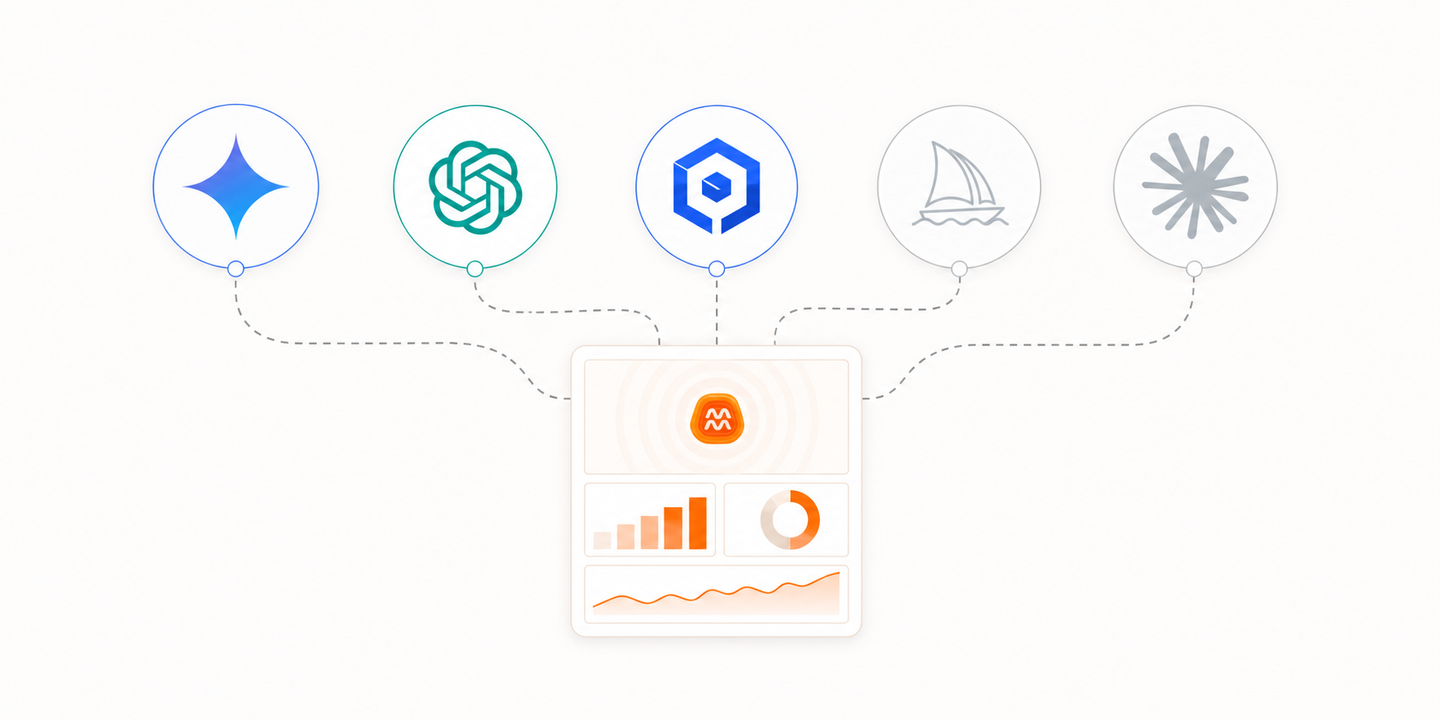
The AI visibility tracking market has filled in fast. Here's where the main alternatives sit, along with the architectural difference that separates them. For a broader side-by-side, see 5 best tools for AI brand visibility.
| Tool | Engine Coverage | Execution | Starting Price |
|---|---|---|---|
| Profound | Up to 9 engines (Enterprise only) | Monitoring + content agents | 7-day free trial, then Enterprise ~$50k/year (no self-serve tiers) |
| Semrush | Google AI Overviews only | Data only | Varies |
| Ahrefs | Google AI Overviews only | Data only | Varies |
| AthenaHQ | Multi-engine | Monitoring only | ~$400/mo |
| Peec AI | Multi-engine | Monitoring only | Varies |
| PromptWatch | 5 engines (incl. Copilot) | Limited content agents | Varies |
Semrush and Ahrefs cover AI Overviews and stop there. No ChatGPT, no Perplexity, no Claude. They're SEO data tools that bolted on an AI visibility tab, not products built from the ground up for this category. If you're still working out how AEO and SEO actually differ, that distinction matters more than it sounds.
AthenaHQ and Peec AI track more engines but neither executes fixes. You get the data; next steps are yours to figure out. Peec AI has no human support layer at all, and if that specific head-to-head matters to you, the Peec AI vs Profound breakdown is worth reading.
PromptWatch covers five engines, namely ChatGPT, Gemini, Claude, Perplexity, and Copilot, and adds AI crawler logs. Genuinely useful. But the content agents are limited: no technical SEO, no backlinks, no CMS push. It tells you what to do. Someone else still has to do it.
Is Profound Worth the Price?
Profound's pricing is now a binary choice, not a tiered ladder. There's a 7-day free trial that lets you validate data quality and see how your brand shows up across engines before committing. After that, the only path forward is a custom enterprise contract with no published price and a sales conversation required before any commitment. No self-serve Growth tier, no $99 entry point, no monthly middle ground. You either walk away after the trial or you sign an enterprise deal.
That structure changes the evaluation calculus. The trial is worth taking seriously: seven days is enough to pressure-test Profound's prompt intelligence and confirm whether the data quality warrants the commitment. But if the trial data looks good and you move forward, you're skipping straight to a custom enterprise contract with sales. For teams without procurement bandwidth or a budget that absorbs that number, there's no stepping-stone option. If that gap rules it out, there are Profound alternatives worth a look.
One more data point worth knowing before you sign: we've seen Profound quote 10-person companies more than $50,000 per year, with no dedicated human support included at that price point. That's not a Fortune 500 contract (community-reported Enterprise pricing). That's a small team paying enterprise money for a reporting dashboard with no one on the other end to help them act on it.
The limitation that runs across every tier: Profound monitors. It shows you where you're invisible in AI search. It won't push a content fix to your CMS, source a backlink, or execute a technical SEO change. You get the diagnosis. The remediation is your problem. For teams without a dedicated resource to act on the data, that's the real cost. You pay for insight, then pay again to do something about it.
How Maintouch Compares to Profound
Profound shows you the gap. Maintouch closes it.
The core difference isn't feature depth or data quality; it's whether insight becomes shipped work inside the same system. Profound monitors; Maintouch executes. Content strategy, content creation, technical SEO fixes pushed directly to your CMS, backlink procurement, and AI visibility tracking all run in one closed loop, no handoff to a separate workflow.
On pricing: Profound's entry point is an Enterprise contract (~$50,000/year for a team as small as 10 people, with no self-serve tier below it). No monthly plan, no checkout page, no option to start without a sales call. Maintouch works the opposite way. Self-serve tiers start at Starter ($149/mo), Scale ($399/mo), and Hypergrowth ($799/mo), all with a 5-day free trial. No sales contract, no custom negotiation. Just pick a tier and start.
On AI visibility: Maintouch tracks citations across ChatGPT, Google Gemini, Google AI Overviews, Perplexity, and Claude at 1,000+ concurrent prompts. Claude coverage, which Profound gates behind its enterprise contract, is available on Maintouch's Hypergrowth plan and above. See the full Maintouch vs Profound comparison for pricing details, or the in-depth Maintouch vs Profound analysis for a deeper breakdown.
Profound customers consistently report needing an external contractor, typically around $2,000/month, to extract value once they have the data. That cost is a direct consequence of what's missing from Profound's enterprise tier: there's no dedicated support, no strategist, and no human who helps you turn the monitoring data into shipped work. You pay ~$50,000/year and then figure it out yourself.
Maintouch's custom plan is built differently. Every custom plan account includes a dedicated forward-deployed marketer, a content engineer, regular meetings with an AEO specialist, and a dedicated Slack channel, all at no additional cost beyond the plan. That's the structural substitute for the contractor layer. Built in, not bolted on.
Monitoring tells you you're missing citations. Closing that gap is a different kind of work entirely.
Final Thoughts on Profound AI Visibility Tracking
Profound is a strong product for the buyer it was built for: a large brand with a dedicated AEO owner, enterprise procurement needs, and a budget that absorbs the contractor layer on top. For everyone else, the ceiling shows up fast and the cost math adds up.
I've watched teams spend three months staring at monitoring dashboards, nod at the gaps, and then ask who's actually going to do the work. That's the moment Profound's model breaks down, and it breaks down the same way every time. If you want to see how the execution side works, shoot me a message at [email protected].
FAQ
Is Profound worth it for a small marketing team without a dedicated AEO owner?
Probably not. Profound no longer offers a self-serve paid tier. The Trial lasts 7 days and then expires with no ongoing tracking. Getting any real engine coverage beyond ChatGPT, Gemini, and AI Overviews requires a custom enterprise contract, typically $2,000 to $5,000+/month. The product assumes someone owns AEO full-time and has the bandwidth to act on the data. If your team is splitting time across priorities, you'll pay a premium for insight and then still need to hire around it to actually execute.
How do I measure whether my content is getting cited by ChatGPT, Perplexity, and Google AI Overviews?
You need a tool that tracks citation share across each engine separately, since citation behavior varies by prompt and by model. Profound tracks this at the prompt level with real user query data; Semrush and Ahrefs cover Google AI Overviews only and stop there. Maintouch tracks citations across all five engines (ChatGPT, Gemini, AI Overviews, Perplexity, and Claude) at 1,000+ concurrent prompts, with a 5-day free trial on all self-serve tiers. Note that Claude tracking requires the Hypergrowth plan ($799/mo) or above.
What is the relationship between SEO and AEO, and how much do they actually overlap?
They share the same foundation. AI engines run a web search before generating answers, so strong SEO directly feeds AEO performance. The practical implication is that running two separate strategies, one for Google and one for AI, is redundant work built on the same underlying content and backlink signals.
Profound vs. Maintouch: which one makes sense if you need execution, not monitoring alone?
If your primary need is data and prompt intelligence, Profound is the stronger option, especially at Enterprise with full engine coverage and Prompt Volumes. If you need the work to actually get done inside the same system, Profound monitoring plus a contractor to act on it typically runs $2,000/month on top of the subscription. Maintouch closes that loop with content creation, CMS execution, backlink procurement, and AI visibility tracking in one system, with a dedicated account strategist included in every paying account.
How does Profound's pricing compare across its tiers as of September 2026?
Profound now has two tiers. The Trial is free and lasts 7 days: 50 prompts per day across ChatGPT, Gemini, and Google AI Overviews, with limited AI Marketer credits and no exports, no API, and no ongoing tracking once the window closes. The enterprise tier is fully custom with no published price, typically landing between $2,000 and $5,000+/month based on known customer contracts, and covers up to 9 engines including Claude, Perplexity, Copilot, and DeepSeek, plus dedicated support, SSO/SAML, SOC 2, and Prompt Volumes. There is no self-serve paid tier between the two.
Does Profound offer a free trial or a free tier?
Profound has a 7-day Trial that is free: 50 prompts per day across ChatGPT, Gemini, and Google AI Overviews. It expires after 7 days with no ongoing tracking and no self-serve paid option after it ends. There is no permanent free tier and no monthly billing path. Once the Trial closes, your only option is a custom enterprise contract requiring a sales conversation. If you want to compare options, Maintouch offers a 5-day free trial on all self-serve tiers (Starter at $149/mo, Scale at $399/mo, Hypergrowth at $799/mo), with Claude tracking available on Hypergrowth and above.
Can I cancel Profound and switch to a monthly plan if I don't see results?
There is no self-serve paid plan to cancel. Profound's only self-serve option is the 7-day Trial, which expires automatically. Any paid access requires a custom enterprise contract negotiated through sales. That means the commitment decision happens before you have meaningful ongoing data, which makes the enterprise conversation worth approaching carefully. If results don't materialize after signing, you're working against a custom contract with no standard monthly escape path.
What's the real cost of using Profound if you factor in what it takes to act on the data?
Profound customers consistently report needing an external contractor, typically around $2,000/month, to extract value once they have the data. Profound monitors and surfaces gaps; it doesn't push fixes to your CMS, build backlinks, or execute content changes. At enterprise pricing, the subscription alone typically runs $2,000 to $5,000+/month. Add the contractor layer and you're looking at $4,000 to $7,000+/month before any execution actually happens. That's the number worth running against alternatives before you sign.
How does Profound track AI visibility, and is it using real user queries or synthetic prompts?
Profound's standout data advantage is Prompt Volumes, which is sourced from real user conversations instead of synthetic queries. The catch: Prompt Volumes is an enterprise-only feature. On the Trial, you're tracking a limited custom prompt set with no ongoing access. Real user query intelligence doesn't unlock until you're in a custom enterprise contract with no published price.
Is Profound a good fit for an early-stage startup that's just getting started with AEO?
Probably not the right starting point. The Trial gives you 7 days of free data across ChatGPT, Gemini, and AI Overviews, which can validate whether the data quality is worth pursuing. But there's no self-serve paid option after that window closes. Moving forward means a custom enterprise contract with no published price and a sales conversation required before you've seen ongoing data. The product also assumes you already have a team member who owns AEO and the bandwidth to act on monitoring data. Early-stage teams with limited resources get more mileage from a system that executes fixes directly instead of one that surfaces gaps you then have to manually close.
Can Profound and Maintouch be used together, or does one replace the other?
Teams occasionally run both in parallel, typically using Profound for its Prompt Volumes data and Maintouch for execution. That's a valid setup if the budget supports it. In practice, most teams that come to Maintouch after a Profound demo find that Maintouch's citation tracking across ChatGPT, Gemini, AI Overviews, Perplexity, and Claude covers the monitoring side well enough that Profound becomes redundant. The bigger structural question is whether you need a separate monitoring tool at all if your content, backlinks, and technical SEO fixes are all running in the same system. One integrated loop tends to outperform two separate tools with a manual handoff in the middle.
What should I look for in a Profound alternative if I need execution and more than monitoring?
The key architectural question is whether the tool closes the loop or hands you a to-do list. Profound, AthenaHQ, Peec AI, Semrush, and Ahrefs all sit on the monitoring side. They show you where you're invisible in AI search and stop there. If you need the work to actually get done, look for a system that tracks citations across all five engines and also pushes content fixes directly to your CMS, handles backlink procurement, and includes a human strategist to keep execution aligned with priorities.
Does Profound track Claude and Gemini citations, or are those locked behind Enterprise?
Both Claude and Gemini are Enterprise-only on Profound. There's no self-serve paid path to either engine - only the Trial exists, and it only covers ChatGPT, Gemini (read-only), and Google AI Overviews for 7 days with no ongoing tracking. If your buyers are spending time on those models, and in B2B they often are, you're already in a sales conversation before you've seen a single data point from either engine.
How does Profound compare to Semrush and Ahrefs for AI visibility tracking?
Semrush and Ahrefs cover Google AI Overviews and stop there. No ChatGPT, no Perplexity, no Claude. They bolted an AI visibility tab onto their existing SEO data products; they were not built from the ground up for answer engine optimization. Profound is AEO-native and tracks multiple engines at the prompt level with real user query data, which is a meaningfully different product. If multi-engine coverage and prompt-level intelligence are what you need, Profound is the better comparison point, though the engine coverage you actually get depends heavily on which tier you're on.
What are Prompt Volumes in Profound and why are they only available at Enterprise?
Prompt Volumes is Profound's standout data feature: instead of running synthetic queries you define manually, it sources prompt data from real user conversations happening inside AI engines. The result is actual AI search demand by topic, not a proxy. That matters because it tells you what buyers are genuinely asking ChatGPT or Perplexity, not what you guessed they'd ask. The catch is that it's gated behind Enterprise pricing with no self-serve path and no published price. On the Trial, you're tracking a limited prompt set with no ongoing access beyond 7 days, which means the real-user query intelligence layer doesn't unlock until you're in a custom Enterprise contract.
Does Profound integrate with Google Analytics or GA4 to show what AI-driven visitors actually do on my site?
No. Profound doesn't have a native GA4 integration, which is a meaningful gap if you're trying to build a business case around AEO spend. You can see where you're getting cited in AI-generated answers, but you can't close the loop on what those visitors do after they land. For teams trying to tie AI visibility to revenue, that attribution gap is one of the more consistent complaints from reviewers and a real consideration before committing.
Is Profound SOC 2 compliant?
Profound's SOC 2 compliance posture isn't publicly equivalent to what some enterprise buyers require. If your procurement team needs formal SOC 2 Type II certification before signing, it's worth verifying directly with Profound's sales team instead of assuming compliance at any tier. For large enterprise accounts, Profound does have an enterprise security posture. SSO is included at Enterprise, but the specific compliance documentation should be confirmed before you're at the signature stage.
How many prompts do I actually need to run a real AEO program, and does Profound's Trial cover that?
Fifty prompts per day during the 7-day Trial gives you a window to validate data quality, but the Trial closes before you can build any operating rhythm. A real AEO program typically tracks dozens of topic clusters, each with multiple prompt variants, across several buyer stages. You run out of headroom fast, especially in a competitive category. Ongoing tracking beyond the Trial requires an Enterprise contract, and neither the Trial nor a self-serve paid tier gives you access to Profound's real-user Prompt Volumes data. That feature sits behind Enterprise pricing with no published price.
Turn search into your best growth channel.
Maintouch tracks your visibility across AI and Google, creates and refreshes content, and gets your brand mentioned on the sites that shape discovery.
Book a demoRelated reading
All posts