
Best SEO Software for Digital Health Patient Acquisition Keywords

By Bennett Cohen
Get Maintouch
Turn search and AI visibility work into a repeatable growth system.
Choosing between an agency, an internal hire, and SEO software is hard because each option leaves different work for your team. A research tool leaves execution with your team; a system that publishes content and applies fixes still needs clinicians to review medical claims and care details. My goal: you walk away knowing exactly which patient acquisition SEO setup fits your staffing, publishing workload, and required oversight.
TLDR:
- Match patient acquisition keywords to care you offer and each searcher's next decision.
- Choose SEO software that ships CMS fixes instead of leaving execution to your team.
- Require clinician review, current medical sources, and accurate review dates.
- Verify HIPAA terms and BAA coverage for your intended data use before connecting tools.
- Maintouch starts at $149/month; content workflows require Hypergrowth or above.
Why SEO Is a Patient Acquisition Channel for Digital Health Companies
Patient acquisition SEO for telehealth starts before someone knows your company exists. People searching for help may be comparing treatments or choosing a provider. Your content connects that search to appropriate care and a booking path.
Compared with broad paid campaigns, intent-matched pages can reach visitors closer to seeking care, but higher conversion rates need testing. Build condition-specific keyword clusters around services you deliver, with clear next steps for eligible patients. Generic awareness terms give you less control over patient fit.
The Search Intent Stack Behind Patient Acquisition Keywords
Match each patient acquisition SEO query to the searcher's next decision, not automatically to a booking form.
| Intent stage | Example query | Content to create |
|---|---|---|
| Informational | “sleep apnea symptoms,” “sleep apnea treatment options” | Clinician-reviewed guides |
| Navigational | “[app name] sleep care” | Branded service pages |
| Comparison | “[provider A] vs [provider B]” | Factual comparisons |
| Transactional | “book online sleep consultation” | Booking or signup pages |
Provider comparisons often carry commercial intent. Link research pages to relevant comparisons, then to care options with clear eligibility requirements.
How AI Search Engines Are Reshaping Healthcare Queries
AI assistants can be a patient's first stop for health questions. ChatGPT, Perplexity, Gemini, and Claude synthesize answers; Google AI Overviews adds search summaries. Citation behavior varies.
For digital health brands in 2026, a citation can introduce care options before a site visit, as seen when a virtual psychiatry clinic grew AI-referred traffic using these tactics. It doesn't guarantee a booking.
Make each answer understandable outside the full page.
Cite authoritative clinical sources and keep schema consistent with visible content. These help systems interpret your pages, but you can't control citation selection.
YMYL and E-E-A-T Requirements for Digital Health Content
Health content is Your Money or Your Life (YMYL): errors can affect health decisions. Google's helpful content guidance gives greater weight to strong E-E-A-T signals here. Use this publishing checklist:
- Experience: Explain care processes with firsthand practitioner input without exposing patient information.
- Expertise: Include author bylines and reviewer bios with relevant clinical credentials.
- Authoritativeness: Support medical claims with current clinical guidelines or peer-reviewed research.
- Trustworthiness: Publish ownership and contact details. Assign review owners, correct outdated guidance, and show accurate review dates.
Technical SEO Priorities Specific to Digital Health Sites
Rapid releases can leave technical debt that limits search visibility, which is why many teams use Maintouch's technical SEO system to apply fixes automatically. Audit public care pages separately from your patient portal:
- Compress medical images and test mobile load times on care and booking pages.
- Check HTML after JavaScript runs and indexing for JavaScript-heavy pages so crawlers can access content.
- Keep canonical tags consistent across duplicate URLs.
- Add LocalBusiness schema markup for AI search for physical locations, using MedicalBusiness where appropriate.
After content changes, check for schema drift in AI search: outdated structured data can conflict with your page copy.
Content Strategy for Condition-Specific and Treatment-Specific Keywords
Map each clinical service to a pillar page, with supporting pages for symptoms, treatments, and comparisons. For insomnia care, link to “CBT-I vs. sleep medication” and “Can CBT-I help night workers?” Link those pages back to the pillar.
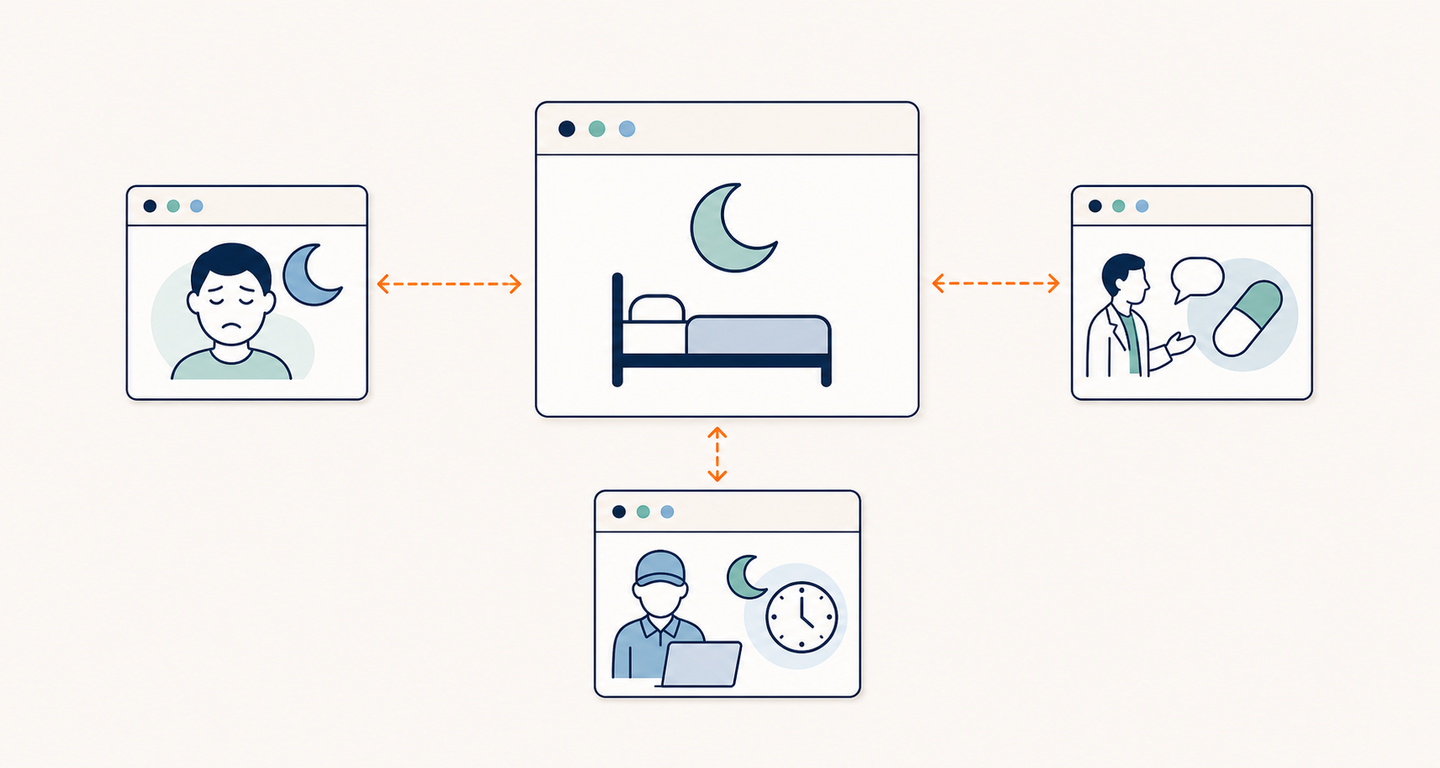
Long-tail queries surface concerns; zero estimated volume doesn't prove absent demand. Use them for AI prompt research, not as evidence of exact patient conversations. Google ranks pages; AI answers may cite passages, a distinction covered in this complete guide to answer engine optimization. Write focused sections that answer one question completely.
Updating and Refreshing Health Content for Long-Term Rankings
Review outdated medical guidance even if rankings hold. Refresh pages that still fit your services; publish separately for distinct patient questions.

Build a recurring review queue:
- Compare Search Console clicks, impressions, and positions, accounting for seasonality.
- Route declining pages and changed clinical guidance to reviewers.
- Correct facts, add appropriate schema, and improve internal links.
- Request indexing after substantive updates; monitor results.
Google's crawl budget management guidance notes crawling doesn't guarantee indexing. Tie review dates to actual clinical review.
Programmatic SEO for Condition, Location, and Symptom Pages at Scale
Programmatic SEO uses templates, structured data, and first-party clinical and product information to create pages without writing each from scratch, and choosing from the best programmatic SEO tools matters at this stage. Condition pages explain treatments; location pages specify service availability; symptom pages answer patient questions.
Use it for patient acquisition SEO once your domain has authority and every page offers distinct value. Swapping city or symptom names across duplicate copy risks low-quality or spam classification. If your domain is new, build individual pages with accurate, useful detail before scaling.
Local SEO for Digital Health Companies with Physical Locations or Service Areas
For hybrid clinics and geographically limited care navigation, local SEO should clarify where patients can receive care. Put state licensing boundaries, available services, and in-person requirements on service-area pages.
LocalBusiness JSON-LD supplies machine-readable business details; MedicalBusiness is a more specific subtype. Include accurate hours and phone numbers. Explain access and booking on each location page without implying a clinic where none exists.
Keep eligible Google Business Profile categories, hours, and appointment links accurate. Check eligibility before creating virtual-only service listings.
How SEO Platforms Compare to Traditional Healthcare SEO Agencies
Compare patient acquisition SEO options by who executes the work:
- Agencies: $3,000 to $10,000 per month, depending on scope and provider. Retainers buy specialist support, but bandwidth and approval handoffs can slow delivery.
- Internal hires: Hiring gives you direct ownership, with salary, benefits, and tooling costs to budget for. Check whether one hire covers your workload.
- Software: Semrush and Ahrefs leave execution to your team. Full-execution systems automate content, technical fixes, and backlinks; clinicians remain responsible for medical review.
Choose based on available staff and required oversight.
What to Look for in an SEO Platform Built for Healthcare Startups
- Verify HIPAA terms and business associate agreement (BAA) availability for your intended data use.
- Test medical schema automation and AI citation tracking, since learning how to get cited in AI Overviews for health-related queries matters for visibility.
- Require live technical fixes through your CMS, not reports that leave execution to your team.
- Check clinical approval controls and confirm draft histories are retained.
- Confirm whether ongoing specialist support comes with your subscription or costs extra.
How Maintouch Serves Digital Health and Consumer Healthcare Companies
I built Maintouch to replace SEO agency execution for digital health companies while keeping clinical review with your team. For example, an insomnia care team can supply approved service details and clinical references as custom data sources, then have the software draft a guide explaining what to expect from an online consultation. Configure approval requirements so your clinician checks medical claims, sources, and eligibility before an authorized approver publishes through a connected CMS such as WordPress or Webflow, instead of handing the approved draft to someone else to upload.
HIPAA/BAA is available only on the Enterprise plan, which has custom pricing, not on self-serve plans such as Hypergrowth. The $149/month starting price applies to Starter. Confirm data-use coverage before sharing sensitive information.
The system generates schema and tracks AI citations; engine access varies by plan.
Human edits update the Knowledge Base, Brand Voice, and Blog Rules.
Plans start at $149/month with a 5-day free trial. Content workflows, automatic updates, and technical fixes require Hypergrowth or above. Test a clinician-reviewed draft before choosing.
Final Thoughts on Digital Health Content Strategy
Useful health content needs ongoing clinical review. You can start with one service, answer your patients' questions, and build from there.
If you want to talk through what a patient acquisition SEO setup would look like on your stack, shoot me a message at [email protected].
FAQ
Can you replace Semrush and Ahrefs with Maintouch while keeping Google Search Console?
Yes, if your goal is to move research and SEO execution into one system, but keep Google Search Console connected: Maintouch needs it alongside CMS access for full execution capability. Content workflows, automatic updates, and technical fixes require Hypergrowth or above. Before canceling Semrush or Ahrefs, test whether Maintouch covers the research and reporting your team actually uses.
Can you use customer conversations in Maintouch without connecting patient records?
Yes. Upload approved, de-identified summaries of recurring questions as custom data sources instead of connecting live systems containing patient information. Use questions about eligibility, appointment access, and care processes to guide content; confirm data-use terms and any required BAA before sharing sensitive information.
How do you keep clinical control over content that Maintouch publishes?
Configure approval requirements and give clinical reviewers the Reviewer role so they can check drafts before publication. Require reviewers to verify medical claims, sources, credentials, and care eligibility before approval. Maintouch doesn't natively support formal stage-gate review cycles or five-year content archiving, so keep those requirements in a separate approved process.
Can Maintouch optimize your public care and booking pages, or only blog posts?
Maintouch can optimize public service, product, and other website pages as well as blog posts. Match each page to its purpose: explain treatment and eligibility on care pages, and make the next step clear on booking pages. Keep patient portals and private records outside the public SEO workflow.
How long does it take to see results from patient acquisition SEO?
SEO compounds over time rather than paying off immediately. Don't expect revenue from month one; expect data. Most sites start seeing ranking movement and impression growth within the first few months, but meaningful patient volume typically builds over six to twelve months as content earns authority and internal links accumulate. Newer domains take longer than established ones.
What's the difference between SEO for telehealth and SEO for a traditional clinic?
Telehealth SEO focuses on condition and symptom keywords rather than location queries, since patients can book care from anywhere you're licensed. Local SEO still matters if you serve specific states or have physical locations, but the content mix shifts heavily toward condition-specific and treatment-specific pages over geo-targeted landing pages. Licensing boundaries also need to be clearly stated on service pages to avoid misleading patients about care access.
Do I need schema markup on every care page, or just the homepage?
Every public care and booking page benefits from schema. MedicalBusiness or LocalBusiness JSON-LD goes on location and service pages; FAQPage schema reinforces your condition and symptom guides; and BreadcrumbList helps crawlers understand your site structure. Schema is a binary qualifier for AI citations: pages without it get deprioritized before content quality is even evaluated, so treating it as a homepage-only task leaves most of your patient acquisition pages invisible to AI-generated answers.
How do you handle patient privacy when using sales call data or customer questions in content?
Upload approved, de-identified summaries of recurring questions as custom data sources rather than connecting live systems containing patient records. Use recurring eligibility and care-access questions to guide content topics, not individual patient details. Confirm your data-use terms and any required business associate agreement before sharing information with any third-party tool, including Maintouch, which offers HIPAA and BAA coverage only on the custom plan.
Is programmatic SEO safe for digital health companies, or will Google penalize it?
Programmatic SEO is safe once your domain has real authority and every page delivers distinct value to the patient. Swapping city or symptom names across duplicate copy without adding unique clinical detail risks low-quality or spam classification. If your domain is new, build individual pages with accurate, useful detail first before scaling programmatically. The same quality and E-E-A-T standards that apply to hand-written health pages apply to programmatic ones.
What CMS platforms does Maintouch support for digital health content publishing?
Maintouch connects directly to WordPress, Webflow, Framer (beta), Sanity, Strapi, Contentful, Storyblok, Payload, HubSpot, and Ghost, pushing content and technical SEO fixes live without routing through a developer queue. Custom websites and headless stacks are served via API and MCP. This direct execution layer covers metadata, JSON-LD, canonical tags, and schema updates automatically on every publish.
How does AI search treat health content differently from other topics?
Health queries are YMYL (Your Money or Your Life) topics, so AI engines apply higher scrutiny to the sources they cite. Pages with strong E-E-A-T signals, including clinical author bylines, current medical sources, accurate review dates, and well-structured schema, are more likely to earn citations in AI-generated answers. Self-contained passage-level answers of 130-170 words that name the condition or treatment directly are the format AI engines prefer when pulling health information into a response.
Turn search into your best growth channel.
Maintouch tracks your visibility across AI and Google, creates and refreshes content, and gets your brand mentioned on the sites that shape discovery.
Book a demoRelated reading
All posts