
Win Citations in Google AI Overviews Today

By Bennett Cohen
Get Maintouch
Turn search and AI visibility work into a repeatable growth system.
Check your rankings, then check whose pages Google cites above them: are you on both lists? If you're tracking positions and Search Console impressions alone, you're missing a separate question: which of your answers actually gets used in an AI Overview? My goal: you walk away knowing exactly how to build passages that are easier to cite and track citation coverage alongside clicks, so your next edit has a clear target.
TLDR:
- Keep your SEO plan, but optimize individual passages for AI Overview citations.
- Aim for roughly 40-170 words per standalone answer under question-based H2s and H3s.
- Back your claims with first-party data, named authors, and current sources.
- Measure AI Overview citation rate: checks where you're cited divided by total checks.
- Maintouch regenerates schema through CMS webhooks on every publish or update.
Why AI Overview Citations Matter More Than Organic Rankings
First-page rankings don't guarantee visitors. Pathmonk reports AI Overviews appeared on roughly 48% of tracked queries in February 2026. Ahrefs found a 58% lower average clickthrough rate for top-ranking pages when AI Overviews appeared.
For those searches, aim to get cited in AI Overviews alongside earning blue-link rankings. CXL argues for precision over sheer depth: make individual answers easy to cite instead of treating ranking position as your only visibility target.
How Google AI Overviews Actually Select Citation Sources
Stridec describes source selection as a two-stage retrieval and synthesis process:
- Retrieval finds relevant candidate pages.
- Synthesis weighs whether passages are easy to extract, clearly attributable, and trustworthy enough to include.
Ranking and citation signals overlap, but they're different tests in this model. A clear answer at position eight can get cited in AI Overviews while the first result gets skipped. Check which passage on your page directly supports the generated answer.
Traditional SEO vs. AI Overview Optimization: What Changes
Your SEO investment still matters: domain authority and backlinks provide a foundation. AI Overviews optimization adds editorial work.
| Existing focus | What to add for AI citations |
|---|---|
| Page-level optimization | Passages that answer a question independently |
| Keyword targeting | Concepts needed for a complete answer |
| Ranking position | Clear claims with supporting evidence |
Keep your SEO plan running. In your next content brief, specify each section's question and the evidence supporting its answer.
Structure Your Content for Passage-Level Extraction
To support passage retrieval, write self-contained answer blocks of roughly 40 to 170 words. That’s an editing target, not a citation requirement.
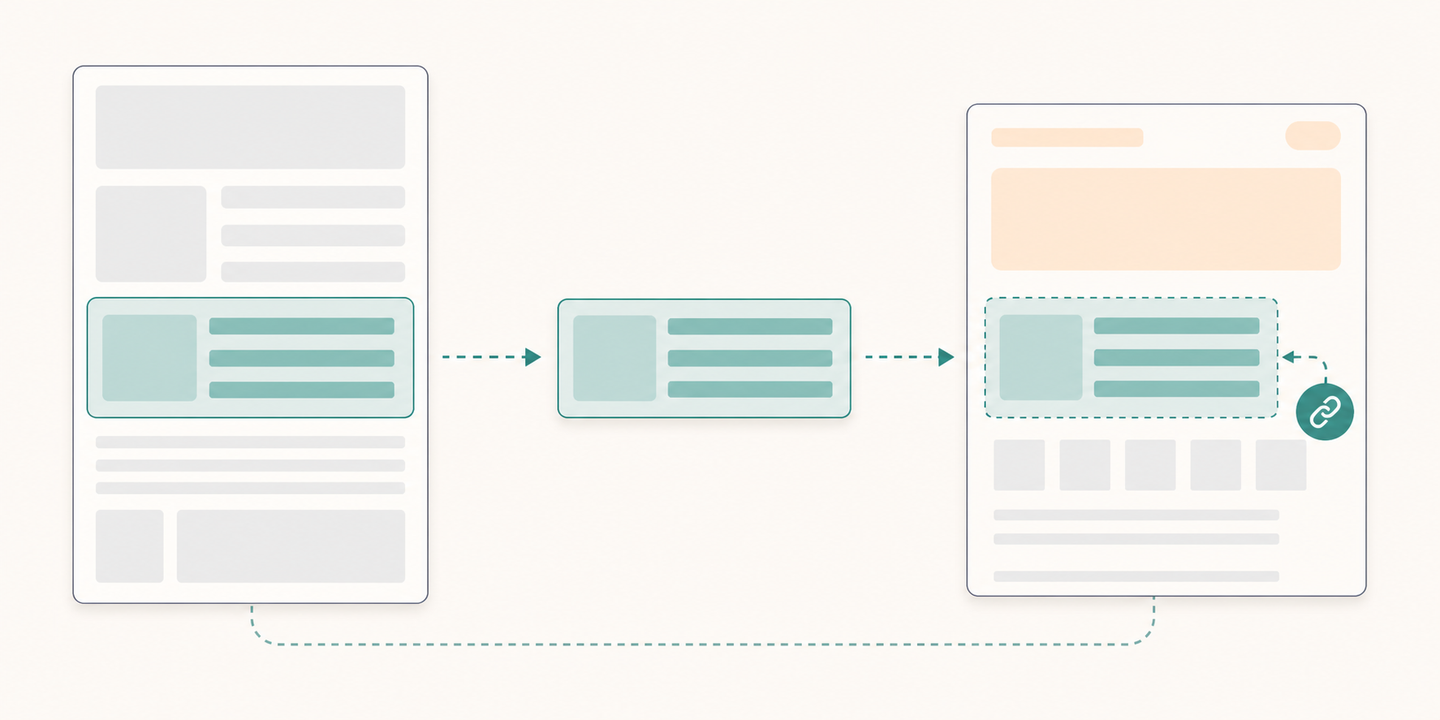
- Use question-based H2 and H3 headings matching readers’ questions.
- Answer directly below each heading.
- Name the entity instead of using “it” or “this tool” when the reference needs earlier context.
- Cut hedging, but keep qualifications needed for accuracy.
Copy each answer into a blank document:
Does this passage make sense without earlier text?
Build E-E-A-T Signals That AI Systems Recognize
ZipTie reports that 96% of AI Overview citations came from sources with strong E-E-A-T signals in Wellows' 2,400-citation analysis. That's vendor research, not Google's scoring rule.
E-E-A-T means experience, expertise, authoritativeness, and trustworthiness. Make your credentials checkable:
- Connect author entity markup to named profiles with relevant credentials.
- Publish first-party data or original research with inspectable methods.
- Reference independent reviews and industry coverage.
- Document tests and implementation details so readers can verify your experience.
Use Schema Markup as a Citation Qualifier
Treat schema as a publishing quality check, not a proven requirement for Google AI Overviews citations.
Match types to your content:
- Use Organization for company identity and Article for editorial pages.
- Add FAQPage for visible questions and answers.
- Reserve HowTo for genuine step-by-step instructions.
ZipTie describes FAQ schema's contribution as indirect, through Google's Knowledge Graph pipeline.
After every edit, validate syntax and required properties. Fix any mismatch between markup and visible content.
Target Question-Based Queries and Fan-Out Prompts
Build your AI Overview content strategy around high-intent informational questions. Google’s query fan-out expands searches into related sub-questions, creating opportunities for relevant passages without guaranteeing citations.
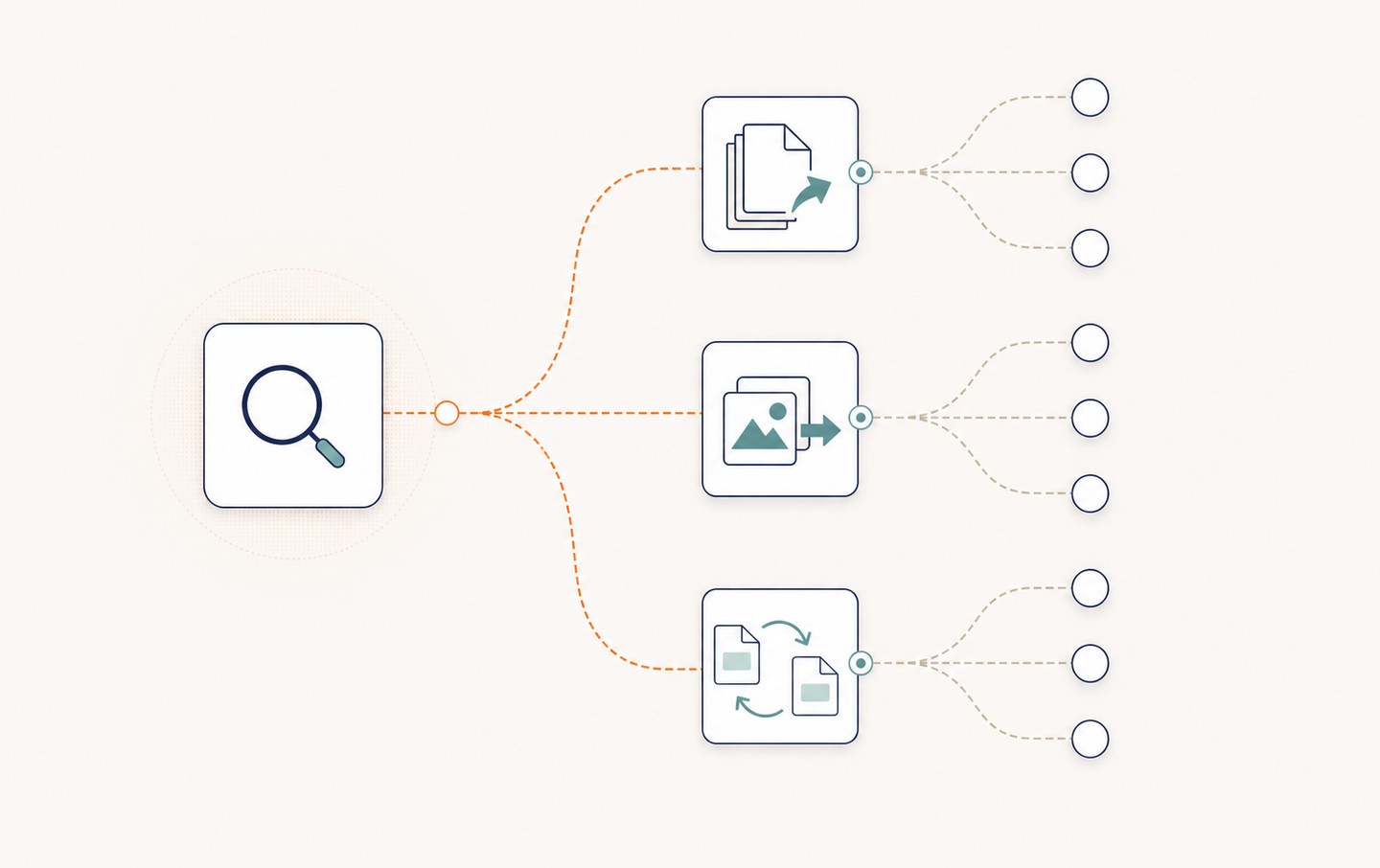
For “How do I migrate WordPress to Sanity?”:
- Collect follow-up questions from search results and customer conversations.
- Group by task: content export, image transfer, redirect setup.
- Make distinct questions H2s or H3s; keep related answers together.
Use observed questions, but don’t assume they match Google’s exact fan-out queries.
Build Topical Authority Across Your Domain
Build connected topic clusters to support your AI Overview content strategy, and track AI visibility across all major AI engines as part of that effort. Broader coverage builds topical depth, but don't assume Google uses a documented domain-level citation score.
Cover buyer decisions:
- Publish definitions, how-to guides, comparisons, and technical detail.
- Interlink related articles where readers need context.
- Write descriptive anchors matching destination topics, such as “WordPress to Sanity migration.”
Keep Content Fresh and Specific
Keep statistics dated within the last 12 months and sourced from named studies, since tracking LLM visibility and AI search rankings depends on it. AI systems need attributable evidence to extract claims and choose between candidate sources.
- Schedule quarterly reviews, with earlier checks after product changes.
- Add dated statistics from first-party findings or cited studies.
- Flag pages after traffic drops, then check for obsolete details before rewriting.
- Replace vague wording with named entities and exact figures where your evidence supports them.
Earn Third-Party Validation Across the Web
Third-party consensus means independent sources support your brand's claims, a core principle of answer engine optimization. Your AI Overview content strategy should extend beyond your site to Reddit discussions, G2 and Capterra reviews, and industry publications.
- Pitch useful research to relevant publishers to earn backlinks and brand mentions, and optimize content for Perplexity AI coverage at the same time.
- Invite customers to leave candid reviews without scripting their opinions.
- Check external descriptions against your site's claims. Correct outdated facts where possible, and respond to substantive criticism with evidence.
Measure and Track Your AI Overview Citation Rate
Search Console doesn't isolate AI Overviews. Export your queries, then check results manually or with AI visibility tools to record cited pages.
- Set a weekly reminder to check citations across your tracked query set.
- Compare your citations with competitor mentions across the same query set.
- Repeat checks under consistent conditions; treat individual changes cautiously.
Impressions can hold while clicks fall. Track the right AI visibility KPIs like cited-page coverage, qualified conversions, and CTR to judge whether visibility supports your business.
Common Mistakes That Hurt AI Overview Citation Chances
- Reject thin, keyword-stuffed drafts as part of ongoing AI citation and visibility optimization. Give readers a usable answer before publishing.
- Hold publication until you've checked that each statistic has a current source.
- Block updates when schema still describes old content. Make it match the revised page.
- Return briefs that list ranking targets but omit the reader's question. Define what the page must answer.
- Defer unrelated topics until you've planned supporting coverage in that subject area.
How Maintouch Automates AI Overview Citation Optimization
I built Maintouch to connect citation tracking with execution, including efforts to get cited in ChatGPT responses. AI visibility tracking measures citation share across ChatGPT, Google Gemini, Google AI Overviews, Perplexity, and Claude.
The system automates schema generation, detects markup drift, and regenerates schema through CMS webhooks on every publish or update. It flags stale pages and queues refreshes based on AI crawler traffic.
Use zero-volume queries as proxies for AI sub-questions and first-party context for answers. Connect your CMS and Search Console.
Final thoughts on Google AI Overviews Citations
Rankings don't tell you whether your pages get cited. Keep answers current and measure citations across the same query set. See how Maintouch tracks AI visibility to help guide your next content refresh.
FAQ
Should you refresh old posts or publish new content to get cited in Google AI Overviews?
Refresh an existing post when it already covers the reader's question but has outdated facts, weak evidence, or answers buried in long sections. Publish a new page when the question serves a distinct reader need that your existing content doesn't cover. Start with relevant pages already earning search impressions, then fill genuine coverage gaps.
Do you need to enter every prompt manually in Maintouch for AI visibility tracking?
No. Maintouch supports both manually entered prompts and prompts found automatically by its agents. Add questions from customer conversations yourself when you need coverage of a specific buying decision, then check whether the suggested prompts match your audience.
How do you prepare newly published pages for inclusion in Google AI Overviews?
Make each page publicly crawlable, indexable, and eligible to appear in Google Search with a snippet. Add internal links from relevant indexed pages, include the URL in your XML sitemap, and use Google Search Console's URL Inspection tool to check access and request indexing. An indexing request guarantees neither indexing nor a Google AI Overviews citation.
Can you count AI crawler visits in Maintouch as Google AI Overviews citations?
No. A crawler visit records a request to your site, not proof that an AI answer cited your page. Use Maintouch's AI visibility tracking to check citations in sampled answers, and treat crawler traffic as a separate signal when choosing pages to review.
Does ranking on page one guarantee you'll be cited in a Google AI Overview?
No. Ranking and citation are separate tests. A clear, self-contained answer at position eight can get cited while the top result gets skipped if its answer is buried or hard to extract. Optimize for both: earn the ranking and structure the passage so Google can pull it cleanly.
How long should a passage be to get extracted for an AI Overview?
Aim for roughly 40 to 170 words per answer block. That's an editing target based on what tends to be extractable, not a hard rule from Google. Write enough to answer the question completely, name the entity directly in the block, and stop before you drift into a second topic.
What is schema drift and why does it hurt AI Overview citations?
Schema drift happens when you update page content but forget to update the structured data that describes it. AI systems encounter a mismatch between the schema signal and the live page, which pushes the page down in the retrieval set regardless of content quality. Fix it by validating markup after every edit and regenerating schema automatically on publish.
What are zero-volume queries and how do they relate to AI search?
Zero-volume queries are searches with one or two impressions in Google Search Console. They're often the exact questions people are typing into ChatGPT, Perplexity, and other AI engines before they ever run a traditional search. Building content around those queries is one of the most direct ways to earn AI Overview citations, because you're answering what the AI is already being asked.
Do you need to be cited in AI Overviews for every query you rank for?
No. Prioritize the queries that matter to your business: high-intent informational questions where your answer is genuinely the clearest and most specific one available. Focus your passage-level optimization on those first, track citation rate across that set, and expand from there once you see what's working.
How does topical authority affect Google AI Overview citations?
Broader coverage of a topic signals to both Google and AI systems that your site is a reliable source for that subject area. Publishing definitions, how-to guides, comparisons, and technical deep-dives on related topics builds the kind of domain-level trust that makes individual pages more likely to end up in the retrieval set. Don't assume there's a documented citation score for domains, but the pattern holds: connected topic clusters get cited more than isolated posts.
Can you improve AI Overview citation rates without a strong backlink profile?
Backlinks matter because AI retrieval systems weight authority signals when deciding which pages to surface. A page with clear passage structure but weak authority is harder to surface than one that earns both. That said, content structure and E-E-A-T signals can move the needle on citation rate even before you've built a deep backlink profile, especially for specific long-tail questions where few pages answer cleanly.
Turn search into your best growth channel.
Maintouch tracks your visibility across AI and Google, creates and refreshes content, and gets your brand mentioned on the sites that shape discovery.
Book a demoRelated reading
All posts