
Dev Tools SEO: Google Rankings and AI Visibility (September 2026)

By Bennett Cohen
Get Maintouch
Turn search and AI visibility work into a repeatable growth system.
I'll be frank: most SEO tools weren't built with developer portals in mind. Auto-generated API references, versioned docs, JS-compiled content, and zero-volume queries that convert better than anything in Ahrefs all create problems a standard B2B SEO setup won't catch. This post breaks down what to actually look for.
TLDR:
- Developers search error codes and SDK comparisons, not category terms, so standard B2B SEO playbooks fail them entirely
- 54% of AI Overview citations match URLs already ranking organically, so SEO and AEO share the same retrieval layer
- AI engines extract passages, not pages, so self-contained 130-170 word blocks beat thorough guides that bury the answer
- Schema drift kills citation share: when docs update but FAQPage or HowTo markup doesn't, AI engines stop pulling that page
- Maintouch tracks 1,000+ concurrent prompts across ChatGPT, Gemini, Perplexity, Claude, and Google AI Overviews to surface which queries competitors are taking from you
Why Developer Tools SEO Is Different from Standard B2B SaaS SEO
Engineers don't Google "best API monitoring tool for my team." They search for the exact error code they're hitting, the specific SDK method that's breaking, or a comparison of two libraries by name. The query looks nothing like what a marketing director types, and the intent is completely different.
That gap is why standard B2B SaaS SEO breaks down for developer tools companies. Most SEO playbooks optimize for decision-makers weighing business outcomes. Developer buyers are checking technical fit through docs, changelogs, and GitHub activity, not a pricing page or a "why us" section.
The content that earns developer trust lives in technical documentation, API references, and implementation guides. Those pages rarely get treated as SEO assets by conventional teams, but they're where the actual search volume is. A developer searching for how to authenticate against your API is a high-intent buyer. If your docs don't rank, a competitor's tutorial does.
The Three Content Pillars for Developer Tools Search
Developer tools search authority builds from three content layers, each targeting a different point in how developers actually size up tools.
The first is tutorial and how-to content. Developers search for specific problems: "how to set up OAuth with [your API]," "rate limit error handling [SDK name]." These queries signal active implementation, high intent. If your docs and blog answer them, you're in the running. If they don't, a competitor's tutorial gets the click.
The second is comparison and alternatives pages. Developers compare tools by searching "[Tool A] vs [Tool B]" or "best [Tool A] alternatives." Low volume, high conversion. Most developer tools companies ignore them entirely, handing that traffic to review sites and competitor blogs.
The third is use case and integration pages. "How to connect [your tool] with Postgres," "using [your API] with Next.js." These map the product to workflows developers are already running, and they're the pages AI engines love to cite because they answer a narrow question completely.
Most developer tools companies publish solid docs and stop there. That covers the first pillar partially and leaves the evaluation and workflow layers wide open. SEO for developer tools covers all three layers together.
Technical SEO Challenges Unique to Developer Portals
Auto-generated API references and versioned docs are where developer tools sites bleed crawl budget silently. Each new SDK version can spawn hundreds of near-duplicate pages. Without canonical tags pointing version-specific URLs to a stable version, Google indexes all of them, dilutes ranking signals across the set, and surfaces the wrong one.
As Stackmatix notes, developer portals present unique crawling and indexing puzzles that standard approaches fall short on. JavaScript-executed docs are a common culprit: if your reference pages require JS execution to display content, Googlebot may crawl a blank shell and index nothing useful.
Changelogs are a quieter problem. Valuable for users, but structurally thin for SEO: short entries, repetitive structure, no real keyword targeting. Left unmanaged, they accumulate as indexable noise that dilutes overall site quality signals. The fix is usually noindex on changelog entries or consolidating them into a single crawlable page.
The infrastructure decisions that prevent this:
- Canonical tags on all versioned paths, so ranking signals consolidate instead of fragmenting across SDK releases.
- Server-side or pre-built output for JS-heavy doc pages, so Googlebot sees content instead of an empty shell.
- A clear robots.txt strategy that excludes auto-generated noise from your crawl budget before it compounds.
Most SEO tools flag the symptoms. Few push the fixes.
SEO and AEO: How They Overlap for Developer Tools Companies
BrightEdge: 54% of AI Overview citations overlap organics. That's not a coincidence. AI engines run a web search before generating answers, so strong organic rankings feed directly into citation outcomes. The two channels share the same retrieval layer.
For developer tools companies, this matters practically. A well-optimized implementation guide that ranks on page one for a specific error code query is also a strong candidate for AI Overview citation on that same query. The work compounds across both channels instead of splitting into two separate efforts.
The remaining 46% of citations that fall outside organic overlap require structured data, passage-level optimization, and schema to compete for, which is the core of answer engine optimization. But you close that gap on top of solid SEO, not instead of it.
How AI Engines Decide What to Cite
AI engines don't read pages. They extract passages. The retrieval layer breaks a query into sub-questions, runs them in parallel, and pulls whichever content chunks answer each piece cleanly. A 3,000-word guide that buries the direct answer in paragraph six loses to a 150-word block that opens with it.
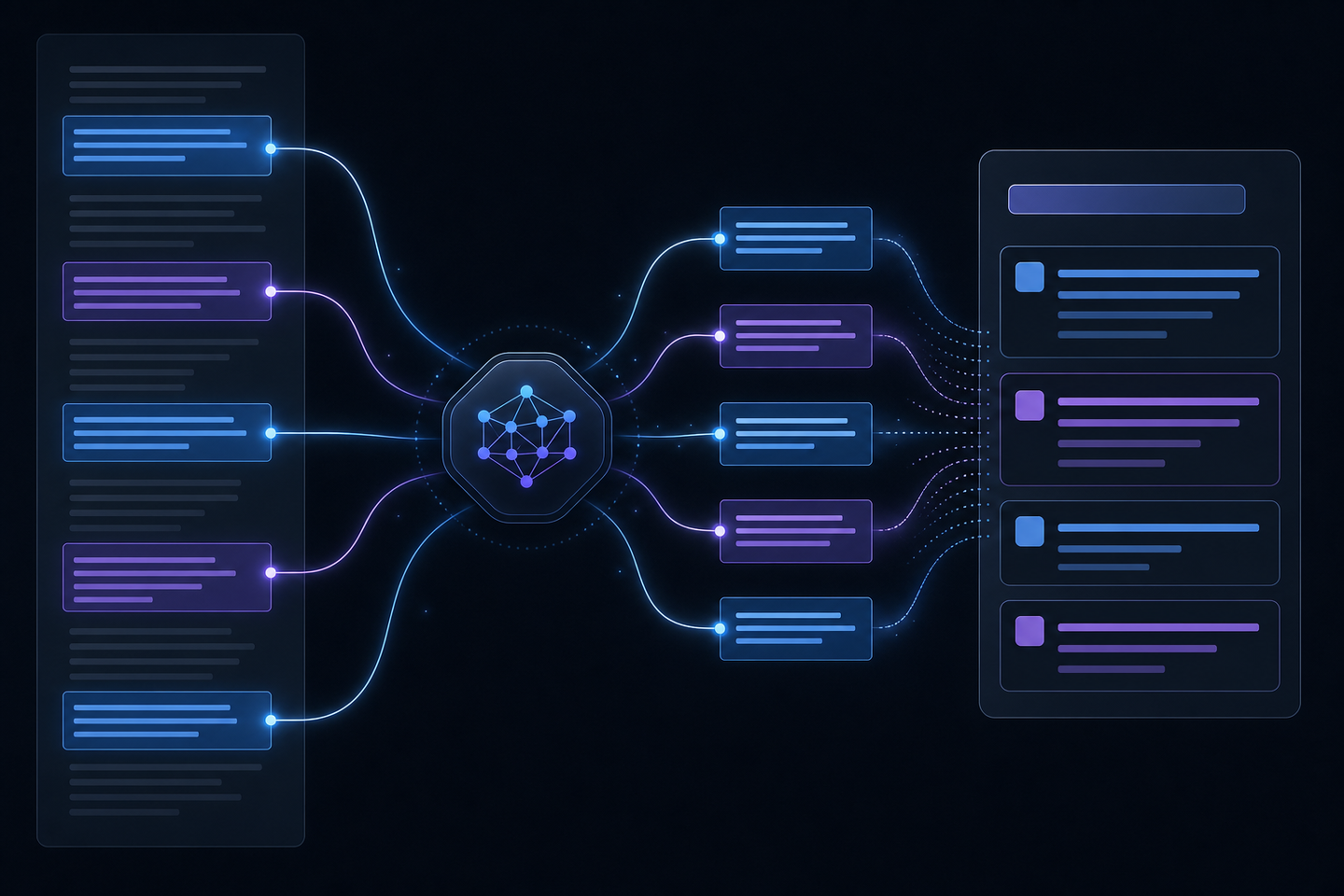
For developer tools companies, this creates a specific content architecture problem. Your implementation guides tend to be thorough by design, walking through setup end-to-end. Useful to a human reader. To a citation algorithm, it's a long document with the answer somewhere in the middle.
The fix is passage-level optimization: self-contained blocks of roughly 130-170 words, each resolving one question completely, with the entity named inside the block. Direct phrasing matters too. "This method returns a 401 when the token is expired" beats "in some cases, you may encounter a 401 error."
Structured formats lift citation probability. FAQ sections, comparison tables, and step-by-step checklists get pulled cleanly. Schema markup for AI citations signal to ChatGPT and Perplexity that structured answers exist before content quality is even checked. Pages without schema get filtered out before the model reads a word.
E-E-A-T in Practice for Developer Tools Content
E-E-A-T for developer tools goes beyond author bios. It's verifiable first-party claims, named engineers behind the content, and technical depth that machines can corroborate against authoritative sources. AI search visits grew 42.8% YoY from Q1 2025 to Q1 2026, and the citation filter inside ChatGPT, Perplexity, and other AI engines rewards content tied to credentialed humans. Anonymous docs pages offer none of those anchors.
In practice, that means named author bylines with real credentials on every technical post, first-party data woven into content (internal benchmarks, actual error rates, production observations), and schema markup that makes authorship and organization identity machine-readable. Maintouch enforces these through Blog Rules and Review Agents, so the signals get applied consistently across every piece, including the ones that skip manual review.
Keyword Strategy for Developer Tools: From High-Volume to Zero-Volume Queries
High-volume head terms matter, but they're rarely where developer tools companies win. "API monitoring" or "developer observability" draws traffic from every stage of awareness, including researchers with no purchase intent. The queries that convert are narrower: "[SDK name] authentication error," "[your tool] vs [competitor] Reddit," "how to paginate [your API] with Python."
Traditional keyword tools assign near-zero volume to those queries. That's misleading. Zero-volume Search Console queries longer than ten words with one or two impressions indicate someone actually typed that into Google. They're also a direct proxy for what developers ask ChatGPT and Perplexity. An engineer who searches that precisely is already in implementation mode.
The practical strategy runs three tiers: head terms for brand visibility, comparison and alternatives pages for evaluation traffic, and zero-volume queries mined from Search Console and sales calls for high-intent AI citation coverage. The third tier is the one most developer tools companies skip entirely.
Schema Markup and Structured Data for Developer Tools Sites
Schema isn't a nice-to-have for developer tools sites. ChatGPT and Perplexity check for structured data first. When it's absent, they move to the next result, regardless of content quality.
The specific problem with developer portals: the pages with the highest citation potential, implementation guides, FAQ sections in docs, step-by-step setup flows, almost never ship with schema by default. Documentation tools don't add it. Most CMS templates don't either. So your best content sits untagged.
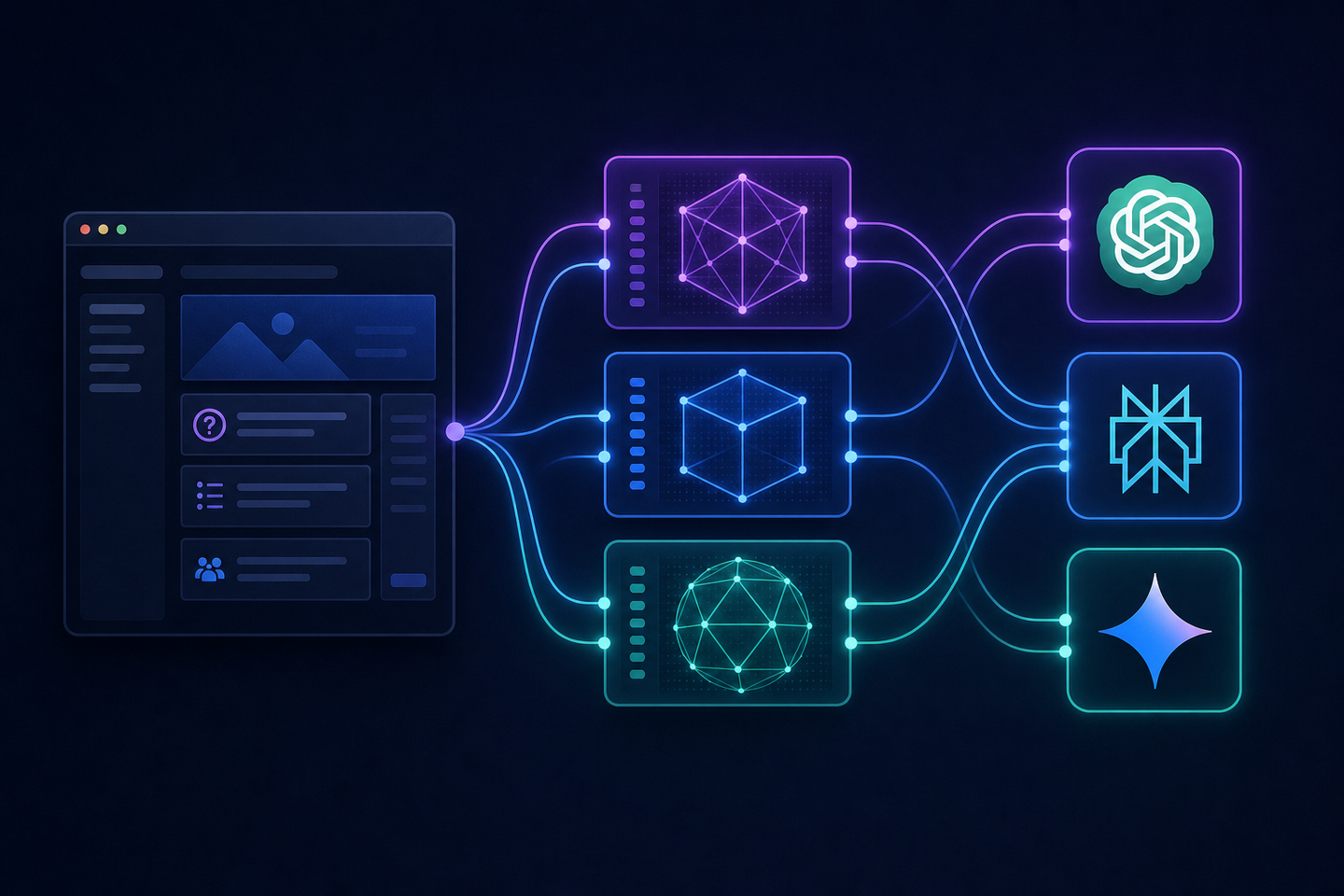
The schema types that matter most here:
- FAQPage on any doc section that answers discrete questions
- HowTo on setup guides and multi-step integration walkthroughs
- Article or BlogPosting on technical posts and changelogs you want indexed as editorial content
- Organization on your root domain for brand entity markup
The second problem is schema drift. Docs update constantly. SDK versions change, endpoints get deprecated, error codes shift. When content updates but schema doesn't, AI engines encounter a mismatch and stop citing the page. A HowTo block referencing a deprecated method while the page copy shows the updated one fails the cross-check.
The fix is automated schema regeneration tied to every publish event, not a quarterly manual audit you'll forget to run.
Backlinks for Developer Tools Companies: Closing the Authority Gap
Developer tools companies almost always start with an authority gap. Incumbents have years of inbound links from documentation references, Stack Overflow answers, and integration ecosystem pages. You're competing against that with a domain that's six months old.
The backlink playbook here is narrow but high-impact:
- SaaS directories and review platforms like G2, Product Hunt, and Slant carry real authority in this space and index fast
- Technical newsletters with developer audiences give you high quality backlinks that reinforce topical relevance alongside raw authority
- Integration ecosystem pages work well if your tool connects to Postgres, Stripe, or Vercel, since those platforms' documentation often link out to integration guides
- Developer-focused media and technical blogs hold editorial standards high enough that the links actually count
Sequencing matters. Get the core implementation guides, comparison pages, and FAQ sections live first, then acquire links pointing at those specific pages. A link to a thin doc page moves nothing. A link to a well-structured guide with FAQPage schema and passage-level optimization compounds across both organic rankings and AI citation share. Programmatic backlink building for SaaS can accelerate this at scale.
Maintouch identifies which pages need backlinks and sources them across multiple marketplaces at zero markup, with full visibility into hosting domain, anchor text, and link context after fulfillment, a form of backlink building without manual outreach.
Tracking AI Visibility: What Brand Mentions in LLM Responses Actually Tell You
Google Analytics won't tell you whether ChatGPT is recommending your SDK when a developer asks for one. Search Console won't either. Those tools measure clicks. AI citation happens before the click, inside the generated answer, and most developer tools companies have no visibility into it at all.
The metrics that matter here are different. AI visibility metrics like citation share measure how often your brand appears in AI-generated responses across ChatGPT, Gemini, Perplexity, Claude, and Google AI Overviews relative to competitors. Prompt coverage tracks which queries your brand gets cited on and which ones a competitor takes instead. Those gaps are your actual content roadmap.
LLM bot crawl traffic adds a secondary signal. When Perplexity's crawler or ChatGPT's indexer visits specific pages, that's a real-time indicator of which content AI engines are actively reviewing. Maintouch monitors this via request-level log integrations with Cloudflare, Vercel, Kinsta, and AWS CloudFront. A page with frequent bot visits but low citation share tells you the content is being retrieved but not extracted cleanly, usually a passage-level or schema problem.
Maintouch tracks 1,000+ concurrent prompts across all five engines and surfaces competitor citation gaps directly, so you can see exactly who's getting cited on the queries you're missing.
SEO Platform vs. Agency vs. In-House: The Real Cost Comparison for Developer Tools Startups
Three paths, three cost structures. Choosing between an SEO platform vs. SEO agency has real cost implications: an agency runs $3,000 to $10,000 per month, while in-house, a full-time SEO hire plus a content writer lands above $200,000 annually before tools. A purpose-built SEO system that executes autonomously replaces both at a fraction of that number.
| Agency | In-House | Autonomous SEO Platform | |
|---|---|---|---|
| Monthly cost | $3,000 to $10,000/mo | $16,000+/mo (salary + tools) | Fraction of agency cost |
| Time to first output | Weeks to onboard | Months to recruit & ramp | Days |
| Developer tools expertise | Rare - most use generic B2B SaaS playbooks | Depends on hire | Built for technical docs, API references, zero-volume queries |
| Technical SEO execution | Flags issues, hands back to you | Requires separate dev queue | Pushes fixes directly to CMS |
| Backlink procurement | Separate process | Separate process | Integrated, zero markup |
| AI citation coverage | Usually not offered | Unlikely without specialist | Tracks 1,000+ prompts across all 5 engines |
| Closes the loop? | No, reports what needs doing | No, requires coordination | Yes, strategy through execution in one system |
The agency path carries a hidden problem beyond cost: the best SEO agencies for developer tools startups are rare, and most aren't built for technical documentation, API reference content, or the developer-specific keyword structures that drive acquisition. You pay enterprise rates and get B2B SaaS playbooks written for marketing audiences, not engineers.
The in-house path has a sequencing problem. Recruiting, onboarding, and ramping an SEO hire takes months before a single piece of content ships. For a venture-backed team focused on velocity, that timeline is a real cost.
The autonomous execution path closes the loop across strategy, content, technical fixes, and backlinks inside one system, without coordinating between a content writer, an SEO specialist, and an agency account manager. For most developer tools startups, converting a single customer from organic or AI search makes that investment ROI-positive.
What to Look for in an SEO Platform Built for Developer Tools
Five criteria separate tools built for developer environments from tools that assume a WordPress blog and a marketing team.
CMS and Infrastructure Compatibility
If the SEO system can't push to your headless stack, you're back to manual copy-paste. Look for native support for Sanity, Contentful, or Strapi, and an API or MCP pathway for custom frameworks. Next.js is a known gap in most tools.
AEO Execution, Beyond Monitoring
Plenty of tools show you which prompts you're missing. Far fewer fix the content, generate schema, and push it live. The question is whether the tool closes the loop or hands the diagnosis back to you.
Schema Automation Tied to Publish Events
Developer docs change constantly. A tool that generates schema once and walks away doesn't solve drift. You need automated regeneration on every update, with validation before anything goes live.
Content Quality Controls for Technical Accuracy
Generic AI content fails developer audiences fast. Look for first-party data infusion from API docs and sales calls, enforced brand rules, and a self-learning layer that sharpens output over time.
Execution Depth vs. Reporting Depth
Most tools report. The right one executes: content creation, technical fixes, backlink procurement, and AI citation optimization inside one system, without requiring a separate agency or developer queue.
Dedicated Human Support
Developer tools SEO involves enough edge cases that a dedicated strategist, not a shared support queue, is the difference between a configured system and one that drifts.
How Maintouch Serves Developer Tools Companies
I built Maintouch for this exact ICP. The CMS integrations cover WordPress, Webflow, Sanity, Contentful, Strapi, Storyblok, Payload, HubSpot, Ghost, and Framer (beta), with an API and MCP pathway for custom Next.js stacks where native pushes aren't available yet.
The content strategy layer connects directly to Gong, Grain, or other call recording tools to pull actual developer language into content briefs. That's how you stop guessing what engineers search for and start building from real signal. Zero-volume query discovery mines Search Console for the narrow, high-intent queries that developer tools companies consistently overlook, and those same queries drive AI citation coverage across ChatGPT, Gemini, Perplexity, Claude, and Google AI Overviews.
If you want to test AI visibility before committing, the free tier tracks 35 prompts across all five engines for a full year at no cost, with Claude coverage included, which competitors like Profound put behind enterprise pricing.
For paying accounts, the loop closes entirely. Technical SEO fixes push directly to the CMS without a developer queue. Backlinks get sourced through integrated marketplaces at zero markup. Every account includes a dedicated strategist on weekly standing syncs and a shared Slack channel, not a ticket queue.
If you're building a developer tool and want to talk through what this looks like on your stack, shoot me a message at [email protected].
Final Thoughts on Developer Tools SEO and AI Visibility
The search behavior of developers is specific, and the content that earns their trust reflects that specificity. If your docs rank, you're in the conversation. If they don't, a competitor's tutorial is. Getting the technical infrastructure right — schema, canonical tags, passage-level structure — is what separates content that gets cited from content that gets skipped. If you're building a developer tool and want to talk through what this looks like on your stack, shoot me a message at [email protected].
FAQ
What does E-E-A-T actually look like in practice for developer tools content, beyond adding an author bio?
Named engineers on every technical post, first-party data woven into the content (internal benchmarks, actual error rates, production observations), and schema markup that makes authorship and organization identity machine-readable. The bio is table stakes. What moves the needle is verifiable claims tied to credentialed humans and technical depth that AI engines can corroborate against authoritative sources. Maintouch enforces these through Blog Rules and Review Agents so every piece ships with the right signals, including the ones that skip manual review.
Can a developer tools company rank well in Google search but still be invisible in ChatGPT and Perplexity responses?
Yes, and it happens more often than most teams realize. A company can hold a first-page Google ranking and be entirely absent from AI-generated answers if its structured data is incomplete or if content buries the direct answer instead of opening with it. AI engines extract passages, not pages, so a well-ranked implementation guide that takes six paragraphs to get to the point loses to a 150-word block that answers the question immediately. Strong organic rankings feed AI citation outcomes through the same retrieval layer, but passage-level structure and schema are what close the gap.
How do I close a backlink gap when competitors have years of accumulated links and my domain is months old?
Start with high-value sources that index fast and carry real authority in the developer tools space: SaaS directories like G2 and Product Hunt, technical newsletters with developer audiences, and integration ecosystem pages from tools your product connects to. The sequencing matters as much as the sources. Get your core implementation guides, comparison pages, and FAQ sections live first, then point links at those specific pages. A link to a thin doc page moves nothing. A link to a well-structured guide with FAQPage schema and passage-level optimization compounds across both organic rankings and AI citation share.
What tools track whether your brand is being cited in AI chatbot responses?
Several tools now cover this, with meaningful differences in engine coverage and execution depth. Maintouch tracks citation share across ChatGPT, Google Gemini, Google AI Overviews, Perplexity, and Claude at scale, and surfaces which prompts competitors are getting cited on instead of you. Semrush and Ahrefs surface some AI visibility data but are limited to Google AI Overviews and stop at reporting. PromptWatch, AthenaHQ, and Meridian are purpose-built trackers but have no execution layer, so the diagnosis stays with you. Maintouch's free tier tracks 35 prompts across all five engines free for a full year, with Claude coverage included, which competitors like Profound put behind enterprise pricing.
Semrush or Ahrefs vs. Maintouch for developer tools SEO: which actually moves the needle?
Semrush and Ahrefs are strong data products. They surface keyword gaps, backlink profiles, and site audit findings with accuracy. What they don't do is fix anything. Every insight hands back to you or your agency to execute, which means a developer queue, a content writer, and a separate backlink process all stay open. For a developer tools startup where the SEO problems are technical (versioned docs, JS-compiled references, schema drift on changelogs) and the content problems are specific (tutorial content, comparison pages, zero-volume implementation queries), the bottleneck is execution speed, not data quality. Maintouch connects directly to your CMS, pushes technical fixes without a developer queue, generates content from actual sales call signal, and sources backlinks through integrated marketplaces. If you want the full picture on where the two approaches differ structurally, the comparison comes down to one question: does the tool execute the work, or report what needs doing?
How long does it actually take for developer tools content to rank in Google?
Most sites see meaningful ranking movement within 90 to 180 days for mid-tail queries, though zero-volume implementation queries can index and rank faster because competition is thin. Don't expect revenue from month one. Expect data: impressions, crawl activity, and early ranking movement are the wins in months one and two. The compounding happens in months three through six, which is why developer tools companies that quit early consistently hand organic and AI citation share to competitors who stayed patient.
Should developer tools documentation be treated as SEO content?
Yes, and most teams miss this entirely. Docs pages are often the highest-intent pages on the whole site: a developer reading your authentication guide is actively implementing your product. If those pages aren't structured with canonical tags, passage-level optimization, and FAQPage schema, they're invisible to both Google and AI engines. Treating docs as SEO assets doesn't mean cramming keywords in, it means making sure every page that answers a real question is discoverable by the people asking it.
What's the difference between SEO and AEO, and do I really need both?
SEO gets you ranked in Google's ten blue links. AEO (answer engine optimization) gets you cited inside ChatGPT, Perplexity, Gemini, and Google AI Overviews. The good news: they share the same foundation. AI engines run a web search before generating answers, so strong SEO rankings feed directly into citation outcomes. The practical answer is you're not running two separate strategies, you're running one strategy that's measured in two places. Skipping AEO means you're invisible the moment a developer asks an AI tool to recommend an SDK or explain an API error.
How do I find out which zero-volume queries my developers are actually searching?
Google Search Console is the starting point: filter for queries with one or two impressions and more than six words. Those narrow, specific queries are almost always developers in active implementation mode, and they map directly to what engineers type into ChatGPT and Perplexity. Sales call recordings are a second layer: questions prospects ask your team are questions they also ask AI tools. Mining both together gives you a content roadmap built from real signal rather than keyword volume estimates.
Does fixing canonical tags and versioned doc URLs actually make a measurable difference in rankings?
It does, and it's one of the fastest wins available on developer portals. Without canonicals, every SDK version creates near-duplicate pages that split ranking signals and confuse Googlebot about which version to surface. Consolidating those signals through canonical tags typically produces ranking improvements on the target version within two to four weeks of reindexing. The fix is mechanical and doesn't require new content, it just requires the infrastructure decision to be made and deployed.
What does a good developer tools comparison page actually need to rank well?
Three things: specificity, structured format, and schema. Specificity means the comparison names real capabilities, real limitations, and real use cases rather than generic feature tables. Structured format means a clear verdict section, a 'who should use each tool' breakdown, and an FAQ block that answers the follow-up questions a developer would ask after reading the main comparison. Schema (FAQPage, Article) is the mechanism that gets those answers surfaced in AI-generated responses. Most developer tools comparison pages nail none of the three, which is why the traffic sits with review sites that do.
Turn search into your best growth channel.
Maintouch tracks your visibility across AI and Google, creates and refreshes content, and gets your brand mentioned on the sites that shape discovery.
Book a demoRelated reading
All posts