
B2B SaaS AI Citation Guide: 90-Day Plan (September 2026)

By Bennett Cohen
Get Maintouch
Turn search and AI visibility work into a repeatable growth system.
Most B2B SaaS companies are invisible in AI-generated answers for their own buyer questions. They don't know it because they're not checking. If a buyer asks Perplexity which tool to use in your category and your name doesn't come up, it doesn't matter where you rank on Google — you're not in the conversation. Getting cited in ChatGPT and Perplexity is a solvable problem. The 90-day plan to do it is more concrete than most people expect.
TLDR:
- A first-page Google ranking gets you zero AI visibility: only 12% of AI-cited URLs appear in Google's top 10.
- Start by auditing robots.txt to allow GPTBot and PerplexityBot, then add an llms.txt file to your root directory.
- Structure content as self-contained answer capsules of 130-170 words with direct declarative phrasing, not hedged prose.
- Content under 30 days old earns 3.2x more AI citations, so build a refresh queue and make substantive edits, not cosmetic ones.
- Maintouch mines Search Console for zero-volume queries automatically and tracks citation gaps across ChatGPT, Gemini, Google AI Overviews, Perplexity, and Claude.
Why AI Citations Work Differently from Google Rankings
Google ranks pages. ChatGPT and Perplexity cite them. That's not the same competition.
When you rank first on Google, you won the right to appear in a list. When an AI cites you, it pulled your content into a generated answer because your page best answered a specific question in a structured, readable format. The selection criteria are fundamentally different.
The data makes this uncomfortable: only 12% of AI-cited URLs appear in Google's top 10 organic results for the same query. Pages that get cited by LLMs actually have fewer backlinks than less-cited pages. Traditional authority signals don't transfer cleanly to AI retrieval.
Meanwhile, 54% of brands are invisible on all four major AI search products for their own buyer questions, according to 15,574 live AI checks. A first-page Google ranking gets you none of that visibility automatically.
AI citation runs on different inputs: semantic relevance, content structure, passage-level clarity, entity coherence. You can hold a first-page Google ranking and be completely absent from AI-generated answers if your content isn't structured to be extracted and cited.
How ChatGPT and Perplexity Each Decide What to Cite
ChatGPT and Perplexity retrieve sources through fundamentally different pipelines. The same page can get cited by one and ignored by the other.
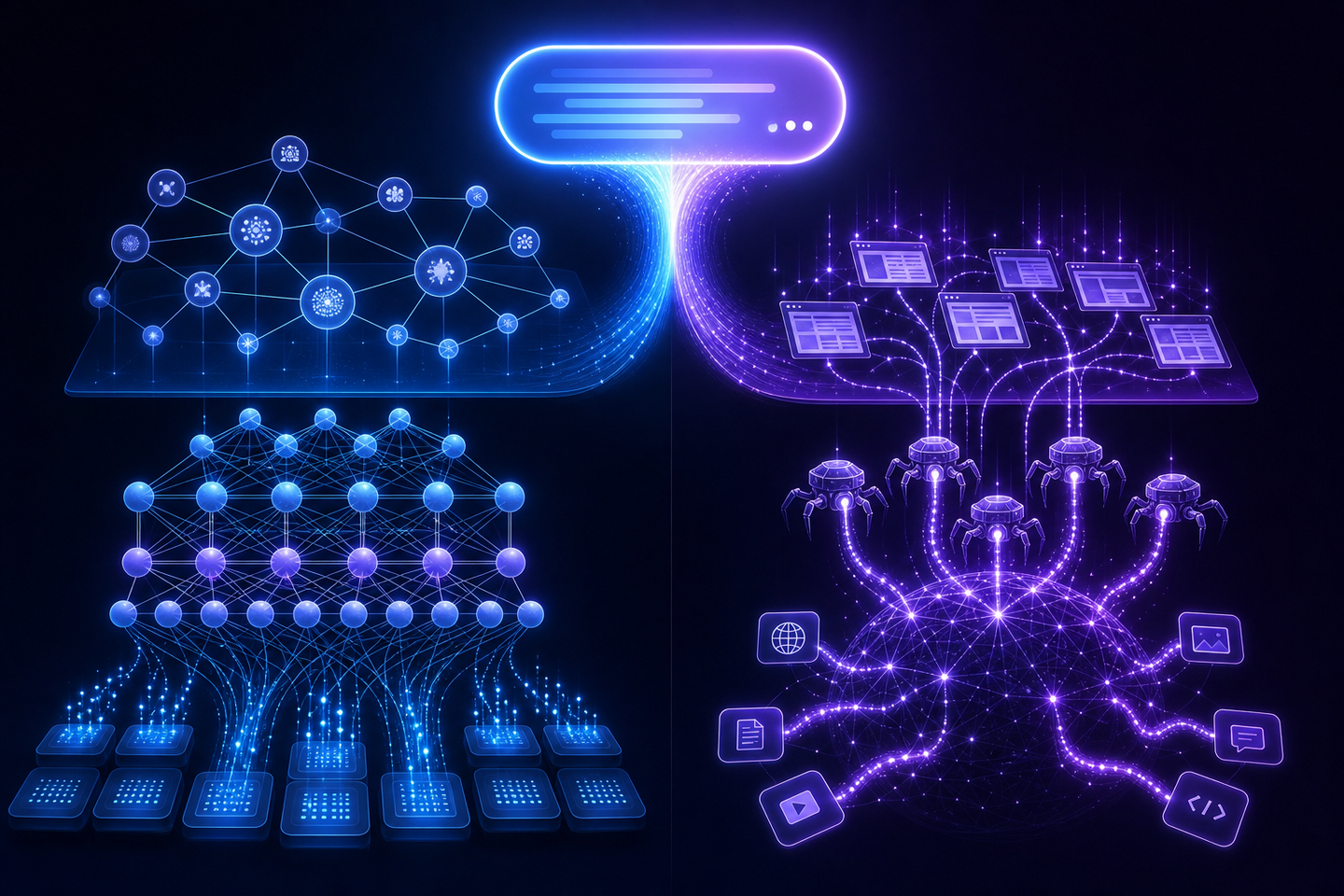
ChatGPT draws from both its training data and live web searches. When web search triggers, it weights factual content with clear hierarchical structure, strong branded domain authority, and visible recency signals. Think Wikipedia-style organization: dense, structured, citable at the passage level. Getting cited in ChatGPT responses starts with understanding that pipeline.
Perplexity searches the web in real time on every query. As authoritytech notes, being discoverable isn't the same as being cited, and being cited isn't the same as actually supporting the generated sentence. It responds well to short lead paragraphs (40-60 words) that answer directly, comparison tables with extractable data, and real-time freshness signals. Reddit community validation moves the needle here in a way it doesn't for ChatGPT.
| Signal | ChatGPT | Perplexity |
|---|---|---|
| Retrieval method | Training data + live web search | Real-time web search on every query |
| Content structure preference | Clear hierarchical structure (Wikipedia-style) | Short lead paragraphs (40-60 words), comparison tables |
| Authority signals | Strong branded domain authority | Reddit community validation, third-party mentions |
| Freshness sensitivity | Moderate: weights recency but not on every query | High: pages untouched for months lose to recently refreshed ones |
| Ideal optimization focus | Domain authority + hierarchical content structure | Lead paragraph clarity + comparison tables + freshness |
Lead paragraphs and comparison tables move the needle for Perplexity; here's the full breakdown. Domain authority and hierarchical structure matter more for ChatGPT. One format doesn't serve both equally.
Your Citation Baseline: Measuring Where You Stand Before Day One
Before you change anything, you need a snapshot. Otherwise you're guessing whether the work moved the needle.
Run 20-30 buyer-intent prompts across ChatGPT and Perplexity manually. Use the questions your actual buyers ask: "best [category] tool for [use case]," "[your category] vs [competitor]," "how do I [problem your product solves]." Log whether your brand appears, your position in the answer, and which competitors get cited instead. Do this in a clean session with no prior context — that's where tracking AI search rankings starts.
For a B2B SaaS company with no prior citation work, expect to show up in fewer than 15% of checks. The overall citation rate across 15,574 buyer-question checks sits at 13.8%, and most of that skews toward brands that have been deliberately building structured content. Zero is a normal starting point. Record it accurately.
Track three things per prompt: cited or not, position in the answer (first mention vs. buried), and which domain got cited when you didn't. That last column is where your gap analysis starts. You're mapping who's filling your absence.
Open Your Site to AI Crawlers First
None of the content or schema work in this guide matters if AI crawlers can't read your pages. Start here.
Check your robots.txt. GPTBot (ChatGPT) and PerplexityBot are blocked by default on many sites that copied older robots.txt templates. Add explicit allow rules for both:
While you're in there, add an llms.txt file to your root directory — a plain-text index that tells AI crawlers which pages matter most. Think of it as a sitemap written for LLM consumption, not human browsers.
Two more things: your sitemap's lastmod timestamps need to reflect actual content changes, not crawl dates. And if your site renders JavaScript client-side, AI crawlers frequently come back empty. Server-side or static generation is a hard requirement for reliable crawlability. Fix both before touching anything else.
Structure Content as Self-Contained Answer Capsules
AI engines don't cite pages. They cite passages. That distinction makes passage-level formatting the highest-impact change you can make.
A citation-ready answer capsule follows a simple pattern: lead with a direct answer in the first sentence, name the entity inside the block (your brand, your category, your product), and keep the whole unit between 130-170 words. Ask yourself: if a crawler extracted just that passage and nothing else, would it fully answer the question? If not, rewrite until it would.
Hedged language kills citation probability before content quality even enters the picture. "It depends," "in most cases," "you might consider" — all of these signal that the passage isn't a definitive answer. AI engines want declarative phrasing.
Structured formats outperform prose in citation checks:
- Comparison tables give Perplexity extractable data it can pull directly into a response without reformatting your content.
- FAQ blocks with direct answers match the question-response pattern AI engines favor when returning conversational queries.
- Checklists work for procedural queries where the engine needs to surface discrete steps, not a summary.
None of these are cosmetic choices. They're structural signals that your content is pre-organized for extraction.
Use Schema Markup as a Citation Qualifier, Not a Guarantee
Schema doesn't get you cited. It gets you considered.
Without valid schema, AI retrieval systems deprioritize your page before anyone reads a word of your content. With it, you're in the pool. What happens after that depends entirely on what you wrote.
Four schema types do the most work for B2B SaaS:
FAQPageon any post with a Q&A section, where each question-answer pair becomes directly extractable by AI retrieval systemsArticlewithdateModifiedpopulated accurately, signaling recency to freshness-sensitive enginesHowToon procedural content where you're walking through discrete stepsOrganizationat the root level with your name, URL, and description filled out completely
The silent killer is schema drift: your content changes, your schema doesn't. AI engines encounter a mismatch between the structured signal and the live page and quietly deprioritize you. No penalty notice. No ranking drop you'd catch in Search Console. You just stop getting cited.
Audit for drift by checking whether your FAQPage questions still match your actual headings, and whether dateModified reflects your last real edit — not your last deploy.
Build Topical Authority Through a Connected Topic Cluster
AI retrieval systems aren't checking whether one page answers a question well. They're assessing whether your domain shows depth on the topic overall — that's the foundation of answer engine optimization.
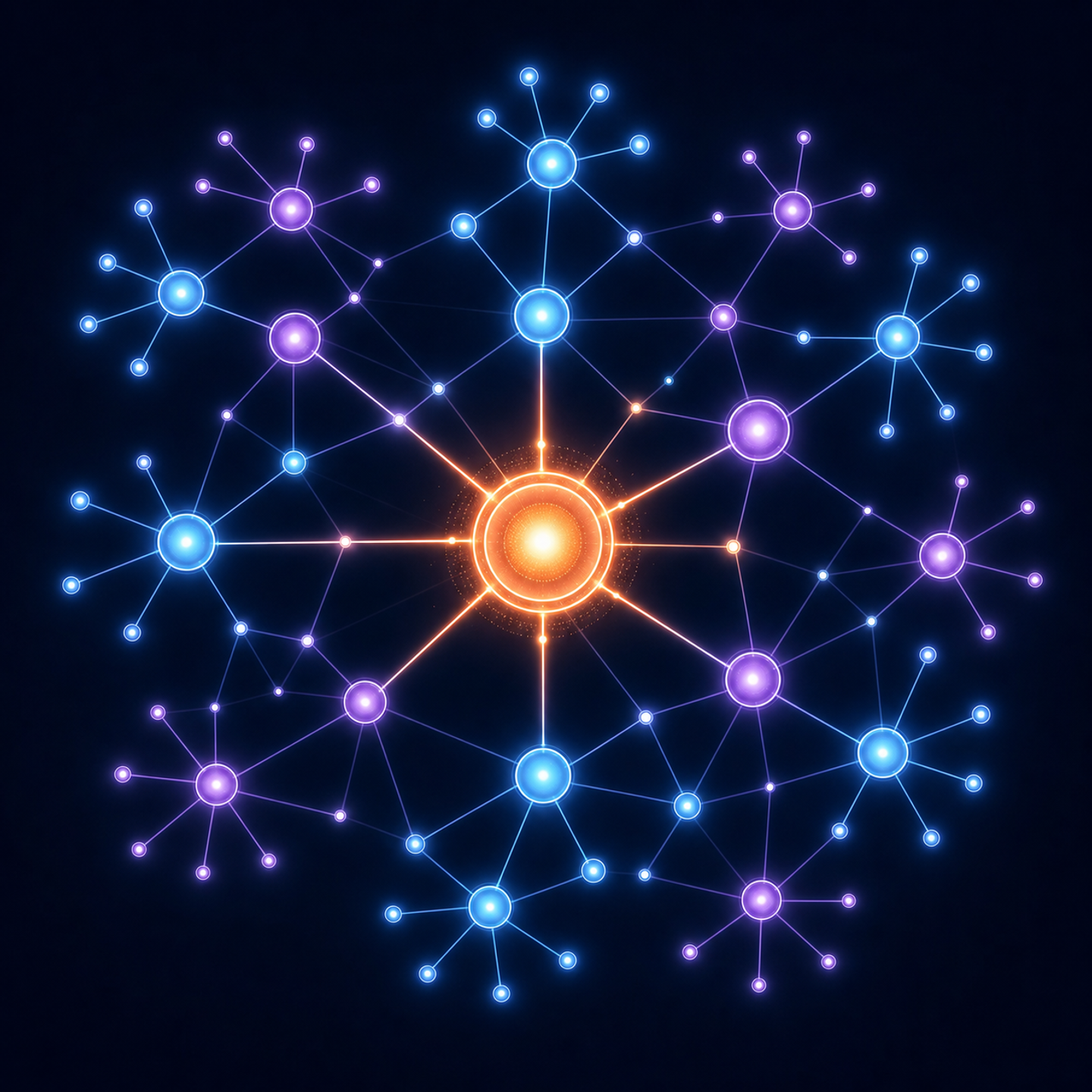
When ChatGPT or Perplexity surfaces a source for a complex B2B query, it's pulling from signals about how thoroughly a domain covers a problem space. A site with twelve interlinked pages on CRM workflow automation reads as more authoritative than a site with one excellent page and nothing around it.
For B2B SaaS companies in narrow verticals, that's an advantage. You don't need to beat HubSpot across all of marketing ops. Own a tight, specific problem space at depth. Map every adjacent question your buyer asks, then build outward: the pillar page covers the core concept, cluster pages handle sub-questions — comparisons, workflows, failure modes, use case variants. A contract management SaaS might own it like this: pillar = contract lifecycle management, clusters = e-signature workflows, contract templates, renewal automation, contract redlining best practices. Five pages. One coherent signal of deep domain coverage.
The interlinking matters as much as the content itself. Each cluster page should link back to the pillar using anchor text that reflects the pillar's primary keyword — signaling to both Google and AI retrieval systems that these pages belong to a coherent body of knowledge, not a collection of disconnected posts.
Find the Questions AI Engines Are Actually Fielding
Traditional keyword tools won't help you here. Queries that buyers type into ChatGPT and Perplexity rarely have measurable search volume — they're conversational, specific, often one-off. Semrush shows 0. Ahrefs shows 0. The question still gets asked hundreds of times a day.
The proxy that actually works is Google Search Console's zero-volume queries (ZVQs): queries that appear in your impressions report with 1-2 impressions and near-zero clicks. They surface because someone asked Google something unusual, Google served your page as a candidate, and nobody clicked — because the intent was better served by an AI tool. They're a direct trace of what buyers are asking AI engines about your category.
Pull your GSC impressions report, filter for queries with fewer than 5 impressions, and sort by query length. Long, specific questions — eight or more words — are your target. "How do B2B SaaS companies track AI citation share" is a ZVQ. Nobody searches that on Google. Plenty of buyers ask it in ChatGPT. Build a page that answers it directly and you're competing for an AI citation with almost no one. The same conversational intent pattern applies to getting cited in AI Overviews.
The other reliable source is competitor citation gaps. Run buyer prompts in Perplexity, log which domains get cited, then check whether those pages are answering questions your site doesn't cover. Every gap is a prompt your competitor is answering instead of you.
The 90-Day Content Freshness Rule
Content under 30 days old earns 3.2x more AI citations than older pages, and roughly half of all AI-cited content is less than 13 weeks old. Perplexity is the most sensitive to this — real-time retrieval means freshness is baked into every query. A page untouched for four months is competing against one refreshed last week. It loses before content quality enters the equation. Managing those freshness signals is most of the AI visibility game.
The distinction that matters: substantive updates versus cosmetic ones. Fixing a typo doesn't reset your freshness signal. Adding a comparison, updating a statistic, expanding an FAQ, revising a section based on a product change — those do. And updating dateModified schema without touching actual content is detectable. It won't move citation rates.
Build a refresh queue from day one. Flag your highest-traffic pages and the baseline prompt list from your measurement phase. Any page without a substantive edit in 60+ days goes in. Start with pages from your citation gap analysis — those are the exact pages AI engines are already reviewing when buyers ask about your category.
Build Third-Party Authority Signals That AI Systems Trust
Backlinks remain a citation prerequisite. AI retrieval systems use authority signals to decide which pages enter the candidate pool at all. Strong backlink profiles get in more often. Weak ones don't, regardless of content quality.
The tactical shift from traditional SEO: stop chasing DR and start chasing domains AI engines already cite. Run buyer prompts in Perplexity, log the third-party sources that appear repeatedly, and treat those as your backlink targets. A link from a source Perplexity already trusts carries more citation weight than a link from a high-DR domain that never appears in an AI answer.
Three signal types matter most:
- Backlinks from review sites like G2 and Capterra, newsletters, and SaaS directories that AI engines surface regularly in B2B answers
- Brand mentions on trusted third-party domains, even without a link, since AI systems read co-occurrence as an authority signal
- Presence in comparison and "best of" posts on domains that rank for your category terms
If Perplexity pulls a "best [your category] tools" post from a domain it trusts and your brand isn't in it, you're not in that buyer's consideration set at all. Getting listed matters as much as getting linked.
Your 30-60-90 Day Execution Plan
Each phase builds on the last. Do them in order.
Days 1-30: Access and Baseline
Before anything else: make sure AI crawlers can reach your pages.
- Audit robots.txt, allow GPTBot and PerplexityBot, and add llms.txt so crawlers have a clean map of your content.
- Fix server-side generation gaps if pages return empty to crawlers.
- Run 20-30 buyer prompts across ChatGPT and Perplexity, logging your citation rate and where competitors appear.
- Pull GSC zero-volume queries and identify your top 10 target questions.
- Deploy Organization, Article, and FAQPage schema on your five most important pages.
Checkpoint: you have a documented baseline citation rate and a ZVQ list to build from.
Days 31-60: Content and Schema
- Rewrite your top five pages as self-contained answer capsules (see structure section for format).
- Publish two to three new pages targeting ZVQs with no existing coverage.
- Audit schema drift across pages with recent content changes.
- Build your topic cluster: pillar page live, two to three cluster pages interlinked with keyword-matched anchor text.
Checkpoint: re-run your baseline prompt set. Citation rate should move on the pages you restructured.
Days 61-90: Freshness, Authority, and Expansion
- Substantively refresh any page not updated in 60-plus days by adding comparisons, updating stats, and expanding FAQs.
- Continue building links from the Perplexity-trusted domains identified in phase one, prioritising any gaps found in competitor citation logs.
- Publish two to three additional cluster pages targeting competitor citation gaps you found in phase one.
- Run your full prompt set again at day 90 and compare citation rate, position, and competitor displacement across all three snapshots, using AI visibility metrics and KPIs to frame your results.
The day-90 number is your proof of concept. If citation rate has moved and competitor displacement has started, the system is working.
How Maintouch Runs the Full Citation Strategy Autonomously
Everything in the 90-day plan above is executable manually. Maintouch runs it autonomously.
The software mines Search Console for zero-volume queries automatically — surfacing the exact conversational questions AI engines are fielding in your category without you having to comb through impression data. Those queries feed directly into content strategy, so the pages you build are targeted at citation-worthy prompts from day one.
Citation tracking runs across all five engines: ChatGPT, Gemini, AI Overviews, Perplexity, and Claude. You see where you're cited, where competitors appear instead, and which prompts represent gaps worth closing — all inside the AI visibility platform. Schema regenerates automatically on every publish through CMS integrations, so drift stops being a silent citation killer. Technical SEO fixes go directly to your connected CMS without routing through a developer queue.
The Content Updates System detects stale context, unoptimized pages, and posts with declining impressions after 90-plus days live — and queues a refresh automatically. Background agents carry out the updates so the pages most likely to earn citations stay current.
Maintouch is built for B2B SaaS companies running this exact motion. If you want to see how it maps to your current citation gaps, shoot me a message at [email protected].
Final Thoughts on Getting Your Brand Into AI-Generated Answers
The gap between ranking on Google and getting cited in AI answers is real, and most B2B SaaS brands are sitting squarely in it without realizing it. The fix isn't complicated — it's sequential. Work through the plan in order, measure at each checkpoint, and don't skip phase one because it feels like setup. If you want to see your current citation rate before you start, shoot me a message at [email protected] and I'll show you exactly where the gaps are.
FAQ
How long does it take to get cited in ChatGPT and Perplexity after making these changes?
Most B2B SaaS sites see citation rate movement on restructured pages within 30-60 days of deploying schema, rewriting passages as self-contained answer capsules, and fixing crawler access. The 90-day window in this guide isn't arbitrary: content under 30 days old earns 3.2x more AI citations than older pages, and Perplexity's real-time retrieval means freshness signals compound quickly once you're in the candidate pool. Don't expect to displace well-cited competitors in week one. Expect your baseline number to move first, then position and competitor displacement to follow.
How do I get my brand cited in AI chatbot answers for questions nobody is searching on Google yet?
Pull your Google Search Console impressions report and filter for queries with fewer than 5 impressions, then sort by query length. Those zero-volume queries (ZVQs) are the direct trace of what buyers are asking ChatGPT and Perplexity in your category. Build a self-contained answer capsule of 130-170 words targeting each question, name your entity inside the block, and use direct declarative phrasing instead of hedged language. For categories where Google search volume barely exists, ZVQs are the only reliable signal of what AI engines are actually fielding, and the competition for those citations is almost zero.
What's the difference between how Perplexity and ChatGPT decide what to cite?
The two engines use fundamentally different retrieval pipelines, so the same page can get cited by one and ignored by the other. See the ChatGPT vs. Perplexity section above for the full breakdown and comparison table.
How do I find which domains AI engines already trust so I can build backlinks from the right sources?
Run buyer prompts in Perplexity, log which third-party domains appear repeatedly across answers in your category, and treat those as your backlink targets. A link from a source Perplexity already cites carries more citation weight than a link from a high-DR domain that never appears in AI answers. Presence in "best of" comparison posts on those domains matters as much as a direct link. If Perplexity pulls a "best [your category] tools" post from a trusted domain and your brand isn't in it, you're invisible to every buyer who asks that question.
How does Maintouch track which AI engines are citing you versus your competitors?
Maintouch tracks citation share across five engines: ChatGPT, Google Gemini, Google AI Overviews, Perplexity, and Claude. You can enter prompts manually or let the platform's agents surface the most relevant ones automatically, which matters because the prompts buyers actually use in ChatGPT and Perplexity rarely show up in Semrush or Ahrefs with measurable volume. The competitive layer shows which domains are getting cited for the same prompts you're tracking, so the gap analysis runs continuously instead of requiring a separate manual audit every time you want to see where competitors are displacing you.
Do I need to get cited on Google first before AI engines will cite me?
No, and this is the most common misconception about AI visibility. Only 12% of AI-cited URLs appear in Google's top 10 organic results for the same query, meaning Google rankings and AI citations are largely separate competitions. A site with zero first-page Google rankings can earn AI citations by publishing self-contained answer capsules with clean schema and allowing AI crawlers access through robots.txt. That said, strong domain authority helps get your page into the retrieval pool, so foundational SEO work still matters.
What does it actually mean to "allow" GPTBot and PerplexityBot in robots.txt?
It means adding explicit allow rules for both crawlers so they can read every page on your site. Many robots.txt files were written years ago using wildcard disallow rules or templates that block all unrecognized bots by default, and GPTBot and PerplexityBot both get caught in that net. Check your robots.txt file at yourdomain.com/robots.txt, and if you don't see explicit allow lines for both, add them. Without this step, no amount of content or schema work will move your citation rate because the crawlers can't reach your pages.
Is schema markup the same thing as structured data?
Yes, the terms are used interchangeably. Schema markup (also called structured data or JSON-LD) is machine-readable metadata you add to a page so that crawlers, search engines, and AI retrieval systems can understand what the content is about without having to interpret prose. For AI citation purposes, the four types that do the most work are FAQPage, Article, HowTo, and Organization. Schema is a qualifier that gets your page into the candidate pool, not a guarantee of citation.
How do I know if schema drift is causing me to lose AI citations?
The simplest signal is a drop in citation rate on pages you recently updated without touching the schema. If your content changed but your FAQPage schema still references old headings, or your Article schema still shows an outdated dateModified timestamp, AI retrieval systems encounter a mismatch and quietly deprioritize the page. Audit by comparing your live FAQPage question text against your actual on-page headings, and compare dateModified in your schema against the date of your last real content edit. Any mismatch is schema drift and should be corrected immediately.
Can a brand new domain earn AI citations, or do I need domain authority first?
New domains face a real disadvantage because AI retrieval systems use backlink profiles and authority signals to determine which pages enter the candidate pool. A page with no inbound links from trusted sources will struggle to get retrieved, even if the content is perfectly structured. The practical path for new domains is to focus on earning citations from third-party sources first: get your product listed on G2, Capterra, and review sites that AI engines already trust, and build a handful of backlinks from newsletters and SaaS directories in your category before expecting direct site citations. Your domain earns its way into the pool incrementally.
What's the difference between an AI citation and an AI Overview on Google?
An AI Overview (formerly Search Generative Experience) is a generated answer block that appears at the top of a Google search results page, drawing from sources Google crawls and ranks. An AI citation is when any AI tool (ChatGPT, Perplexity, Claude, Gemini) names or links to your content inside a generated response. The optimization mechanics overlap significantly: structured content, clean schema, and passage-level clarity help with both. But they're measured differently. AI Overviews show up in Google Search Console data, while ChatGPT, Perplexity, and Claude citations require separate tracking since they don't surface in GSC.
Turn search into your best growth channel.
Maintouch tracks your visibility across AI and Google, creates and refreshes content, and gets your brand mentioned on the sites that shape discovery.
Book a demoRelated reading
All posts