
GEO vs AEO vs LLM SEO Guide for October 2026

By Bennett Cohen
Get Maintouch
Turn search and AI visibility work into a repeatable growth system.
Trying to settle GEO vs AEO vs LLM SEO before planning your next content update? These aren't three separate paths: the labels overlap, and vendors don't use them consistently. What matters is whether your pages can be found, whether their answers make sense on their own, and whether they offer evidence worth citing. My goal: you walk away knowing where the approaches differ and whether to fix your SEO foundation or test citation improvements first.
TLDR:
- GEO targets AI citations, AEO direct answers, and LLM SEO brand visibility in AI responses.
- Start new sites with SEO. Apply AEO and LLM SEO to your pages that already rank.
- Write self-contained answers of 130-170 words, with clear entity names and original evidence.
- Track your AI citation share with a fixed prompt set, separate from SEO rankings and clicks.
- Maintouch combines citation tracking, schema automation, content refreshes, and CMS publishing.
What GEO, AEO, and LLM SEO Actually Mean
GEO, AEO, and LLM SEO aren't standardized terms. Usage varies, but each puts a different outcome in focus:
- GEO (generative engine optimization) aims to get your content used or cited in AI-generated responses.
- AEO (answer engine optimization) makes content easy to select as a direct answer, including featured snippets and AI answers.
- LLM SEO describes work to improve your brand's visibility in LLM responses.
How Traditional SEO Differs From These Newer Approaches
Traditional SEO targets rankings in Google's search results and visits to your site. Backlinks and authority matter; relevance goes beyond repeating keywords.
Rankings alone give you an incomplete picture. Similarweb's research on searches without a click shows users can get what they need without visiting a page. Understanding differences between GEO and SEO helps here: track whether your content appears inside answers alongside your rankings and traffic.
Why the Terminology Got So Fragmented
Researchers introduced labels for studying generated answers, SEO vendors named services around answer visibility, and AI companies added their own product language. The industry never agreed on a naming convention.
When comparing GEO vs AEO vs LLM SEO proposals, ask which tasks you're buying. Different acronyms can describe nearly identical services, and weighing differences between AEO and SEO shows that two “AEO” packages can cover very different work.
The Core Goal All Three Share
GEO, AEO, and LLM SEO share a goal: getting your content into the AI-generated answer. Beyond ranking among ten links, you're competing to become a cited source.
Consider a hypothetical question: “How do I migrate PostgreSQL without losing writes?” A specialist's guide documenting replication setup, cutover checks, and rollback conditions could earn the citation over a category leader's broad database migration overview. The specialist supplies evidence for the exact task, giving the answer a useful source instead of just a recognizable brand.
Your competition changes: a specialist page answering one narrow part of a question can compete with a broader category leader.
Check which questions your competitors' cited pages answer, then identify what your page can contribute.
How AI Search Engines Actually Retrieve and Cite Content
AI engines using web search retrieve candidate pages, then select passages for relevance, authority and clarity. Ranking is only part of the process described in SEO Sherpa's search and retrieval breakdown: passages must work independently.
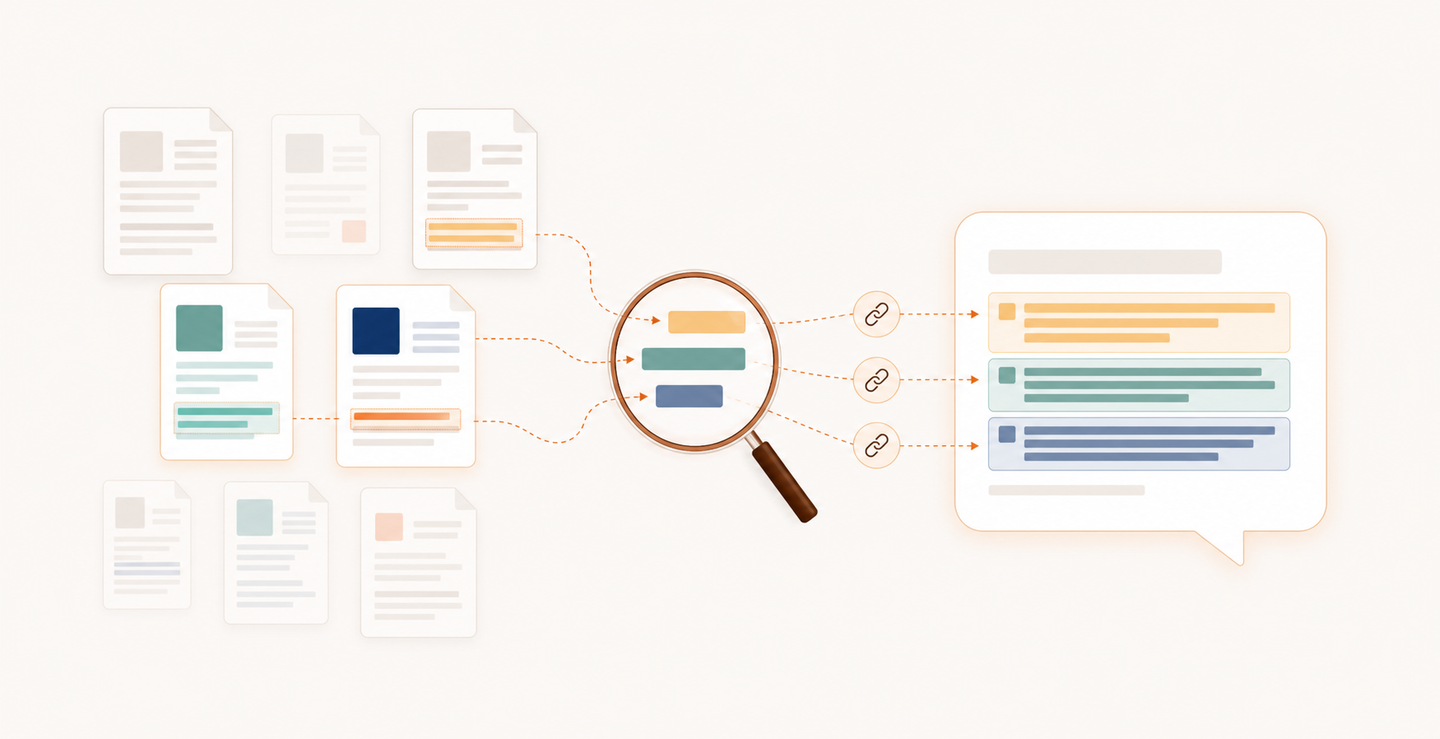
Write answers that make sense outside your page. Keep schema consistent with visible content; markup alone doesn't guarantee citation.
Cited brands earn ~120% more organic clicks per impression than sites ranking below the AI-generated box — track citation share separately so you can see that lift in your own data.
GEO (Generative Engine Optimization): What It Means in Practice
GEO typically means preparing content for generated responses, including work to get cited in ChatGPT responses and Perplexity answers. The label moved from academic research into vendor language. Some practitioners prefer AEO or AI SEO because GEO can suggest geographic targeting and overlaps with existing SEO work.
Following geo best practices means writing passages around specific claims, naming your product or entity clearly, and supplying original evidence worth citing. On comparison pages, put test conditions beside each result.
AEO (Answer Engine Optimization): What It Means in Practice
AEO makes your answers easy to extract. Use FAQ sections and comparison tables with self-contained passages for ChatGPT, Perplexity, Google Gemini, Claude, and when you want to get cited in AI Overviews.
Add FAQPage or HowTo schema only when it matches your content. Where search features require structured data, missing markup blocks eligibility regardless of writing quality. AI citations have no universal schema requirement, so check each feature's requirements before adding markup.
LLM SEO: What It Means and Who Uses the Term
LLM SEO appeals to developers and technical SEO practitioners who focus on what an LLM retrieves and how it uses information to generate a response.
Compared with AEO, the practical distinction is diagnostic depth, since tracking LLM visibility means separating information learned during training from sources retrieved live, then checking which evidence informs the answer. Ask anyone proposing “LLM SEO” which mechanisms their work can actually influence.
Where GEO, AEO, and LLM SEO Overlap and Where They Diverge
All three rely on structured content, accurate schema markup, clear entity names, and credible authority signals.
| Term | Practical focus | Typical use |
|---|---|---|
| GEO | Evidence for synthesized responses | ChatGPT and Perplexity research answers |
| AEO | Easily selected direct answers | Snippets, voice answers, Google AI Overviews |
| LLM SEO | Retrieval and brand representation | ChatGPT, Claude, Gemini response audits |
Use these associations to scope your project, not to assign exclusive engine boundaries.
The Relationship Between Traditional SEO and AI Search Optimization
Traditional SEO and AI search optimization can share a backlog. When AI engines search the web before generating answers, crawlability helps your pages enter the candidate pool. Backlinks and domain authority support credibility, while content freshness keeps the evidence current.
Start within your existing SEO program: fix blocked crawling and update outdated product information. You’re building the foundation for AI retrieval with work that also supports SEO.
Which Strategy Should You Focus on First
Choose your starting point by domain maturity:
- If your domain is new or has low authority, start with foundational SEO. Build useful pages around narrow buyer questions and earn relevant links before testing AI-specific tactics.
- If you already rank for relevant searches, apply AEO and LLM SEO tactics to those pages. Start with buying decisions, where your existing authority gives citation experiments a stronger base.
How to Optimize Content for AI Citation Across All Three Approaches
- Write each answer as a self-contained block of 130-170 words, naming the entity so the passage makes sense on its own.
- Turn procedures into checklists. Use tables for side-by-side comparisons.
- Check whether Article, Organization, FAQPage, or HowTo markup fits your page, using schema markup for AI citations as your reference.
- Review pages older than 90 days for substantive updates. Add new evidence where needed; changing the date alone doesn't improve the content.
How to Measure Success Across SEO and AI Search
Keep separate scorecards for SEO and AI search:
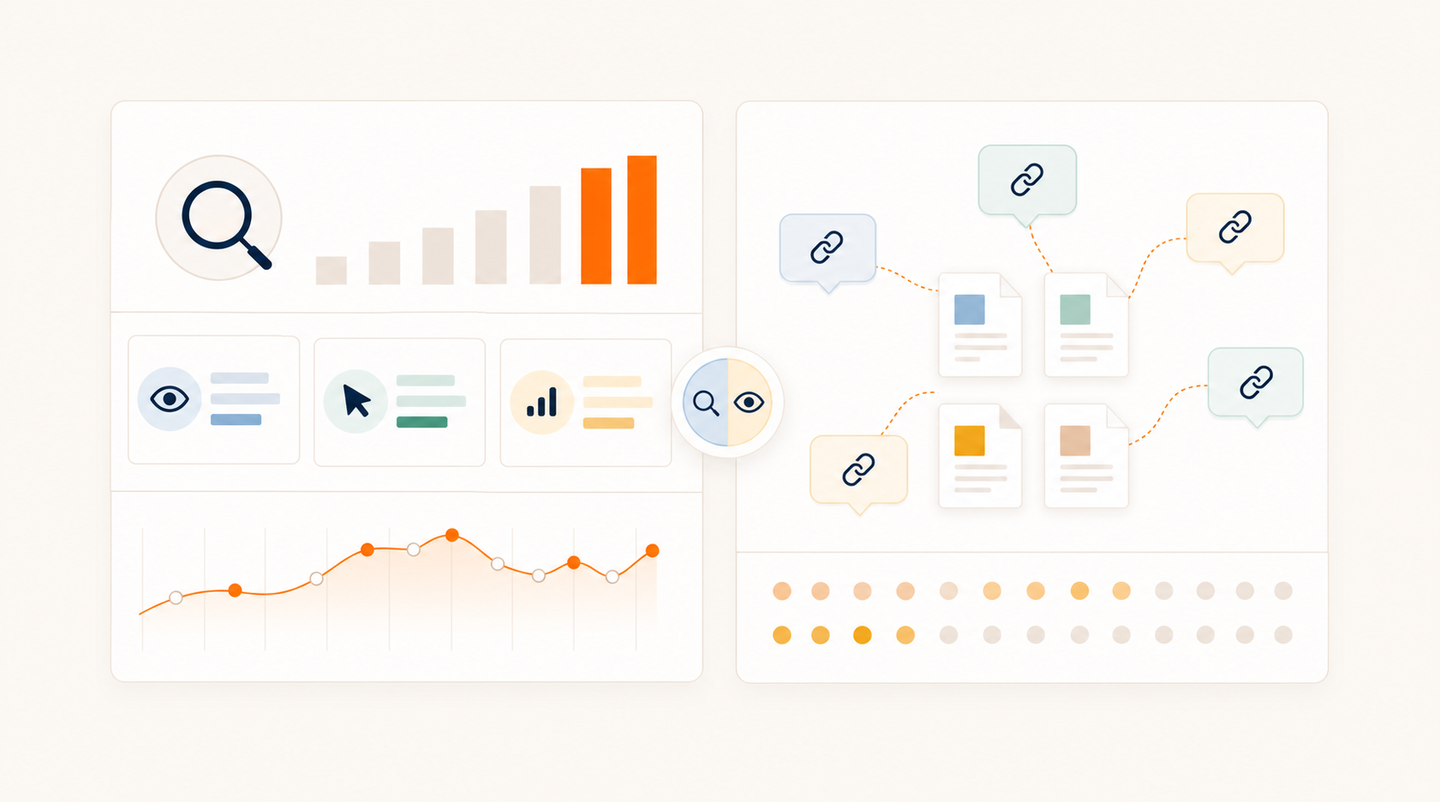
- For SEO, track impressions, clicks, and average position in Google Search Console.
- For AI search, track citation share: how often answers cite your brand across ChatGPT, Gemini, AI Overviews, Perplexity, and Claude. Use the same prompt set to compare your share with competitors.
How Maintouch Handles GEO, AEO, and LLM SEO in a Single Workflow
I built Maintouch to run SEO and AEO in the same workflow — citation tracking, zero-volume query discovery, schema automation, content refreshes, backlink procurement, and CMS publishing, all inside one system. You don't coordinate those tasks across separate tools. The system runs them.
Final Thoughts on Comparing AI Search Approaches
GEO, AEO, and LLM SEO aren't fixed service definitions. You get a clearer plan by asking which tasks fit your site's needs. If you want to talk through what that looks like for your stack, shoot me a message at [email protected].
FAQ
Should you refresh existing posts or write new content to earn citations in ChatGPT and Google AI Overviews?
Refresh an existing post when it already matches the buyer question but lacks current facts, clear answers, or original evidence. Write a new page when the question serves a different intent that your existing content doesn't cover. Use Google Search Console impressions and the pages cited in AI answers to choose your first candidates.
Do you need separate pages for Google rankings and ChatGPT or Perplexity citations?
No. Use one page per buyer intent, with useful detail for readers and self-contained answers that AI engines can quote. GEO, AEO, and LLM SEO can share that page; create separate pages only when the questions require different answers, such as implementation instructions versus a purchasing comparison.
How do you find questions your buyers might ask ChatGPT using Google Search Console?
Start with relevant queries that already generate impressions in Google Search Console, then combine them with questions from sales calls and support conversations. Turn those inputs into prompts that include the buyer's role, task, and limits, and test them in ChatGPT. Treat low-impression queries as research leads, not proof that someone asked the same question in an AI chat.
How do you distinguish a ChatGPT brand mention from a citation to your website?
A brand mention names your company; a citation to your website includes a source link pointing to your domain. Record mentions, citations to your own pages, and citations to third-party pages about your brand separately. That distinction shows whether you need clearer product information on your site or stronger coverage on sources ChatGPT already cites.
Does schema markup actually make a difference for getting cited in AI answers?
Schema is a binary qualifier. Without it, a page gets deprioritized before content quality is even evaluated. With it, you're in the pool. Use FAQPage, HowTo, Article, and Organization markup where it matches your content, and make sure the structured data stays consistent with the visible text on the page. Schema drift is one of the most common reasons a page loses citations without any visible change to its content.
How is GEO different from traditional SEO, really?
Traditional SEO competes for a ranked link in a results list. GEO and AEO compete to become one of the 3-5 cited sources inside an AI-generated answer. The evaluation criteria shift from backlink authority and keyword density toward passage clarity, entity naming, and evidence quality. Your pages need both: strong SEO gets you into the retrieval pool, and structured, self-contained writing gets you cited from it.
Can a small site with low domain authority earn AI citations?
Yes, but it's harder. AI retrieval systems weight authority signals when deciding which pages surface in context, so a weaker backlink profile means you appear in the candidate pool less often. That said, a narrow specialist page answering one exact question with original evidence can outcompete a broader, higher-authority page for that specific query. Focus on a tight topic cluster and build relevant backlinks before chasing AI citation at scale.
How often should you update content to stay cited in AI responses?
Content updated in the last 90 days gets cited more consistently than stale pages. That doesn't mean changing the publish date every month. It means adding new evidence, refreshing outdated product details, and verifying that schema still matches what the page says. If a page is getting impressions but losing citation share, a substantive update is almost always the right first move.
Is there a difference between how ChatGPT and Google AI Overviews decide what to cite?
Yes. Google AI Overviews run a web search, retrieve candidate pages, and select passages that rank well and read cleanly. ChatGPT pulls from training data and (in browsing mode) live web results, weighting structured, authoritative sources. The tactics overlap heavily: self-contained answers, accurate schema, and strong backlink signals help with both. Track citation share separately across each engine and look for patterns in which pages earn citations where.
What's the minimum viable setup for tracking AI citation performance?
Pick a fixed set of prompts that reflect your buyers' actual questions, run them across ChatGPT, Perplexity, Google AI Overviews, Gemini, and Claude, and record which pages get cited and which competitors appear. Do this consistently so you can compare share over time, not just a single snapshot. One-off tests tell you nothing; the signal comes from trends across a stable prompt set.
Turn search into your best growth channel.
Maintouch tracks your visibility across AI and Google, creates and refreshes content, and gets your brand mentioned on the sites that shape discovery.
Book a demoRelated reading
All posts