
Startup SEO: Closing the Domain Authority Gap

By Bennett Cohen
Get Maintouch
Turn search and AI visibility work into a repeatable growth system.
Stop measuring your startup's SEO progress against an enterprise competitor's traffic total. You can win on the buyer questions that actually matter while your domain authority score barely moves — and if you're waiting for that number to catch up before doing the work, you're waiting for nothing. My goal: you walk away knowing exactly how to choose a narrow topic, build a cluster of linked pages around it, and track the rankings and conversions that actually tell you whether it's working.
TLDR:
- Stop waiting for domain authority parity. DA isn't a Google ranking factor.
- Target your rivals' long-tail gaps with linked guides and tested examples.
- Pitch your original research to niche publications to earn relevant editorial backlinks.
- Track cluster impressions, long-tail rankings, AI citations, and organic conversions monthly.
- Maintouch procures backlinks through its backlink marketplace — 70+ providers at bulk rates, no markup — available on Hypergrowth or above.
What the Domain Authority Gap Actually Means for Startups
Domain authority (DA) is a third-party score — not a Google ranking factor — that estimates a site's ranking potential based largely on its backlink profile. The links underneath that score are real, though, and they do give enterprise competitors a head start.
Older sites have had longer to earn references. Bigger publishing budgets mean more pages, which means more surface area to attract links. Age alone doesn't earn you anything — but years of accumulated, relevant links? That's real equity. Your startup is starting from scratch against a site that's been compounding it for a decade.
A useful page can still struggle against an incumbent with that kind of head start. If you're tackling this without an agency, a guide on how to do SEO yourself can help you budget for earning credibility alongside publishing.
Why Domain Authority Is a Lagging Indicator, Not a Ceiling
A startup can improve a page and earn impressions long before an authority tool reflects that progress. DA is a lagging snapshot of accumulated signals — not a ceiling on what you can rank for next month.
Use DA to set expectations about effort, then judge each search opportunity on its own evidence.
Waiting for score parity is just delaying work that could already be earning visibility. Start with the pages currently ranking for your target query. Check how useful they are, how well they match search intent, and — most importantly — where they leave the reader's question half-answered. That gap is your opening.
Where Startups Can Compete Right Now
Enterprise sites tend to dominate the broad, high-volume terms — and honestly, don't bother fighting them there. The narrower searches are where they're sloppy. Sort your opportunities by search intent and you'll find gaps they haven't touched.
| Search intent | Territory to check |
|---|---|
| Long-tail research | Buyer-specific tasks, such as usage-based billing for small SaaS teams |
| Navigational gaps | Hard-to-find integration instructions needing a walkthrough pointing to official documentation |
| Question-based searches | Troubleshooting questions with incomplete answers in current results |
| New topics | Recently released features or changing requirements missing from existing guides |
Before you draft anything, check the current results and name the unmet need your page will fill. Don't write into a gap you haven't confirmed exists. If you're still figuring out how to staff this work, the SEO platform vs. agency tradeoff is worth thinking through before you commit either way.
Topical Authority as the Startup's Primary Lever
Topical authority means covering a subject deeply enough that Google — and your reader — treats you as the go-to source on it. A focused startup with tight, consistent coverage can outrank a higher-DA site that's written one scattered post on the topic and moved on.
Pick something narrow. Usage-based billing implementation, for example. Build a central guide. Support it with pages on metering errors, invoice disputes, edge cases your product has actually surfaced. Link between them wherever a reader would naturally need the next explanation. The cluster earns authority the individual page never could.
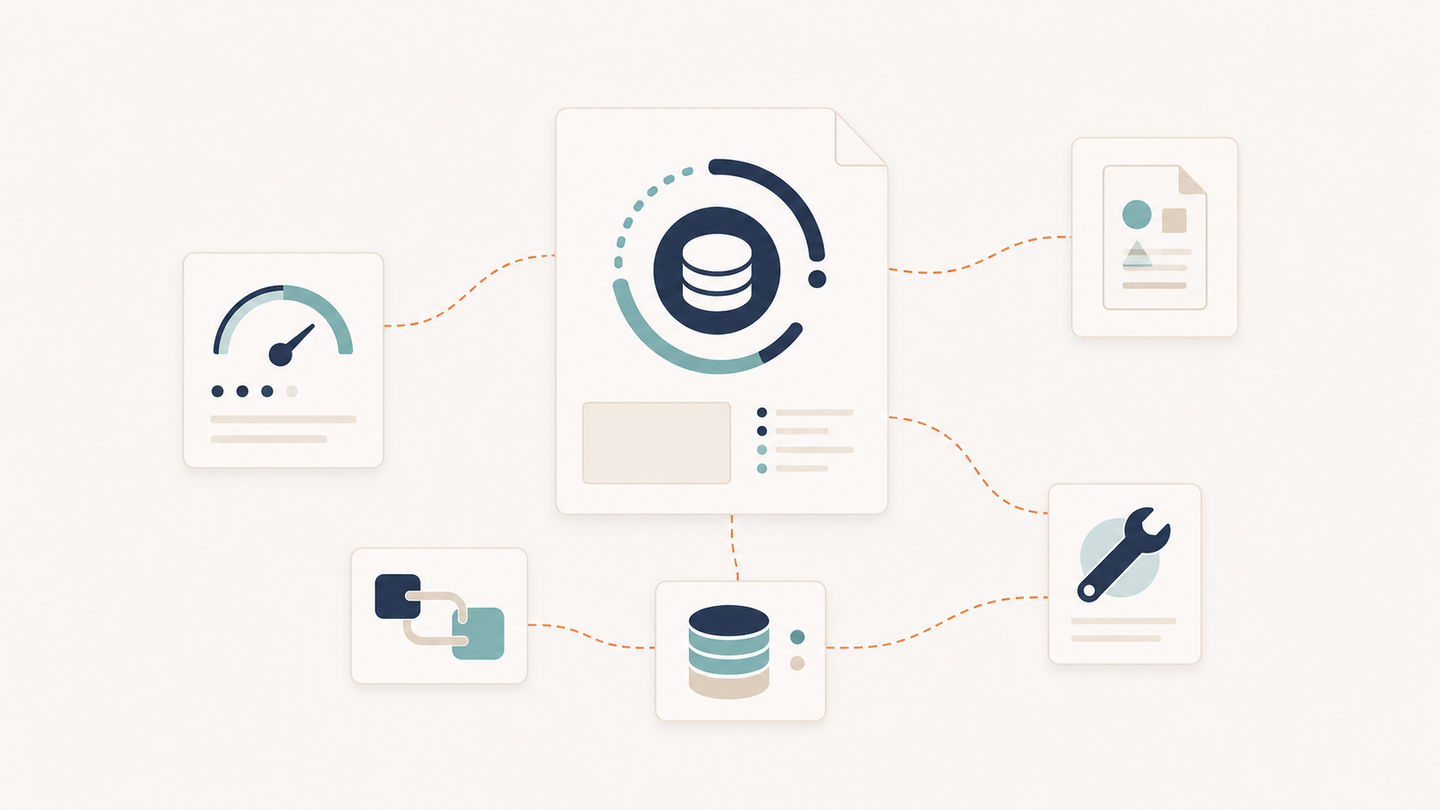
Don't try to match their publishing volume. You can't. Show expertise instead: name qualified authors, include examples you've actually tested, cite original sources. Assign each cluster an owner — someone responsible for keeping those pages accurate as the subject evolves. An outdated cluster is worse than no cluster.
How to Build Backlinks Without an Enterprise Budget
You're not going to out-spend an enterprise's outreach budget, so don't try. Focus on the publications that actually matter to your buyers. A few well-placed links from relevant sources will do more than 50 generic directory submissions. Selective outreach looks like this:
- Publish original research with clear methodology and citable data.
- Pitch findings to niche publications whose readers match your buyers, such as SaaStr for SaaS founders.
- Have your founder contribute informed commentary to industry articles.
- Seek relevant directory and review site placements with real editorial standards.
Check the publication's recent articles before pursuing placement — you're looking for editorial standards, not just domain authority. If your team doesn't have the bandwidth for manual pitching, there are backlink building approaches that don't require it.
Content Velocity vs. Content Depth: Choosing the Right Trade-off
Enterprise content teams can fund a publishing cadence you can't match. That's fine. Set your schedule around what you can actually contribute to each piece — not what looks productive on a content calendar.
Publish fewer pages if that gives you time to include anonymized support patterns, real benchmarks from your own product tests, or edge cases your team has actually handled. Say how you gathered the evidence. Acknowledge its limits. That's the thing a competitor with a $500k content budget can't replicate.
Before approving a draft, mark every passage that contains information the reader couldn't get from the first three Google results. If you can't find much, send it back for more reporting. Don't publish filler just to hit a cadence. If you're weighing your link-building stack at the same time, it's worth comparing automated backlink procurement options before committing.
Technical SEO as an Equalizer
This is an underrated advantage of being small. A startup can fix technical gaps in a week. Enterprise sites carry years of architecture debt — duplicate URLs eating crawl budget, conflicting canonicals, slow pages, missing schema sitting in a developer backlog that nobody's touched in eight months. They know the problems are there. They just can't move fast enough to fix them.
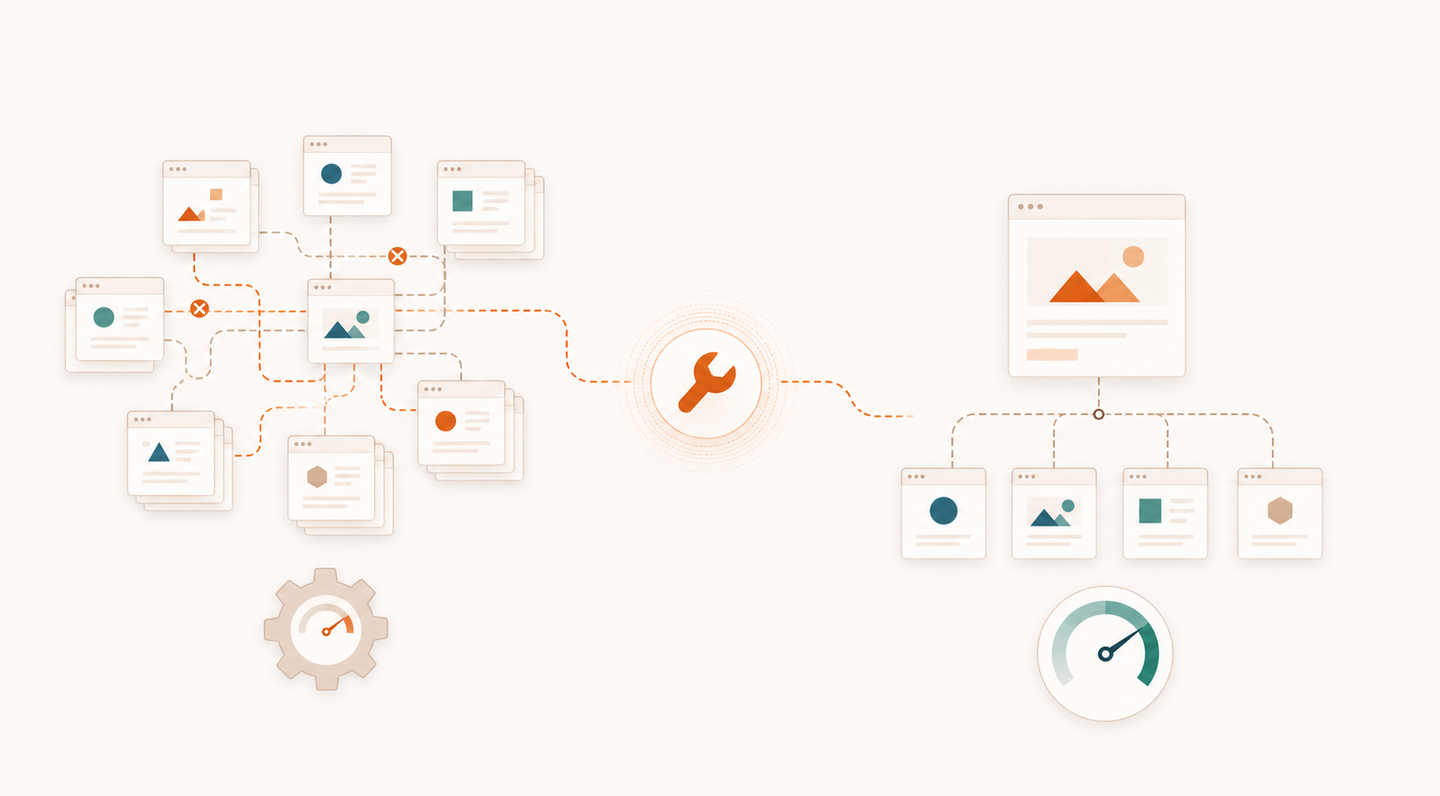
Audit your target pages first:
- Write accurate titles and meta descriptions for each page.
- Add structured data that matches visible content.
- Check Core Web Vitals; fix oversized images and unnecessary scripts.
- Add relevant internal links so important pages are reachable.
- Keep canonical tags consistent with your preferred URLs.
After each fix, retest the live URL to confirm the change actually landed. If you're building links at the same time, programmatic backlink building for SaaS pairs well with technical cleanup — the two compound each other.
Structured Data and AI Search as a Parallel Ranking Track
ChatGPT, Perplexity, Claude, Gemini, and Google AI Overviews offer a parallel route to visibility that your DA score doesn't block: citations inside generated answers. Your startup page can appear there while it's still sitting on Google's second page. Neither placement guarantees the other, but they're not mutually exclusive either — and right now, most of your competitors aren't optimizing for both.
Citation selection involves retrieval and answer relevance — not just authority signals. Clear, self-contained passages and accurate structured data help AI systems interpret and surface your content. A solid keyword competitor analysis can show you where those gaps exist in the current results. Schema alone doesn't guarantee citations, but it reduces friction.
Add these to your publishing checklist before every piece goes live:
- Answer each question in a self-contained passage.
- Name the product or entity explicitly.
- Keep schema properties complete and consistent with the page whenever facts change.
How Startups Can Measure Whether Their Strategy Is Working
Don't measure this against what the enterprise competitor is doing. Measure it by whether you're gaining ground within your target topics. Track monthly:
- Search Console impressions growth by keyword cluster.
- Click-through rate changes for those queries.
- Rankings for your target long-tail terms.
- AI citation share across a consistent prompt set.
- Organic conversion rate for each landing page.
Organic value is visits × conversion rate × value per conversion. ROI is (organic value - SEO costs) / SEO costs. If you want to estimate avoided paid spend, use equivalent paid clicks × CPC — just keep that figure separate from organic value so you're not double-counting the same traffic twice.
Track AI citation progress alongside traditional rankings. Getting cited in AI overviews is a separate game, and one your competitors are likely ignoring.
Maintouch: Built for Startups Closing the Gap
I built Maintouch to help startups close the domain authority gap without $200k+ in annual SEO labor. The agents find competitor gaps, target long-tail and zero-volume queries, handle CMS fixes, and procure backlinks through a backlink marketplace of 70+ providers at bulk rates — no markup.
AI visibility tracking covers ChatGPT, Gemini, Google AI Overviews, Perplexity, and Claude. Full execution runs on Hypergrowth or above. Self-serve plans include a 5-day free trial. Connect your CMS and Search Console and you're in.
Final Thoughts on Competing Across the Authority Gap
You can make real progress before your DA score catches up. I've watched startups win on buyer queries while their authority metrics barely moved — because they picked the right topic, built a tight cluster, and tracked the right things. That's the whole playbook. Track the searches and conversions that matter to your business, not the ones that look impressive in a deck.
If you want to work through what that looks like for your specific situation, shoot me a message at [email protected]. I'll work through the next opportunity with you.
FAQ
Can your startup run SEO with Maintouch if you only have 30 minutes a week?
A 30-minute weekly review can cover routine oversight after setup, but leave extra time for onboarding and expert fact-checking. Connect your CMS and Google Search Console, supply product facts, and set approval rules before automating execution on Hypergrowth or above. Use your weekly review to check priorities, approve content, and catch claims that need internal expertise.
Should your startup publish hundreds of pages to catch bigger competitors on Google?
No, a new or low-authority domain should start with a focused topic cluster before attempting programmatic SEO at scale. Publish a central guide and supporting pages with tested examples, then check indexing, relevant impressions, and conversions before expanding. Publishing volume without distinct reader value can create scaled-content spam risk.
How do you check whether backlinks are helping your startup or creating Google penalty risk?
Check the linking page’s topic, editorial quality, anchor text, and placement context; a domain score alone can't tell you whether a link is useful. Review Google Search Console’s Links report alongside its Manual actions report, then investigate paid ranking links or patterns of manipulative placements. Don't submit a disavow file solely because a tool labels links “toxic”; reserve it for serious link-scheme exposure or a link-related manual action.
What should you do if Google Search Console impressions rise but your startup's clicks stay flat?
Compare the same queries and pages across equal periods before changing your domain authority gap strategy. If new queries are appearing at low positions, improve those pages’ answers and internal links; if positions hold steady but click-through rate falls, check titles, search intent, and competing search features. Keep AI citation tracking separate, because Search Console doesn't show whether ChatGPT, Perplexity, or Claude cited your pages.
Turn search into your best growth channel.
Maintouch tracks your visibility across AI and Google, creates and refreshes content, and gets your brand mentioned on the sites that shape discovery.
Book a demoRelated reading
All posts